
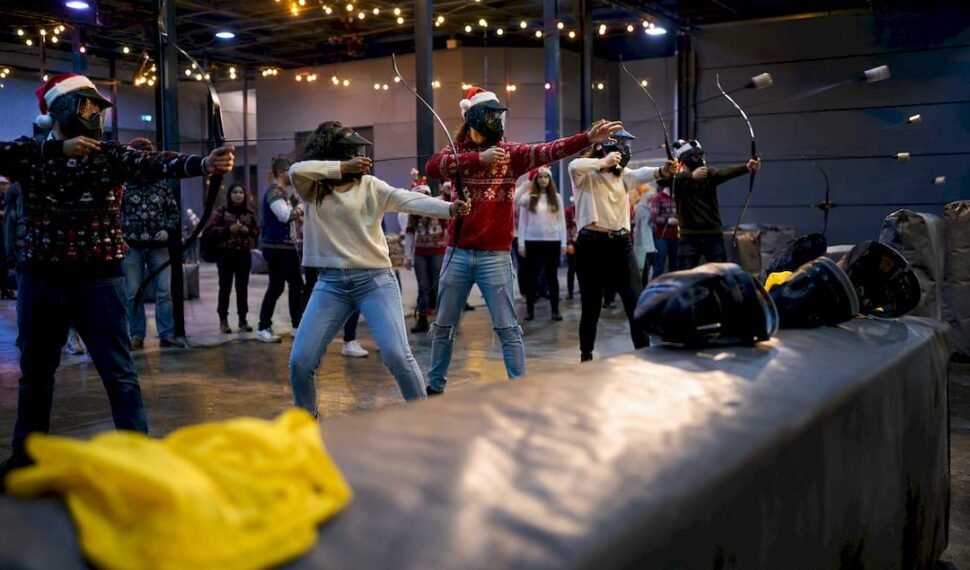
Pick one anchor for your office holiday party, whether it’s a theme, a shared activity, or a booked venue experience, and build everything else around it. Below you’ll find over two dozen office holiday party ideas organized by vibe and budget, plus the planning checklist and vendor questions to actually pull one off. For teams that want a done-for-you anchor, a venue like Archers Battlefield handles the entertainment while you handle everything else.
TL;DR:
- Active, experiential activities like game-show nights and escape rooms foster engagement and break down department silos, especially when scaled for small groups.
- Budget options such as potlucks, decorating contests, and coffee hours can create meaningful celebrations with minimal cost and effort.
- Outsourcing activities to venues like Archers Battlefield for combat archery or nerf battles reduces planning stress and ensures safety oversight.
- Hybrid events should include synchronized virtual participation, personalized kits, and clear itineraries to maximize remote employee engagement.
- Prioritizing one strong anchor activity and thoroughly planning around it delivers higher enjoyment than overly focusing on decor or themes.
Table of Contents
- Office Holiday Party Ideas For Every Budget And Vibe
- Your Planning Checklist, Budget, And Vendor Questions
- Making Sure Nobody Stands Awkwardly By The Wall
- Running A Party That Works For Remote And In-Office Staff
- Stretching A Small Budget Without Anyone Noticing
- Food And Drink Formats That Won’t Slow Down Your Line
- A Sample Run-Of-Show So Nothing Falls Through The Cracks
- Booking An Experiential Venue Instead Of Running Every Activity Yourself
- Music, DJs, And Playlists That Actually Fit The Room
- Keeping Everyone Safe, Fed, And Comfortable
- Getting Cliques To Actually Mix
- What Actually Makes These Parties Work
- Let Archers Battlefield Run Your Anchor Activity
- Sources
Office Holiday Party Ideas For Every Budget And Vibe
An anchor activity does one thing for a planner that a generic “party” never does: it gives everyone a reason to be in the room. Active, experiential formats consistently outperform standard dinner-and-speeches events for engagement, and they tend to break down the department silos that form when the same five people always sit together. Here’s the full range, from free to fully outsourced.
Low-effort, low-cost ideas
These cost almost nothing beyond staff time and still deliver a real sense of occasion.
- Potluck with a theme. Assign categories (appetizers, desserts, “a dish from your culture”) instead of a free-for-all. Accessibility note: always post a full ingredient list next to each dish. Budget: under $5 per person for paper goods and a grand prize.
- Morning coffee and pastry hour. Works for teams that dread evening commitments. Setup takes one person twenty minutes. Budget band: low, roughly $8 to $12 per head.
- Desk-decor contest. Give people a week’s notice, set three prize categories (funniest, most festive, best on a budget), and let managers vote blind. Zero setup cost beyond small prizes.
- Ugly sweater day. Pair it with a lunchtime judging panel so it doesn’t just fade into background noise. Budget: essentially free, plus a modest prize.
- Hot cocoa or cider bar. A self-serve station near the break room turns a slow afternoon into an event. Low cost, high visibility.
Interactive and team-building formats
These need more coordination but pay off in actual conversation between people who don’t normally talk.
- Game-show night. Rent or build a Family Feud or Jeopardy-style setup with company trivia mixed in. Accessibility note: use a microphone and large-print question cards. Budget: medium, $15 to $25 per person if you hire a host.
- Gingerbread house contest. Teams of four to six, thirty minutes, judged on three criteria. Great for mixed-ability groups since building doesn’t require speed or strength.
- Escape-room-style challenge. Puzzle formats work especially well for smaller groups who enjoy problem solving together, and they scale down easily to teams of five or six. Budget: medium to high depending on whether you rent a kit or build your own.
- Office scavenger hunt. Clue-based, photo-verified, run in pairs so no one gets left out. Costs almost nothing if you write the clues yourself.
- Holiday trivia tournament. Split into tables, run five rounds, keep questions light on pop culture obscurity so everyone has a shot.
Formal and glam options
For companies that want the party to feel like an occasion rather than an office lunch stretched out.
- Winter wonderland gala. String lighting, a photo backdrop, and a plated or heavy-appetizer dinner. Budget: high, often $60 to $120 per person depending on venue and catering.
- Wine and cheese tasting. Bring in a sommelier for a guided tasting; always pair it with a strong nonalcoholic lineup. Medium to high budget.
- Theater or dinner-show night. Book a block of seats at a local venue. Works well for smaller headcounts where a full buyout isn’t practical.
Outsourced and venue-based options
Handing off the entertainment portion is often the single biggest stress-reducer in the whole planning process.
- Bowling night. Lanes, shoes, and food are bundled, and most alleys handle large groups without extra staffing on your end.
- Movie theater buyout. Rent a screen for a holiday release; concessions double as the catering.
- Experiential venue booking. A combat archery or nerf battle session at a venue like Archers Battlefield gives you a built-in anchor activity with trained facilitators running the games, which means nobody on your team has to design or referee anything.
Virtual and hybrid ideas
- At-home kits plus Zoom. Ship a small box (cocoa mix, a puzzle, a branded ornament) timed to arrive the day before.
- Streamed trivia. Use a live-poll tool so remote employees compete in real time instead of watching passively.
- Desk-decor photo gallery. Collect submissions through a shared link and display them on a screen during the call.
Charitable and photo-ready moments
- Donation drive or volunteer shift. Pair a toy drive with the party itself so giving becomes part of the celebration, not a separate ask.
- Instant-photo guestbook. A Polaroid-style station or QR-code photo booth increases participation and creates content you can reuse in newsletters and recruiting materials months later.
Your Planning Checklist, Budget, And Vendor Questions
Work backward from the party date and you’ll avoid the two most common failures: booking a popular venue too late and running out of budget before you’ve paid for food.
- Three months out. Lock the date, set the guest list, and choose your anchor activity or venue. Popular venues and caterers book up fast in November and December.
- Six to eight weeks out. Send invitations and open RSVPs. A clear invite with a firm reply date, not a vague “let us know,” cuts down on last-minute headcount surprises.
- Two weeks out. Confirm final headcount with your caterer or venue, finalize the run-of-show, and assign day-of roles.
- 48 to 72 hours out. Confirm delivery times, parking or loading access, and any AV needs with vendors directly.
- Day of. Do a final walkthrough an hour before doors open. Check signage, name tags, and the playlist.
Budget generally breaks into three bands per person: low (covers casual catering and DIY games), medium (covers a rented venue or hired entertainment), and high (covers a full gala with plated dinner and open bar). Food consistently ranks as the element employees remember most, so if you’re trimming a budget, protect the food line before you protect the decor line.
Before booking anything, ask vendors these four questions: What’s your maximum capacity for this room or format? How do you handle dietary accommodations, and is there an extra fee? Do you carry liability insurance, and can you provide a certificate? What are your set-up and tear-down windows, and do they include AV support?
Pro Tip: Ask every vendor for their cancellation and weather-reschedule policy in writing before you sign anything. It’s the detail planners forget until they need it.
Making Sure Nobody Stands Awkwardly By The Wall
Task-based activities work better than open mingling because they lower social pressure. When everyone has a job to do, like finding a clue or decorating a gingerbread wall, people talk without needing a script.
Two setups do this reliably:
- Photo scavenger hunt. Pair people across departments by drawing names, hand each pair five location-based photo prompts, and give them 20 minutes. For accessibility, offer a seated “photo judge” role for anyone who prefers not to walk the building.
- Collaborative ornament or card-making station. Set out supplies at a long table with no assigned seats. This works for any mobility level and lets people drift in and out without commitment.
Run these activities in the first 45 minutes, before the open bar or big meal, and frame them as optional side activities rather than the main event. That framing alone removes most of the pressure.
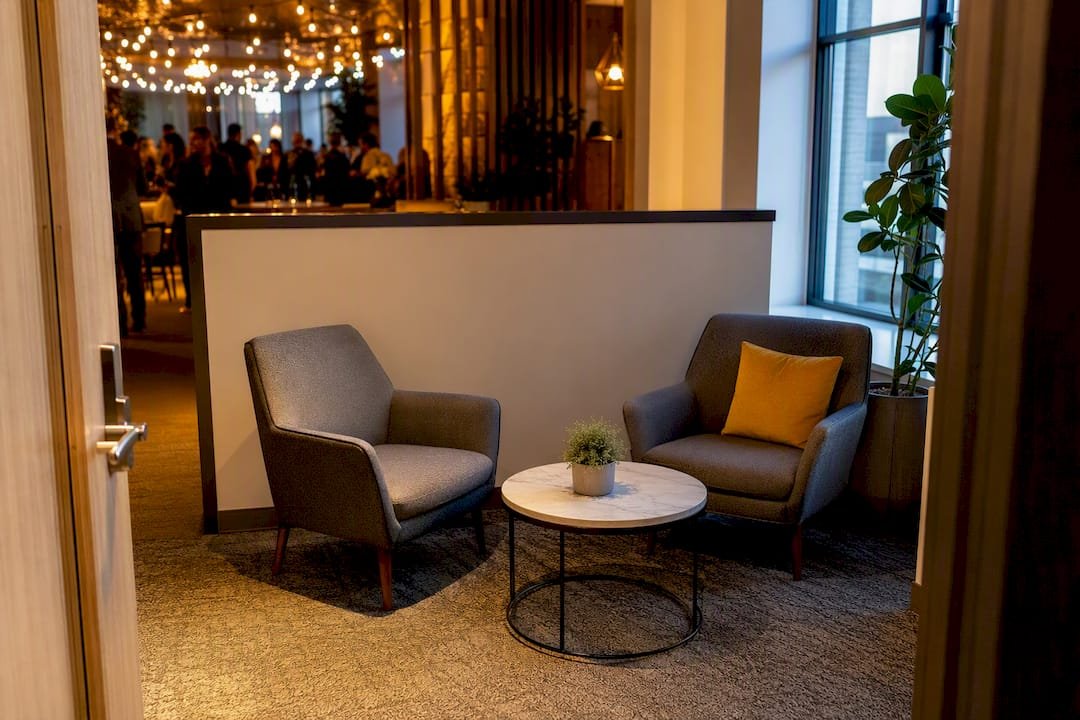
Pro Tip: Label one seating area as a “quiet corner” with no music or games nearby. It gives introverted employees and anyone managing sensory sensitivities a graceful way to opt out without leaving the party.
Running A Party That Works For Remote And In-Office Staff
Hybrid parties fail most often when remote employees are treated as an afterthought bolted onto an in-person event. Three formats scale well depending on your team’s split:
- Fully synchronous. Everyone, in-office and remote, joins one live activity (trivia, a game show) at the same time. Best when your remote headcount is under 30%.
- Parallel tracks. In-office staff get a physical activity while remote staff get a simultaneous virtual one, then both groups reconvene for a shared segment like awards. Best for a 50/50 split.
- Kit-driven asynchronous. Remote employees get a kit to open on their own schedule, with one optional live check-in. Best for widely distributed teams across time zones.
For synchronous segments, keep trivia rounds under ten minutes each, use a live-polling tool so answers appear on screen in real time, and build in one show-and-tell round so remote voices aren’t just answering questions but leading a moment. Shipping kits works best when timed to arrive two to three days before the event, packaged with dietary labeling clearly printed on the outside of any food item, and paired with a one-page instruction sheet. Teams that ship physical kits and design at least one synchronous segment see meaningfully higher remote participation than teams that just send a Zoom link.
Stretching A Small Budget Without Anyone Noticing
Three tactics consistently save money without visibly cutting the guest experience. Reframing a potluck as a “holiday dish showcase” with a prize for best entry removes the stigma of asking employees to bring food. Offering a ride-share stipend instead of hiring a shuttle bus cuts transportation costs while still solving the same problem.
Cut decor and printed signage before you cut food or the anchor activity. Guests barely register a plainer backdrop, but a small buffet or a canceled game runs out fast and people notice immediately. To find internal sponsors, ask department heads if their team budget can cover one specific line item (a dessert table, a photo booth) in exchange for their team’s name on it. It’s an easier ask than requesting a lump sum.
- Partner with a local restaurant for a catering discount in exchange for signage or a social mention.
- Reframe the potluck as a themed showcase with a small prize.
- Offer a ride-share stipend instead of full transportation.
- Split sponsorship asks by department rather than asking one budget to cover everything.
Food And Drink Formats That Won’t Slow Down Your Line
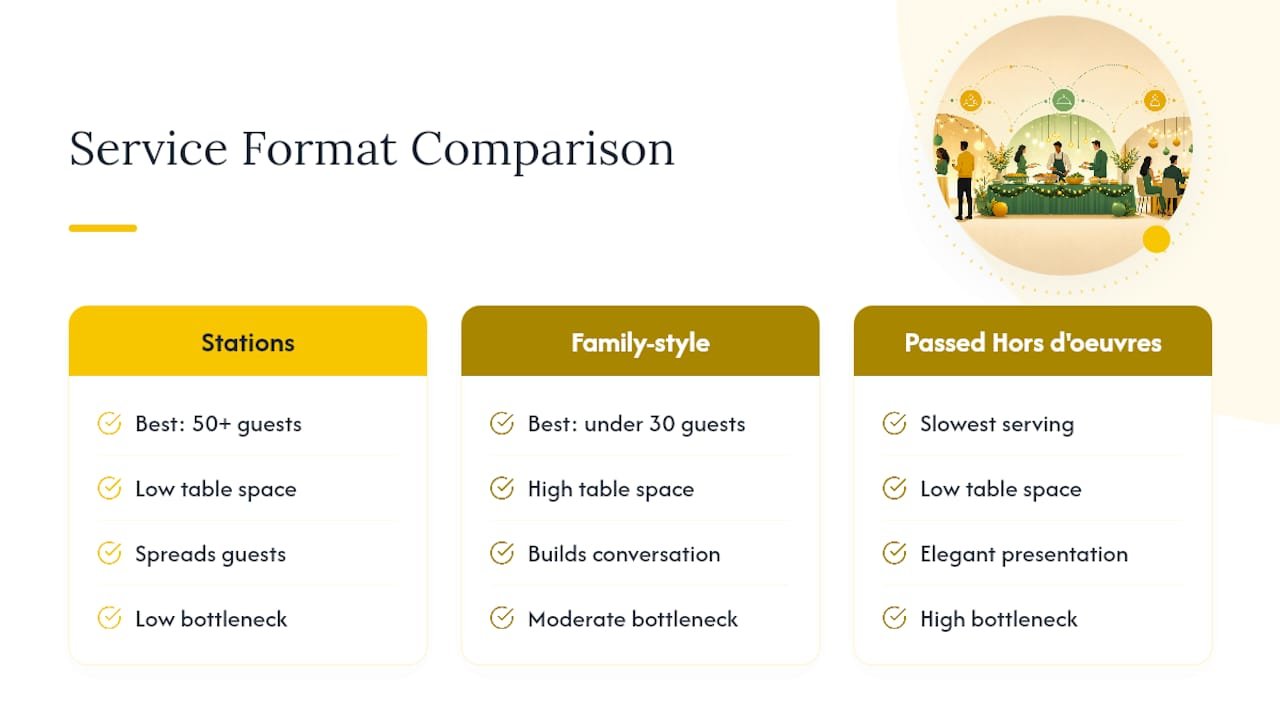
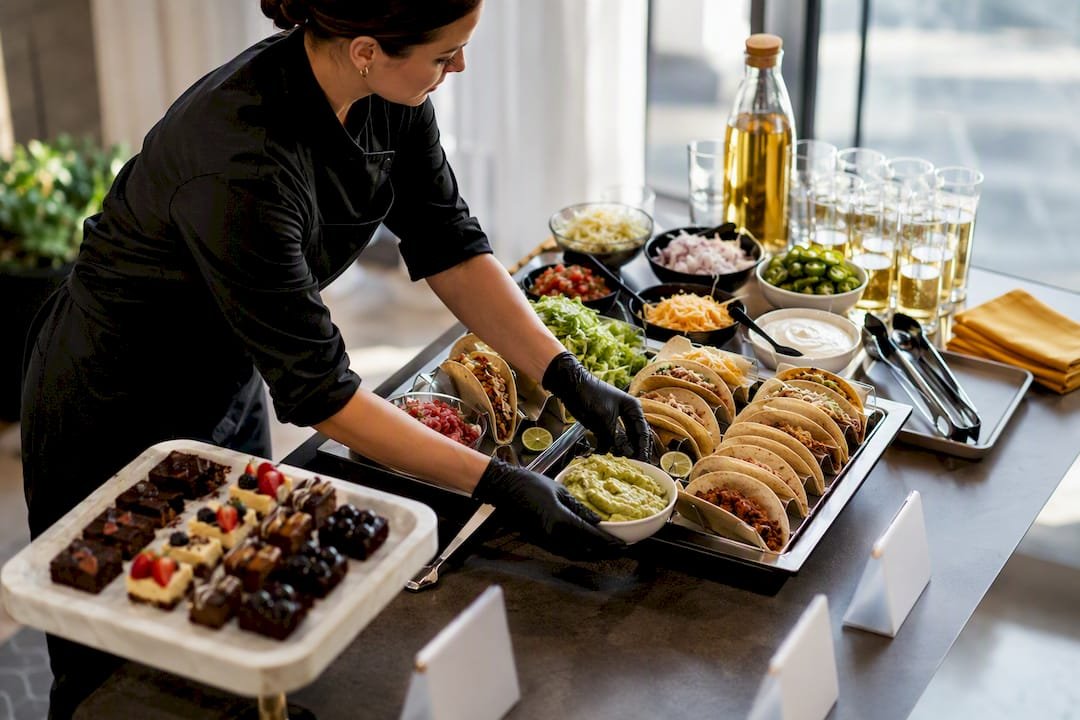
Stations (a taco bar, a carving station, a dessert table) work best for groups over 50 because they spread people out and reduce bottlenecks. Family-style service builds more conversation at smaller parties under 30 people but needs more table space. Passed hors d’oeuvres look elegant but move slowest and frustrate large groups waiting for a tray to reach them.
Whatever format you pick, label every dish with its major allergens (nuts, dairy, gluten, shellfish) on a small printed card, not just verbally at the buffet. Stock at least two nonalcoholic options beyond soda, since a mocktail or festive sparkling cider signals real hospitality rather than an afterthought. When you brief your caterer, confirm in writing: full ingredient lists for each dish, a plan for cross-contamination in shared serving areas, and a backup dish for last-minute dietary requests. A useful resource for building out a festive menu is this seasonal catering guide for event planners, which breaks down formats by group size.
A Sample Run-Of-Show So Nothing Falls Through The Cracks
A three-hour party runs cleanest when it follows a loose but real structure, not a rigid script.
- 0:00 to 0:30. Arrival, coat check, name tags, and a welcome drink or coffee station.
- 0:30 to 1:15. Anchor activity (your chosen game, escape-room challenge, or venue-based session).
- 1:15 to 2:00. Food service, timed to open right as the anchor activity wraps.
- 2:00 to 2:30. A short awards or recognition moment. Keeping it to three to five recognitions gives everyone a shared focal point without dragging.
- 2:30 to 3:00. Open social time, gift exchange, and wind-down music.
Assign one person as the point of contact for vendors, one for the AV and music, and one floating “problem solver” with no fixed task. Keep a printed contact list with every vendor’s day-of phone number, not just an email. For contingencies, always have an indoor weather backup if any part of the event is outdoors, a backup playlist if a DJ runs late, and a spare allergy-safe dish held in reserve for last-minute dietary issues.
Booking An Experiential Venue Instead Of Running Every Activity Yourself
Handing the anchor activity to a facilitator changes the entire shape of your planning workload. Instead of writing trivia questions or refereeing a scavenger hunt, you’re coordinating arrival times and a headcount.
An entertainment venue runs combat archery, nerf battles, bazooka ball, dodgeball, axe throwing, and arcade games, with private packages built for corporate groups of varying sizes. Facilitators run the games and safety briefings, which means your team shows up, plays, and leaves the logistics to someone else.
- Ask about group-size bands before booking. Most experiential venues have sweet spots (say, 15 to 40 people) where facilitation runs smoothest.
- Confirm how facilitators structure rotations so no one sits out for long stretches.
- Ask specifically about seated or low-exertion roles. Offering an alternative like a chair-based or observer role lets anyone who prefers not to do physical activity still participate meaningfully.
- Check what’s included versus what you’ll need to bring separately, like food or a dedicated space for gifts and awards.
Booking a private event package turns your entire run-of-show around one block of time instead of five separate activities to plan and staff.
Music, DJs, And Playlists That Actually Fit The Room
Music sets the pace of a party more than almost any other single decision, and the format matters as much as the songs. A hired DJ works best for parties over 60 people where reading the room and adjusting energy in real time actually matters. A live band, especially a small acoustic or jazz trio, fits formal or glam-themed events where background ambiance matters more than dance-floor energy. A curated playlist run through a decent speaker system is the right call for smaller, budget-conscious parties, and it costs nothing beyond the speaker rental.
Whichever route you take, build the playlist or DJ brief around energy transitions, not just genre. Start with lower-volume instrumental or lounge tracks during arrival and food service, shift to upbeat holiday and pop tracks once the anchor activity wraps, and taper back down for the wind-down period so conversations can happen without shouting. If you’re hiring a DJ or band, share your company’s music preferences in advance (a quick survey works fine) and flag any songs to avoid. Confirm sound levels with your venue ahead of time, since some office buildings and shared event spaces have volume restrictions after certain hours that can catch planners off guard on the day itself.
Keeping Everyone Safe, Fed, And Comfortable
Dietary restrictions deserve the same level of planning attention as the entertainment budget. Send a short dietary and accessibility survey with your invitation, not after RSVPs close, so caterers have real numbers instead of guesses. Common categories to always account for include vegetarian, vegan, gluten-free, nut-free, and halal or kosher options, and every dish should be labeled clearly rather than described verbally by serving staff who may not be available all night.
COVID-19 and general illness precautions still matter for office gatherings, particularly in winter when respiratory illness circulates more heavily. Reasonable steps include offering hand sanitizer stations near food service, spacing seating where the room allows it, and giving employees a genuine, judgment-free way to skip the event or attend virtually if they’re feeling unwell. A written policy shared in advance, even a short paragraph in the invitation, removes the awkwardness of people wondering whether it’s acceptable to stay home.
Physical activities carry their own safety considerations. Any venue running combat-style or physical games should walk guest through a safety briefing before play starts, provide protective gear where relevant, and offer a lower-intensity alternative for anyone who prefers not to participate physically. Alcohol service deserves the same caution: staff a designated bartender rather than a self-serve station, stock strong nonalcoholic options, and consider ending bar service 30 to 45 minutes before the party’s official end time.
Getting Cliques To Actually Mix
The biggest inclusivity failure at office parties isn’t a missing accommodation. It’s a room where the same five-person friend groups from the office simply relocate to a party venue and never interact with anyone else. Structured mixing solves this better than hoping people will introduce themselves.
Assign seating or team groupings at random for at least one segment of the night, whether that’s a trivia table or a scavenger-hunt pair. Random assignment forces new conversations without singling anyone out. Rotating activity stations, where small groups move together through two or three different games over the course of an hour, has the same effect and keeps energy higher than one long static activity.
Give every employee a genuine option to participate at their own comfort level. Not everyone wants to be on stage during an awards segment or paired up for a physical game, and that’s fine as long as there’s a clear, low-key alternative, like a seated conversation area or a simpler side activity, that doesn’t read as a consolation prize. The goal is a party where opting into the quieter option feels just as normal as opting into the loud one. Small gestures matter too: a quick round of shout-outs for people outside the usual leadership spotlight, or a “new hire bingo” card that gets recent hires talking to people they haven’t met yet, does more for real inclusion than a bigger budget ever will.
What Actually Makes These Parties Work
The pattern that shows up again and again in office holiday party planning is a mismatch between effort and payoff. Planners pour hours into decor and theme details that guests barely register, then run out of time to think through the one thing that actually determines whether people have fun: whether there’s something to do together that isn’t just standing near a buffet table.
The fix isn’t more budget. It’s picking one strong anchor and protecting the time and attention it needs. A gingerbread contest, a trivia tournament, or a booked activity session does more for the room’s energy than a fancier venue with nothing planned inside it. The second lesson worth internalizing: opt-in beats mandatory every time. The parties people talk about positively afterward are the ones where nobody felt cornered into an activity, a gift exchange, or a spotlight moment they didn’t want.
If there’s one tactical change to make next week, it’s this: send your dietary and comfort-level survey with the invitation, not after. It costs five minutes and prevents almost every scramble that happens the week of the party.
— Archers
Let Archers Battlefield Run Your Anchor Activity
This is an alternative to designing and staffing your own party activities from scratch. It’s an indoor venue offering combat archery, nerf battles, bazooka ball, dodgeball, axe throwing, and arcade games, with private packages sized for corporate groups.
Facilitators handle the safety briefings, game rotations, and equipment, so your team’s only job is showing up and having fun. That frees up the hours you’d otherwise spend writing trivia questions or chasing down escape-room props. If your office party needs one strong anchor without the DIY logistics, check archery booking for availability, or reach out through the team-building page to request group pricing for your headcount.
Sources
- Office party ideas (Indeed Hiring Lab)
- Office Holiday Party Ideas, Secret Santa & White Elephant Rules (Successories)
- Festive Christmas theme ideas for work (Eventoly)
- How to plan the perfect office holiday party (Paperless Post)


