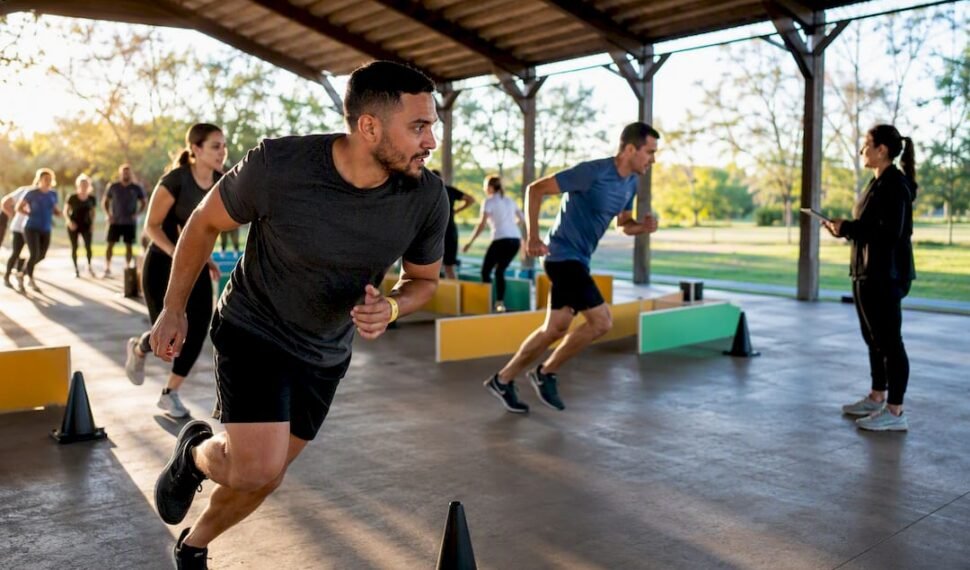
High energy team building means running fast-paced, physically or mentally activating group activities designed to spike engagement and collaboration in a short window, usually two to four hours. The single most useful move for any planner: pick three to four complementary activities (a warm-up, a core challenge, a skills challenge, and a celebration round) and run them back to back using a structured agenda. Some venues build these kinds of programs around combat archery and arena games as the core challenge, which gives you a proven starting template instead of a blank page.
TL;DR:
- High-energy activities are most effective when tailored to team size, space, and objectives, with arena games suitable for groups of 6 to 30 people.
- Facilitators should prioritize debriefing immediately after activities to translate fun into measurable improvements in communication and collaboration.
- Active sessions require proper safety planning, including waivers, protective gear, trained staff, and accessible, non-contact options for all participants.
- A four-hour agenda with three to four targeted activities and built-in breaks consistently outperforms longer, unstructured offsite sessions.
- Booking from experienced providers like Archers Battlefield simplifies logistics, providing a variety of combat and sport-based formats with safety and customization built-in.
Table of Contents
- Why High-Energy Formats Actually Work
- Matching Activity Type to Team Size, Space, and Goal
- 15 Ready-to-Run High-Energy Activities
- The 4-Hour Agenda You Can Run Tomorrow
- Running It at Archers Battlefield: What to Expect and Ask
- Safety, Accessibility, and Liability Before You Book
- Turning the Fun Into Something You Can Measure
- What Three Years of Booking Corporate Groups Actually Teaches You
- Book Your High-Energy Team Event
- Sources
Why High-Energy Formats Actually Work
Skeptical managers usually assume “fun” activities are a break from real work, not a lever for it. The research disagrees. Structured group activities show measurable gains in team interaction, communication, and collaborative problem solving across controlled studies and practitioner reviews. The mechanism isn’t complicated: physical activation and light competitive pressure force people to communicate faster and rely on teammates they might otherwise ignore in a meeting room.
High-energy formats serve a handful of precise objectives, and knowing which one you’re chasing changes your activity picks. Use them for:
- Communication under pressure — relay and blindfold-style challenges force quick, clear instructions.
- Morale and buy-in — a shared physical win resets a team that’s been grinding through a rough quarter.
- Creative problem solving — timed build challenges push people out of their usual role on the team.
By the numbers: McKinsey’s analysis of outdoor and nature-based team experiences found that active, intentionally facilitated offsite experiences boost creativity and performance more reliably than passive offsites like dinners or lectures.
None of this means every team needs a sprint-and-shout event. Tone it down when the group includes people managing chronic health conditions, when morale is fragile after layoffs, or when half the room has never met and needs a slower trust-building ramp before anything competitive. High energy works best when participants already have baseline psychological safety. Add it too early and you get forced enthusiasm instead of real engagement.
Matching Activity Type to Team Size, Space, and Goal
Not every high-energy format fits every room. A 12-person team in a hotel conference space needs something different than a 60-person sales team with a parking lot and two hours to burn. Practitioner guidance consistently sorts high-energy activities into a handful of categories, each with its own space and group-size sweet spot.
- Energizers — 5 to 10 minute icebreaker bursts (human bingo, rapid-fire trivia). Work for any group size, minimal space, zero equipment.
- Relays — timed team races (bucket relays, blindfolded obstacle courses). Best for groups of 8 to 40 split into even teams, need open floor or outdoor space.
- Arena and combat-style games — soft-equipment competitive formats like combat archery or Nerf-style battles. Ideal for 6 to 30 people, need a dedicated arena or large open room, and deliver the highest sustained energy of any category.
- Improv exercises — quick-scene and “yes, and” games. Fit 10 to 50 people, need almost no space, best for creativity-focused objectives.
- Sport-based challenges — dodgeball, tug-of-war, or modified relay races. Suit 10 to 40 people and require gym or field access.
- Low-impact alternatives — trivia sprints, tabletop build challenges, escape-room-style puzzles. Fit any group size and any space, useful when mobility or medical concerns rule out physical games.
- Virtual variants — timed online scavenger hunts, virtual trivia sprints, breakout-room build challenges. The only option for distributed teams, though energy is harder to sustain past 45 minutes on video.
Practitioner-tested lists like SessionLab’s activity roundup and Workhuman’s guidance on team-building formats both land on the same selection logic. Start with your single dominant objective (trust, communication, or creativity), then filter by four constraints: does the space allow it, does the group size fit the activity’s sweet spot, does everyone in the room have equal ability to participate, and does it fit inside your time and budget window. Skip any activity that fails even one of those checks rather than forcing it to work.
15 Ready-to-Run High-Energy Activities
Each of these includes what you need to run it cold, no additional research required. Timing assumes a facilitator who’s read the instructions once beforehand.
-
Two-Minute Introductions. Objective: quick rapport building. Materials: none. Setup: 0 minutes. Runtime: 5 to 8 minutes. Group size: any. Energy: low to medium. Pair people up, give 60 seconds each to share one work win and one non-work fact, then have pairs introduce each other to the room.
-
Human Knot. Objective: physical problem solving. Materials: none. Setup: 1 minute. Runtime: 10 minutes. Group size: 8 to 16. Energy: medium. Circle up, grab two random hands across the circle, untangle without letting go. Non-contact modification: swap for a rope-and-hoop version where the group passes a hoop around joined hands instead.
-
Marshmallow Challenge. Objective: creative problem solving under time pressure. Materials: 20 sticks of spaghetti, one yard of tape, one yard of string, one marshmallow per team. Setup: 5 minutes. Runtime: 18 minutes (build) plus 5 minute debrief. Group size: teams of 4, any number of teams. Energy: medium. Teams build the tallest freestanding structure topping with a marshmallow. Debrief prompt: “What did your team assume early that turned out wrong?”
-
Minefield. Objective: trust and precise communication. Materials: cones or soft obstacles, blindfolds. Setup: 10 minutes. Runtime: 15 minutes. Group size: pairs, scales to any number. Energy: medium to high. One partner is blindfolded and guided verbally through an obstacle field by their teammate. This is a validated communication exercise that reliably surfaces gaps between what people think they’re communicating and what actually lands. Debrief: “What instruction worked better than you expected?”
-
Bucket Brigade Relay. Objective: coordination under time pressure. Materials: buckets, water or foam balls, cones. Setup: 10 minutes. Runtime: 15 minutes. Group size: teams of 6 to 10. Energy: high. Teams race to move contents from one bucket to another down a line without spilling.
-
Combat Archery Skirmish. Objective: strategic thinking and adrenaline-driven bonding. Materials: foam-tipped bows and arrows, protective masks, arena setup. Setup: 15 minutes with a facilitated venue. Runtime: 20 to 30 minutes. Group size: 6 to 20 per arena session. Energy: very high. This is the format Archers Battlefield built its team-building programs around, and it works because it forces quick tactical calls under mild physical pressure without real contact risk.
-
Nerf Battle Objective Round. Objective: team strategy and role assignment. Materials: foam blasters, arena obstacles. Setup: 15 minutes. Runtime: 20 minutes. Group size: 8 to 24. Energy: very high. Split into squads with a capture-the-flag style objective instead of pure elimination, which keeps eliminated players engaged as strategists rather than sitting out.
-
Blind Shape Building. Objective: verbal precision. Materials: rope, blindfolds. Setup: 2 minutes. Runtime: 10 minutes. Group size: 6 to 15. Energy: medium. Blindfolded team builds a specific shape using only a length of rope and verbal coordination.
-
Two Truths and a Lie Speed Round. Objective: quick rapport at scale. Materials: none. Setup: 0 minutes. Runtime: 8 minutes. Group size: any, works in breakout groups of 5 to 6. Energy: low to medium.
-
Egg Drop Engineering. Objective: creative problem solving with real consequences. Materials: raw eggs, straws, tape, plastic bags. Setup: 10 minutes. Runtime: 20 minutes. Group size: teams of 3 to 5. Energy: medium. Teams build a contraption to protect an egg dropped from height. Non-contact and equipment-light, good for mixed-mobility groups.
-
Improv “Yes, And” Scenes. Objective: creative flexibility, reducing defensiveness. Materials: none. Setup: 0 minutes. Runtime: 15 minutes. Group size: 10 to 30. Energy: medium to high. Volunteers build short improvised scenes, each new line must build on the last with no rejection.
-
Dodgeball Tournament Round. Objective: high-energy physical release and quick alliance-building. Materials: soft dodgeballs, court or open space. Setup: 5 minutes. Runtime: 20 to 30 minutes. Group size: 12 to 30. Energy: very high. Non-contact modification: switch to a target-elimination variant where players are out only when a marked cone is hit, not by direct tag.
-
Axe Throwing Rotation. Objective: focus under mild pressure, individual skill building inside a team frame. Materials: throwing axes, target lanes, trained staff. Setup: venue-managed. Runtime: 20 minutes per rotation. Group size: 6 to 16 depending on lane count. Energy: medium to high, more focused than frantic.
-
Virtual Scavenger Sprint. Objective: energy and fun for distributed teams. Materials: video call, a shared prompt list. Setup: 10 minutes. Runtime: 20 minutes. Group size: any, works in breakout teams of 4 to 6. Energy: medium. Teams race to find and screen-share five household items matching prompts.
-
Celebration Relay. Objective: end-of-session closure and shared win. Materials: whatever props remain from earlier activities. Setup: 0 minutes. Runtime: 10 minutes. Group size: full group. Energy: high, then intentionally winding down. A final light competitive round that ends in applause, not elimination, so everyone leaves on a high note regardless of how the day’s scoring went.
The 4-Hour Agenda You Can Run Tomorrow
A focused four-hour window with three or four activities plus built-in debriefs consistently outperforms longer, unstructured offsites because attention and energy both decay past the two-hour mark without a change of pace.
| Time | Block | Notes |
|---|---|---|
| — | Arrival and warm-up energizer | Two-Minute Introductions or Two Truths and a Lie |
| 0:15–0:45 | Core physical challenge | Combat archery skirmish or Nerf battle objective round |
| — | Quick debrief and water break | Start-Stop-Continue format, 5 minutes |
| — | Problem-solving challenge | Marshmallow Challenge or Minefield |
| — | Break, snacks, informal mingling | Staffing note: one facilitator resets equipment |
| — | Sport-based or arena round two | Dodgeball tournament or bucket brigade relay |
| 2:45–3:15 | Improv or creative closer | “Yes, And” scenes, lighter energy |
| 3:15–3:45 | Celebration relay and awards | Keep it inclusive, not just for the “winning” team |
| — | Group debrief and next-step commitments | One-sentence takeaway from every participant |
Planning timeline: lock the venue and headcount three weeks out, confirm activity picks and any dietary or accessibility needs two weeks out, send the agenda to participants one week out, and reconfirm staffing, weather backup, and equipment the day before.
- Have a low-energy backup ready (trivia sprint, tabletop puzzle) in case weather or an injury forces an indoor pivot.
- Assign one non-facilitating staffer to handle logistics interruptions so the lead facilitator never has to break flow.
- Build a 15-minute buffer somewhere in the middle. Something always runs long.
Running It at Archers Battlefield: What to Expect and Ask
Archers Battlefield runs indoor high-energy team programs built around combat archery, Nerf battles, bazooka ball, dodgeball, and axe throwing, with customizable team-building packages scaled to group size. That combination matters because it lets you run two or three different arena formats back to back inside one venue, without the logistics of moving a group between locations mid-session.
Before booking any venue for a corporate group, ask these questions directly:
- What’s the maximum capacity per arena or room, and can multiple sessions run in parallel for larger groups?
- Is a safety briefing included before equipment is handed out?
- What’s the staff-to-participant ratio during active games?
- Is on-site first aid or a trained staff member available during the event?
- How much can the format be customized (team size, rotation length, mix of activities)?
Pro Tip: Ask the venue how they handle mixed-ability groups before you book. A good operator will offer a non-contact or reduced-intensity version of each arena game rather than just excluding hesitant participants from the round entirely.
If you’re comparing venues, Nerf battle formats and dodgeball tend to work well as the “core challenge” block in the agenda above, since both scale from small teams to large groups with minimal setup time between rotations.
Safety, Accessibility, and Liability Before You Book
High energy doesn’t mean high risk, but only if the basics are locked down ahead of time. Cornell’s group teambuilding guide treats safety planning and activity design as inseparable steps, not an afterthought bolted on at the end.
Before the event, confirm:
- Signed waivers are collected from every participant, not just a department head signing on behalf of the team.
- Protective equipment (masks, padding) is provided and properly fitted for anything arena-based.
- Staff running physical activities are trained, not just present.
- A first-aid kit and a designated first responder are on-site for the full session.
Accessibility needs planning too. Build a non-contact version of every physical activity into your plan from the start rather than improvising one on the spot, and confirm the venue has a seated or low-mobility alternative for anyone who needs it. Non-contact arena formats with soft equipment deliver most of the same energy and engagement as full-contact versions while staying open to nearly everyone in the room.
Pro Tip: Ask any vendor directly what their liability insurance covers and whether it extends to corporate bookings specifically, not just public walk-in sessions. This is a five-minute question that saves a very bad afternoon later.
Turning the Fun Into Something You Can Measure
Energy fades fast if nobody captures what the team actually learned. Three debrief formats work well immediately after a high-energy session:
- Start-Stop-Continue. Each team names one thing to start doing, one to stop, one to keep doing based on how they worked together during the activities. Takes 5 minutes, works for groups of any size.
- Plus-Delta. A quick two-column list: what worked (plus), what would improve it next time (delta). Best run on a whiteboard right after the closing activity while memories are fresh.
- One-Sentence Takeaway. Go around the room, each person shares a single sentence about what they’ll do differently at work this week.
Short, immediate debrief prompts increase the odds a team actually converts a fun afternoon into one or two concrete behavior changes, rather than the day evaporating into a nice memory with no follow-through.
By the numbers: Structured group activities followed by facilitated debriefs show measurably stronger gains in team communication and collaborative problem solving than unstructured social events, according to practitioner and academic reviews of team interventions.
Send a one-week pulse check afterward: a two-question survey asking whether people followed through on their stated takeaway and whether they noticed any change in how the team communicates. Tie it back to the objective you picked at the start (communication, morale, or creative problem solving) so leadership sees a direct line from the event budget to a business outcome, not just photos from the day.
What Three Years of Booking Corporate Groups Actually Teaches You
The best high-energy sessions Archers Battlefield has hosted rarely came from the biggest budget or the fanciest activity lineup. One mid-size sales team booked a two-hour combat archery and Nerf battle block after a rough quarter, expecting a morale boost. What actually shifted the room was a five-minute debrief where a normally quiet team member pointed out that the same three people had called every shot during the Nerf round, mirroring exactly what happened in their weekly planning meetings. That observation did more for the team than the activities themselves.
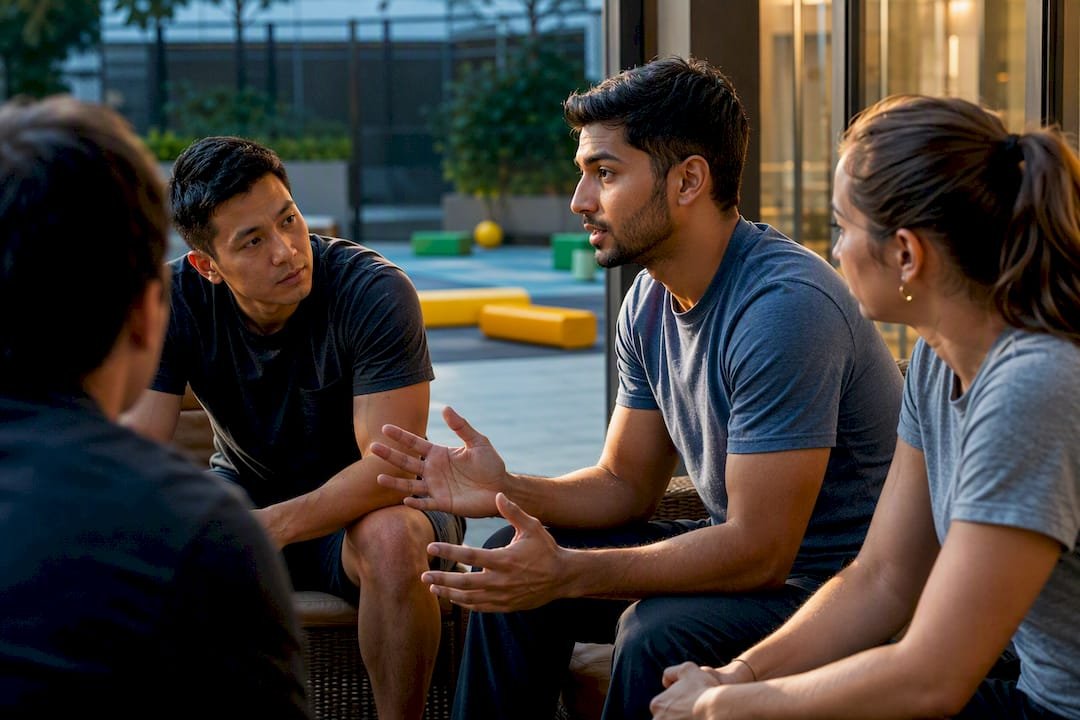
Three lessons come out of moments like that. First, design around a single objective instead of stacking unrelated activities, because a scattered agenda produces a scattered debrief. Second, build in the reduced-intensity option before anyone asks for it, since teams with a visible inclusive option participate more fully, not less. Third, protect the debrief time as ruthlessly as the activity time. It’s the cheapest, highest-return five minutes of the entire event, and it’s the first thing planners cut when the schedule runs long.
If you’re planning something for your own team, reach out and describe your group and your goal. A custom plan usually takes less back and forth than you’d expect.
— Archers
Book Your High-Energy Team Event
Archers Battlefield is the option for teams that want a done-for-you high-energy program instead of piecing together a venue, equipment, and a facilitator separately. You get combat archery, Nerf battles, bazooka ball, dodgeball, and axe throwing under one roof, already built into customizable team-building packages sized for small teams up to large departments.
Groups typically run from 6 to 60 people, and packages generally include arena time, equipment, safety briefings, and staff supervision, with add-ons available depending on the event package you choose. If you’re ready to lock in a date, check availability and get a quote through archery booking for archery-centered sessions, or start a conversation about a mixed-activity program through the team-building page. Either way, the next step is the same: tell us your group size and your date, and get a plan back within a day.
Sources
This article draws on peer-reviewed and practitioner research on structured group activities, Cornell’s facilitator guide to team building games, SessionLab’s roundup of team-building activities, Workhuman’s guidance on workplace team building, and Offsiteio’s 4-hour agenda framework.
Planners building out a full-day program might also find creative workshop formats useful for breakout sessions, and catering guidance for corporate events worth reading before locking in your agenda’s break timing.
- Pmc
- 53 team building activities to improve teamwork in 2025
- 2026 Best Team-Building Activities for the Workplace
- Group Teambuilding Games and Initiatives (Cornell SCL)


