
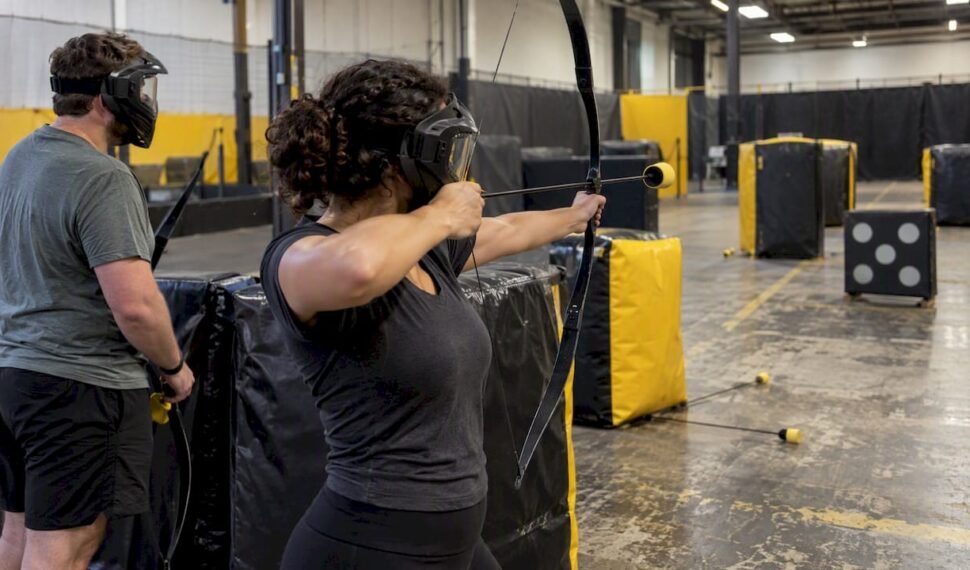
The best indoor date nights fall into four categories: eat and drink, play and move, create and build, and relax and connect, and you can run almost any of them tonight with things already in your home. Research on self-expansion shows novel, activating experiences boost relationship satisfaction more than routine ones, and a couples cooking class or a night at Archers Battlefield can deliver that spark just as well as a DIY setup.
TL;DR:
- A themed dinner with specialty ingredients costs $20 to $40, while Culinaria’s Thai cooking class costs a few hundred dollars per couple plus HST.
- Keep competitive games under 30 minutes, with a clear stop signal agreed on beforehand, so playful rivalry does not turn into frustration.
- Naming one specific thing you appreciated about your partner predicts higher relationship satisfaction the next day, so add a brief appreciation ritual to calm evenings.
- Archers Battlefield charges $35 each for Combat Archery or Nerf Battle and $30 each for Ping Pong or Dodgeball; weekend slots can fill quickly.
Table of Contents
- 1. Eat and drink: cooking, tasting, and themed dinner ideas
- 2. Play and move: games, challenges, and friendly competition
- 3. Create and build: arts, crafts, and projects for two
- 4. Relax and connect: conversation, rituals, and shared calm
- How to turn any idea into a memorable indoor date
- Archers Battlefield: an active indoor date alternative
- Picking indoor dates for the season or the weather
- Keeping active indoor games safe and contained
- Bringing venue-style games into your couple’s night
- Mixing competition and cooperation for stronger bonding
- Why intentional indoor dates beat passive screen nights
- How we can help you plan your next indoor date
- FAQ
- Sources
1. Eat and drink: cooking, tasting, and themed dinner ideas
Food-focused dates work because they force collaboration. Assign roles before you start: one partner chops, the other plates, and you switch halfway through so nobody gets stuck on dish duty the whole time.
- Cook a new cuisine together using a recipe neither of you has tried, with one person leading prep and the other handling plating and music.
- Run a tasting party: pick three wines, three mocktails, or three chocolate bars and compare notes out loud before revealing which one you each liked best, or order a cake tasting box from Made by AKB to enjoy a curated dessert experience at home.
- Build a travel-themed dinner around a country you want to visit, with matching playlist, dim lighting, and a simple dessert to close the night.
- Host a dessert or cocktail workshop where one of you researches the recipe and the other handles setup, then you split cleanup so nobody ends the night scrubbing pans alone.
If you’d rather skip the grocery run, a professional couples cooking class is worth the splurge. A Thai couples cooking class through Culinaria typically costs a few hundred dollars per couple plus HST and lasts a few hours, including hands-on prep and a shared meal at the end. That price sits above a pantry-only night at home but below a full dinner-and-a-movie outing once you factor in the hands-on instruction. For budget tiers, a pantry-only tasting costs almost nothing, a themed dinner with a few specialty ingredients runs $20 to $40, and a booked class like Culinaria’s covers the premium end when you want someone else managing the logistics.
2. Play and move: games, challenges, and friendly competition
Active, competitive formats create the kind of novelty that research on shared positive emotion ties to relationship benefits, so treat game night as more than filler between dinner and bed.
- Pick a board or card game you both know and add a couple-only house rule, like winner picks the next date.
- Run a DIY trivia night using categories pulled from your relationship history or a free online quiz generator.
- Build a mini escape room in two rooms with sticky-note clues, a locked box, and a 20-minute timer.
- Clear a living room obstacle course using couch cushions and pillows, then time each other and compare laps.
- Throw a short dance party with a playlist split evenly between both of your music taste.
Pro Tip: Keep any at-home competitive game under 30 minutes so the fun ends before anyone gets genuinely annoyed about losing.
These formats work because they’re active and new, not because they’re complicated. The self-expansion model links exciting, activating joint experiences to stronger relationship satisfaction than couples get from sticking to routine, low-energy activities, which is exactly why a 20-minute obstacle course can outperform another night of scrolling side by side.
3. Create and build: arts, crafts, and projects for two
Co-creating something tangible gives you an inside joke or a keepsake, and the process matters more than the output.
- Try a paint-and-sip or pottery kit at home, splitting tasks so one of you preps supplies while the other sets up the playlist and lighting.
- Build a mini scrapbook or memory book using old photos, ticket stubs, and a few written prompts about your favorite shared moments.
- Plan a DIY photo shoot or short video with a simple shot list, a couple of household props, and a theme you pick together.
- Decorate a cake or batch of cookies as a joint project meant to be photographed and kept, not just eaten.
A paint kit or pottery set runs $20 to $40 per person, a scrapbook costs whatever leftover photos and a dollar-store album add up to, and a photo shoot needs nothing but a phone and 45 minutes. Building a shared reality together, even something as small as a finished scrapbook page, has documented benefits for meaning and relational stability over time, which makes these projects worth the extra setup time compared to a passive night in.
4. Relax and connect: conversation, rituals, and shared calm
Not every date needs motion. Low-key nights built around conversation and small rituals carry real weight for closeness.
- Run a short gratitude exercise where you each name one specific thing the other did that week that you appreciated.
- Set up an at-home spa night with dimmed lighting, a shared playlist, and simple treatments like face masks or a foot soak.
- Watch a movie or album together with built-in pause points where you talk about what just happened instead of watching straight through.
- Pick three conversation prompts ahead of time so the night doesn’t default to silence or your phones.
Everyday expressions of gratitude between partners generally predict increases in relationship satisfaction the following day, acting like small booster shots for relationship maintenance. That’s a strong argument for building a two-minute appreciation ritual into even your laziest date night. Shared positive emotion between partners shows up in roughly 38% of the time couples spend together and tracks with lower cortisol levels, meaning a calm, connected evening carries a physical benefit as well as an emotional one.
How to turn any idea into a memorable indoor date
A good idea still needs structure, or it collapses into the same screen-time default you were trying to avoid.
- Pick the format first and set a rough start and end time so the evening has shape.
- Make a short checklist covering atmosphere, supplies, who does what, and a backup plan if something falls through.
- Follow a loose timing template: eat or create first, play or move in the middle, then wind down into conversation or rest.
- Adjust for accessibility, swapping high-movement games for seated versions or lowering lighting and noise as needed.
Pro Tip: Write your plan on a sticky note and put it on the fridge. Deciding the format ahead of time is what actually prevents the slide into default screen time.
Archers Battlefield: an active indoor date alternative
Some nights call for more energy than a living room can offer. When that’s the mood, an in-person venue built for active group play gives couples a high-energy option without the at-home setup.
- Combat Archery suits couples who want playful, head-to-head competition with a game format you won’t find in a living room.
- Axe-Throwing fits a slightly more focused, skill-building mood, and our axe-throwing date ideas guide covers formats built specifically for two.
- Arcade Games work for a nostalgic, low-pressure wind-down after a more active session.
- Ping Pong and Dodgeball give you fast, easy-to-learn options when you want movement without a steep learning curve.
If you’re weighing a booked activity against a DIY night, our archery booking page shows current availability so you can plan around a weekend that works for both of you.
Picking indoor dates for the season or the weather
Indoor dates earn their keep most in winter and during stretches of rain, when outdoor plans fall through on short notice. Cold months favor warm, slower formats: a tasting party, a spa night, or a themed dinner with heavier comfort food fits a night when neither of you wants to leave the house.
Hot summer days can also push you indoors, just toward lighter, more active formats like a dance party or an obstacle course, since air conditioning becomes part of the appeal rather than an afterthought. Rainy evenings suit anything with a build or create component, since a scrapbook or a cooking project doesn’t care what’s happening outside the window.
If a planned outdoor date gets rained out, keep a backup idea from a different theme bucket ready rather than defaulting to a movie by elimination. A couple who planned a picnic can pivot to an at-home tasting party with the same snacks they packed, which keeps the intentionality of the original plan instead of losing it to the weather.
Keeping active indoor games safe and contained
Active games like an obstacle course or a living-room dance-off work best when you treat the space seriously before you start. Clear breakables and loose rugs, check that furniture edges are padded or avoided, and agree on boundaries for how far a “lap” or a “throw” can go before someone bumps into a lamp.
Set a few ground rules out loud: no running near glass, no games involving sharp objects without supervision, and a clear stop signal either partner can use if something feels too fast or too close. If a game involves throwing anything, even a soft object, designate a clear target zone away from windows, screens, and anyone’s face.
Booked venues solve this problem differently. A space built for combat-style games like archery or axe-throwing comes with padded lanes, safety briefings, and staff oversight, which is part of why some couples choose a session out of the house instead of improvising with pillows and couch cushions.
Bringing venue-style games into your couple’s night
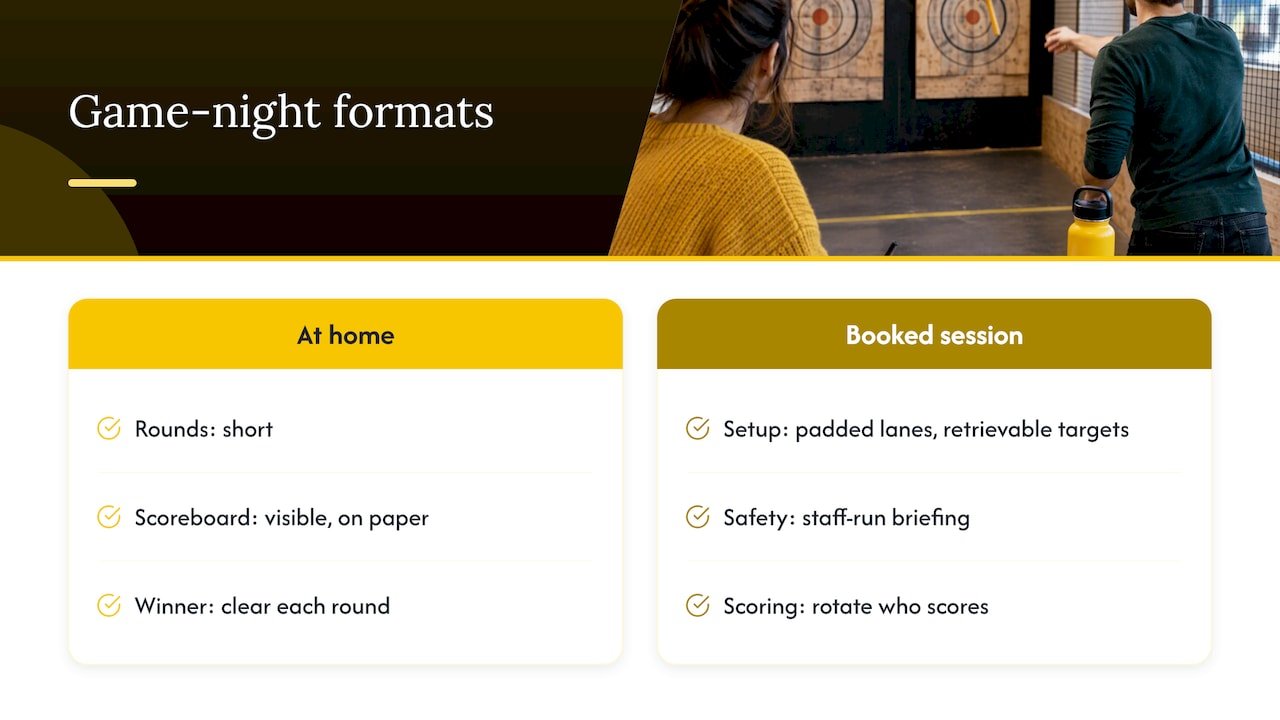
Combat archery and axe-throwing are built around fast rounds and visible scoring, and that same structure translates well to a couple’s night even without the full venue setup. If you’re staying home, borrow the format: short rounds, a visible scoreboard on paper, and a clear winner each round instead of one long drawn-out game.
For couples who want the real version, a booked session gives you the padded lanes, retrievable targets, and staff-run safety briefing that make these games work at full intensity. Our indoor team building games guide breaks down facilitation tips that apply just as well to two people as to a larger group, particularly around keeping rounds short and rotating who scores.
Axe-throwing in particular rewards a slower, more focused rhythm than archery’s faster pace, which makes it a good fit for a couple who wants a competitive edge without constant movement. A session built for small groups scales down naturally to two, since the scoring and round structure don’t change with headcount.
Mixing competition and cooperation for stronger bonding
Friendly competition and cooperative play serve different purposes, and the strongest date nights usually include both. Competitive formats, like trivia or an obstacle-course time trial, create the kind of activating novelty tied to relationship satisfaction gains, while cooperative formats, like a shared cooking project or an escape room, build the sense of teamwork that makes a couple feel like they’re on the same side.
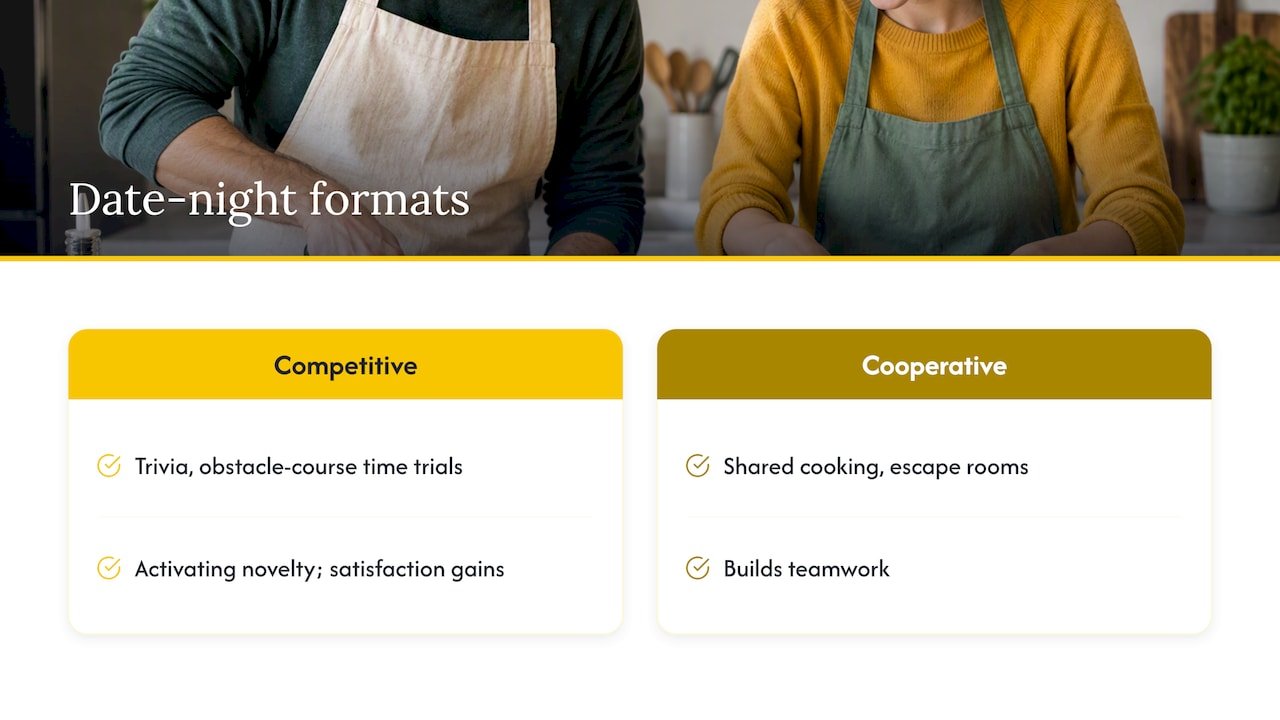
A simple way to balance both: start cooperative, so you warm up working together, then shift competitive once the mood is loose and playful. A cooking project followed by a quick trivia round hits both notes in one evening. For conversation-driven cooperation, our communication games for adults guide includes debrief scripts originally built for groups that adapt easily to a two-person format, especially the prompts meant to surface what each person noticed during the activity.
Keep score lightly where competition is involved. The point isn’t who wins, it’s the shared adrenaline of trying, which is the same activating ingredient that makes novel joint experiences outperform routine ones for relationship satisfaction.
Why intentional indoor dates beat passive screen nights
A planned evening, even a 45-minute one, almost always beats an accidental night of parallel scrolling. The difference isn’t effort, it’s intention: deciding on a format and a rough timeline turns a backup plan into an actual date.
Gratitude research backs this up in a small but real way. Couples who name one specific thing they appreciated about each other see a next-day bump in relationship satisfaction, which means a two-minute ritual can outperform an hour of unplanned screen time. Try one idea tonight, even a small one, and treat the planning itself as part of the date rather than a chore before the real thing starts.
— Archers
How we can help you plan your next indoor date
When you want the energy of a night out without the planning that goes into a full dinner party, a booked activity covers that gap. We run combat archery, axe-throwing, ping pong, dodgeball, nerf battles, and arcade games, each priced and packaged for small groups including couples.

For a couple’s night out, Combat Archery and Nerf Battle run $35 each, while Ping Pong and Dodgeball run $30 each, all listed on our booking page. If you’d rather build a full evening around one activity, our event packages start at $299 and scale up for bigger groups or longer sessions. Weekend slots fill quickly, so check availability early in the week if you’re planning for Friday or Saturday night.
FAQ
What can couples do for fun indoors?
Couples can cook or taste new foods together, play active games like a DIY obstacle course or trivia night, build a shared craft project, or slow down with a spa night and a gratitude exercise. Mixing an active format with a calmer one in the same evening tends to cover both novelty and connection.
What to do for an inside date?
Pick one idea from a food, game, craft, or relaxation theme and give it a rough start and end time so the night has shape. A themed dinner paired with a short trivia round or a gratitude exercise covers both excitement and closeness in one evening.
What are some ideas for a date night at home?
Strong at-home options include a themed dinner, a tasting party, a mini escape room built from household items, a craft project like a scrapbook, or a spa night with simple treatments. Novel, activating choices like a game or obstacle course tend to boost relationship satisfaction more than a routine night of watching television.
What are 100 fun things couples can do together?
There’s no single official list, but strong indoor options cluster into four themes: eating and drinking together, active games and challenges, creative projects, and low-key connection rituals like gratitude exercises or a spa night. Picking one idea from each theme over a month covers most of what couples typically look for in date night variety.
Sources
- The self-expansion model and relationship outcomes (Psychology literature)
- Couples cooking class: Thai — Culinaria Restaurant & Events
- It’s the little things: Everyday gratitude as a booster shot for romantic relationships


