
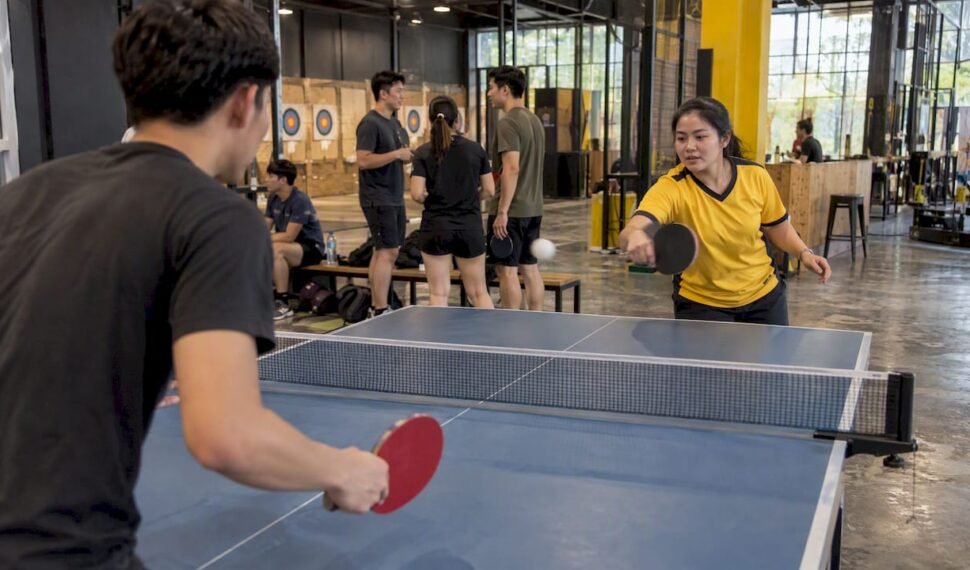
The best sports team party comes from picking 3 to 5 activities that match your group, choosing a venue that cuts down on coordination work, and locking your headcount and volunteer roles early. This approach works whether you’re planning for a kids’ league or an adult recreational team, and it holds up whether you book an indoor activity venue like Archers Battlefield or run things at the local park, as long as you also build in some basic accessibility planning from the start.
TL;DR:
- Choose 3 to 5 activities that match your group’s age and energy levels, pairing high- and low-energy options to maintain a natural flow.
- Finalize your headcount two weeks early and assign specific roles for food, A/V, awards, and RSVPs to avoid coordination issues.
- Select a venue that suits your size, weather, and accessibility needs, confirming capacity, parking, food rules, and contingency plans beforehand.
- Keep food simple, label allergens, and plan awards to maximize impact, following a clear 90-minute schedule with distribution tied to the event flow.
- Use ready-made packages from venues like Archers Battlefield for hassle-free setup and supervision, especially for season-ending celebrations.
Table of Contents
- 1. Ten ready-to-run sports team party ideas
- 2. Build a planning checklist for budget, RSVPs, and roles
- 3. How do you choose the right venue for your group?
- 4. Pick a theme, plan food, and set up awards
- 5. Cover safety, legal duty, and accessibility basics
- 6. Gift and party favor ideas suitable for sports teams
- 7. How we think about organizing team parties
- Quick pitch: Archers Battlefield packages worth a look
- FAQ
- Sources
1. Ten ready-to-run sports team party ideas
Each of these concepts can be organized in a weekend with minimal extra planning. Pick the ones that fit your group’s age range and energy level, then adapt the details.
- All-sport skills challenge: Set up four or five stations (dribbling, throwing accuracy, relay sprints, balance) and rotate small groups through each one; this works well because it keeps everyone moving and avoids long waits.
- Parents vs. kids games: A short relay or scrimmage where parents play against the kids’ team always generates laughs and photos; keep the rules simple so adults don’t dominate.
- Obstacle course relay: Lay out cones, hoops, and a few household items to build a timed course; teams of three or four race the clock rather than each other, which lowers the stakes for younger players.
- Mixed-age trivia night: Write questions at two difficulty levels, one for kids and one for adults, and mix them into the same rounds so families play together instead of splitting up.
- Tailgate-style parking lot party: Grills, lawn chairs, and a cornhole set turn an ordinary parking lot into a party space; this works best for a final home game when families are already gathering there.
- Indoor activity venue plan: Booking a laser tag, trampoline, or arcade venue removes almost all day-of setup since the activities are already built in; this is a strong option when the season ends in cold weather or when you want a guaranteed rain-free event.
- Bowling party with lanes and prizes: Reserve a block of lanes, keep score informally, and hand out small prizes for silliest throw or best gutter-ball recovery.
- Highlights video and awards ceremony: A short highlights reel built from season photos and clips, followed by a quick awards presentation, creates a moment that sticks with players long after the party ends, often more than any single game does.
- Photo-based scavenger hunt: Give teams a list of silly or sentimental photo tasks to complete around the venue or neighborhood; this keeps kids engaged without requiring constant adult supervision of a single activity.
- Wacky sports skills contest: Think blindfolded shooting, non-dominant-hand dribbling, or running backward relays; these contests work because skill level stops mattering and everyone laughs at themselves equally.
Pro Tip: Pair a high-energy activity (obstacle course, scavenger hunt) with a low-energy one (trivia, awards) so the party has a natural rhythm instead of one long sprint of activity.
2. Build a planning checklist for budget, RSVPs, and roles
A party falls apart more often from coordination gaps than from a bad activity choice. A short checklist up front prevents most of the common failures.
- Decide the budget and payment method early: a flat per-family contribution or a potluck sign-up both work, but mixing the two without clear communication causes confusion.
- Lock a hard headcount two weeks before the event so you can finalize catering, room bookings, or lane reservations with your venue.
- Assign four roles: food coordination, slideshow or A/V, awards and prizes, and RSVP communications, so no single person carries the whole event.
- Send RSVP requests three to four weeks out, with one reminder at the two-week mark when you confirm final numbers.
Pro Tip: Put one person in charge of chasing late RSVPs so the rest of the planning team isn’t distracted from their own tasks.
3. How do you choose the right venue for your group?
Venue choice drives most of your logistics, so match it to your group’s size, age range, and weather tolerance.
- Team’s home field: Familiar to families, free parking, and no reservation needed, though it depends entirely on good weather and offers no backup indoor space, a pattern confirmed across youth team party planning.
- Local park with a reserved shelter: Good outdoor space and tables, but popular parks require reservations well in advance for larger groups.
- Trampoline parks and bowling alleys: Built-in activities mean almost no day-of setup, which is why indoor venues reduce coordination work compared to organizing your own games from scratch.
- Laser tag and indoor activity venues: Weather-proof, often include party rooms, and work well for mixed-age groups since staff typically run the games for you.
- Rock-climbing gyms: Fun for older kids and teens, but check age and height minimums before booking.
- Arena party rooms: Convenient when the team already plays there, though catering and outside food rules vary by rink.
Before booking, confirm capacity limits, food and outside-catering rules, supervision requirements, storage for gear and gifts, parking, and a backup plan if the venue or weather falls through.
4. Pick a theme, plan food, and set up awards
A simple theme ties the whole party together without adding much extra work. Team colors, a decade or retro night, a favorite-pro-team dress-up night, or a more formal hall-of-fame banquet all give guests an easy way to participate. A dessert-first party, where the cake or ice cream bar comes before the meal, works surprisingly well for younger teams who lose patience waiting.
- Keep food simple with a concession-style spread (hot dogs, popcorn, nachos) or a potluck with assigned categories like sides, mains, and desserts to avoid five identical bags of chips.
- An ice cream bar with toppings works as both dessert and a built-in activity for kids.
- Label dishes with common allergens so parents can quickly check what’s safe for their kids.
- Plan both serious awards (MVP, most improved) and silly ones (best bench cheerleader, most game-day socks) and place the awards segment right after the highlights video for maximum impact.
A sample 90-minute flow: 20 minutes of arrival and food, 30 minutes of activities or games, 15 minutes for the highlights video, 15 minutes for awards, and the remaining time for open mingling.
5. Cover safety, legal duty, and accessibility basics
A few practical steps protect both your guests and your event. Keep supervision ratios reasonable for any physical activity, and for adult team events, avoid combining alcohol with physical contests since that combination raises injury risk significantly, a point raised in legal guidance for employer-hosted events. Clubs and employers hosting adult parties should also consider liability exposure and bring in trained serving staff for any licensed event rather than leaving alcohol service unmanaged.
Accessibility deserves the same upfront attention as safety. Organizers should design for inclusion before guests ever ask, according to guidance on accessible sport events, which means addressing mobility access, sensory needs, and gender-inclusive facilities as part of initial planning rather than as a reaction.
- Confirm the venue has step-free access and accessible washrooms, and list this in your invitation.
- Set aside a quiet space for guests who find loud games or crowds overwhelming.
- Share clear access details (parking, entrances, noise level) in the RSVP message itself.
- Offer gender-inclusive washroom options where the venue allows it.
- Ask about accessibility or dietary needs anonymously on the RSVP form so guests don’t have to request accommodations publicly.
6. Gift and party favor ideas suitable for sports teams
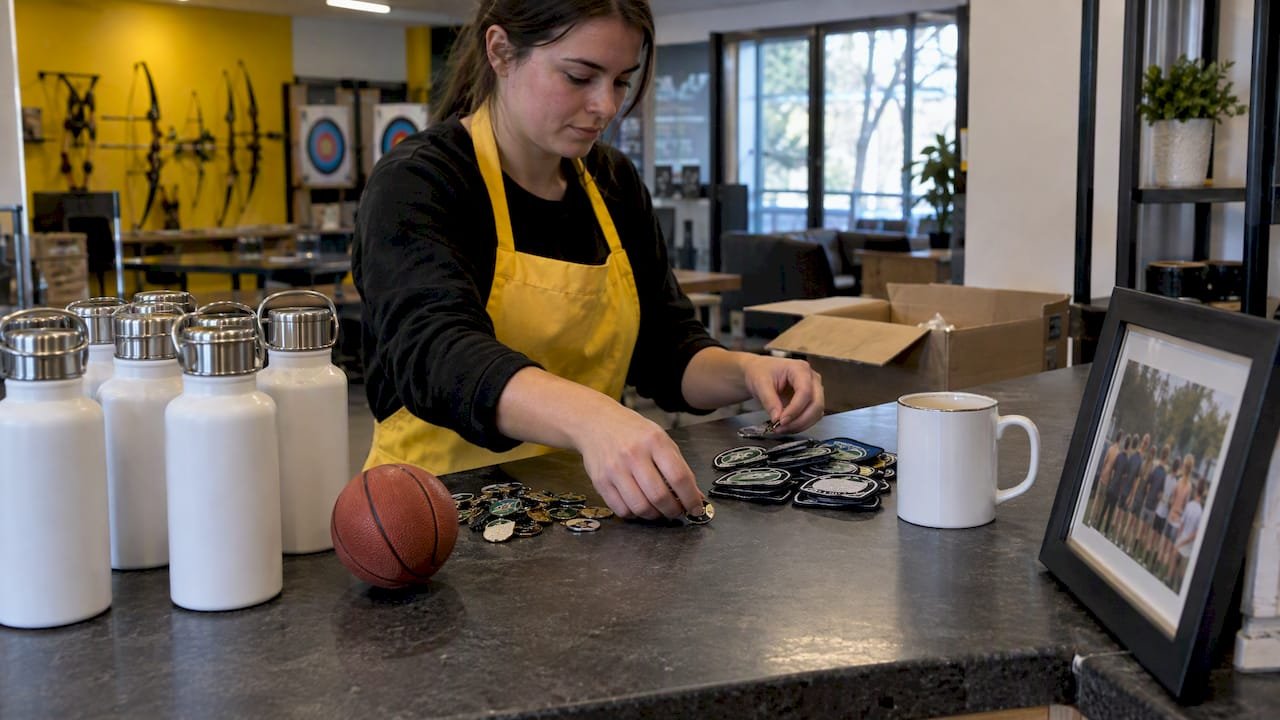
Favors work best when they’re small, usable, and tied to the season rather than generic trinkets. A team photo keychain or magnet gives families something they’ll actually keep, and personalized water bottles or sport-specific gear bags double as practical items for next season. For younger kids, a grab bag with a mini ball, stickers, and a certificate of participation covers the bases without costing much per child.
For teams looking to mark a strong season, a custom patch or pin that players can add to a jacket or bag creates a lasting memento that beats a disposable trophy. Older teams and adult recreational leagues often prefer something consumable: a team-branded mug, a gift card to a local sports shop, or a shared team photo printed and framed for each player.
Keep favors proportional to your budget: a $3 to $5 per-player favor is plenty for most youth teams, while adult teams sometimes pool funds for a single larger gift, like a framed group photo or a round of drinks at the party itself. Whatever you choose, pair it with the awards segment so the favor distribution doesn’t feel like a separate, bolted-on moment at the end of the night.
7. How we think about organizing team parties
Across kids’ birthdays, adult celebrations, and sports team events, we’ve built our packages around the same planning gaps organizers run into everywhere: budget uncertainty, venue logistics, and too much weight on one volunteer. Splitting roles across food, communications, and activities keeps any single organizer from burning out, and a packaged venue removes most of the setup work entirely. Reach out and we’ll walk through what fits your group.
— Archers
Quick pitch: Archers Battlefield packages worth a look
If you’d rather skip the setup and supervision logistics entirely, we run ready-made packages built for exactly this kind of event. For kids’ teams, our kids birthday party packages cover games, party room space, and food options in one booking. For adult teams or mixed groups, the event packages page lists options like Pong & Party On and Action & Chill Bash, both priced from $299 and $599 respectively.

For season-ending celebrations built specifically around team dynamics, our sports team building event packages, including Game On Team Battle from $399, combine activities with a built-in format so you’re not designing games from scratch. The next step is simple: confirm your date and headcount, then book online or request a planning call to walk through package details.
FAQ
What are some fun ideas for a team party?
A skills challenge relay, a parents-versus-kids game, a trivia night mixing age groups, and a highlights video with an awards ceremony all work well because they require little extra equipment. Picking three or four of these rather than trying to run every idea at once keeps the event manageable for one organizing team.
What are some unique team sports?
Beyond traditional sports, activities like combat archery, dodgeball, and bazooka ball offer team-based formats that work well for group celebrations since they’re built around short rounds and rotating teams. These formats suit mixed-age or mixed-skill groups because they rely more on strategy and reflexes than athletic training.
What are some ideas for a sports day themed party?
A multi-station skills challenge, a wacky sports contest with silly rules, and an obstacle course relay all fit a sports day theme well. Adding team colors or jerseys as a dress code ties the whole event together without extra cost.
What are the top party games for a team celebration?
Trivia, photo scavenger hunts, obstacle relays, and skills challenges consistently work well because they scale to almost any group size and age range. Pairing one high-energy game with one low-energy game, like trivia after a relay, keeps the party’s pace balanced from start to finish.
How far in advance should we plan a team party?
Start inviting guests three to four weeks before the event and confirm a final headcount about two weeks out so catering and venue bookings can be locked in. This timeline gives organizers enough room to assign roles and handle late RSVPs without last-minute scrambling.
Sources
- Designing for inclusion: Practical ways to make sport events more accessible — SIRC
- End-of-Season Party Ideas — SignUpGenius
- Hosting a holiday party? Make a list of legal duties and best practices — Sherrard Kuzz


