
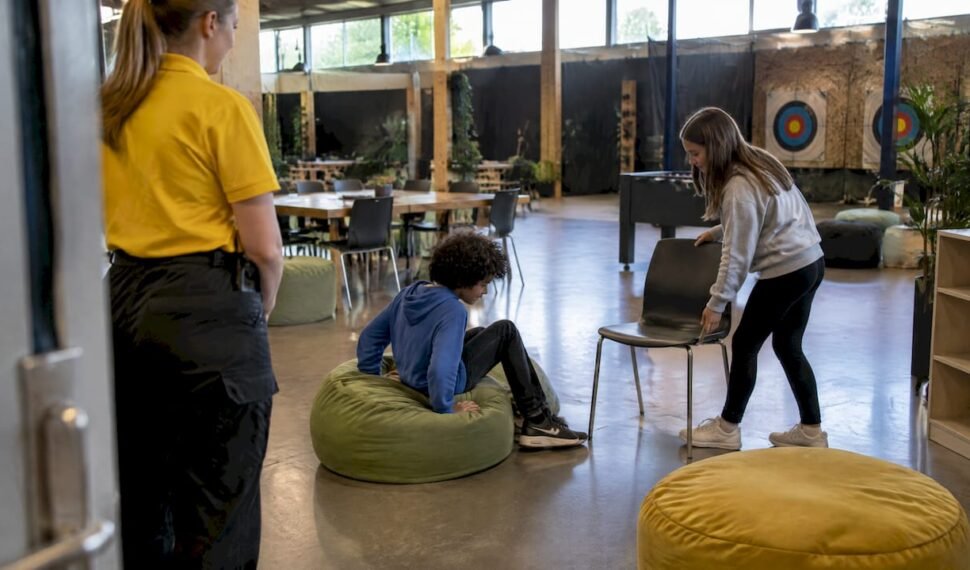
An inclusive birthday party is shorter, structured, and designed so every child can opt in: you share the schedule in advance, set up a quiet zone, choose adaptable activities, and label the food clearly. The Child Mind Institute and Specialneeds both point to the same four moves as the highest-leverage changes a host can make, and none of them cost extra money.
TL;DR:
- Build food, mobility, sensory, and communication questions into the RSVP; follow up about two weeks before the party and offer private contact.
- Before booking, confirm a route without steps, a nearby accessible restroom, adjustable lights and music, clear paths, and a quiet space visible to a supervisor.
- Choose cooperative games with nonphysical roles, offer precut craft pieces, and explain each activity aloud, with a picture, and through a demonstration.
- Keep the party to 60 to 90 minutes, post a visual schedule, give warnings five minutes before transitions, and serve food after the main activity.
Table of Contents
- How do you ask about guest needs without singling anyone out?
- What should you check about the venue before you book?
- Which games let kids of every ability join in?
- How do you prevent overstimulation during the party?
- How do you plan food so every child can eat safely?
- Which party favors work for the widest range of kids?
- What does a sample party timeline look like?
- What we’ve learned running staffed kids’ parties
- Plan an inclusive party with staffed support built in
- FAQ
- Sources
How do you ask about guest needs without singling anyone out?
The easiest way to collect accessibility and sensory information is to build it into the RSVP instead of asking separately later. A short form, sent with the invitation, lets parents share what their child needs while keeping the question routine rather than pointed.
Include fields for:
- Food allergies or dietary restrictions, with space for detail
- Mobility needs, such as wheelchair access or a preference for seated activities
- Sensory sensitivities, including sound, lighting, or crowding triggers
- A preferred way to communicate, in case a parent would rather talk by phone or text than fill out a form
Ask at the time of the RSVP, or follow up about two weeks before the party if replies are slow. For families who want more detail, offer a quick photo or video of the venue, or a simple visual schedule of how the party will flow. Keep a private contact, a phone number or a direct message thread, open for anything a parent would rather not put in writing on a shared invite.
What should you check about the venue before you book?
Venue accessibility is usually about small, fixable details rather than major renovations. Accessibility Standards Canada recommends wide doorways, accessible restrooms, clear wayfinding, and quiet or low-stimulation spaces as baseline features for spaces serving children.
Before booking, confirm:
- A step-free entrance and clear path from parking to the party area
- At least one accessible restroom near the main space
- Seating options at different heights, including a spot for a wheelchair or stroller
- Open sightlines so a parent or caregiver supervising from the side can see the whole room
- A clear, uncluttered path between activity stations
Ask staff directly whether they can dim lights, lower music on request, and provide a staff member to assist a guest who needs it. Also ask about capacity limits, since a crowded room raises noise and stimulation for everyone.
Pro Tip: Set out at least two seating styles, floor cushions and chairs, so kids can choose what’s comfortable, and walk the room yourself beforehand to check that a supervisor can see every corner.
Which games let kids of every ability join in?
Games work best when they reward creativity and teamwork instead of speed or physical skill, since that levels the field for a mixed-ability group. Try these:
- Buddy scavenger hunt: pair an older or more mobile child with a younger or less mobile one so both contribute to finding items.
- Pre-cut craft station: offer templates and pre-cut pieces alongside scissors, so kids with fine-motor differences can still finish a project.
- Cooperative relay: swap speed-based tasks for team puzzles where everyone has a job, like clue-reader or scorekeeper.
- Sensory bin station: a quiet table with textured materials for kids who need a break from louder games.
- Movie corner: a low-stimulation alternative running the whole party for anyone who needs a change of pace.
- Decorate-your-own-cookie table: a seated, low-pressure activity that doubles as a snack break.
Give instructions three ways: say them out loud, show a simple picture or card, and demonstrate the first round yourself. A script as simple as “we’re going to find five items on this list, you and your buddy work together” covers verbal and sets up the demo. Our mixed-age party games guide has several more ready-to-run rounds with adaptation notes built in.
Pro Tip: Assign non-physical roles, like clue-reader or team strategist, so kids with mobility differences still have a visible, valued job in every game.
How do you prevent overstimulation during the party?
A recharge zone works best when it’s framed as optional, not a consequence. The Child Mind Institute recommends stocking it with calming items like noise-canceling headphones, fidget toys, or a weighted lap pad, and calling it a “recharge spot” rather than a time-out, since that framing reduces stigma among peers.
Keep the rest of the room steady too:
- Play music at a low, consistent volume instead of loud or variable tracks
- Skip poppers, balloon bursts, or sudden loud noises
- Use adjustable or natural lighting where possible, and avoid strobe effects
- Place the recharge zone slightly apart from the main activity but still visible to a supervisor
Sharing a schedule or venue photos in advance is one of the most effective sensory accommodations hosts can make, according to the Child Mind Institute, since it gives children with sensory processing differences time to prepare mentally for what’s coming.
How do you plan food so every child can eat safely?
Buffet-style, self-serve food reduces both stress and cross-contact risk. Eatright recommends offering plain, easy-to-eat options and labeling allergens clearly so kids and parents can see at a glance what’s safe.
A few practical moves:
- Label common allergens (nuts, dairy, gluten, eggs) directly on or next to each dish
- Offer at least one plain option, like a basic cracker or fruit tray, that almost every diet can handle
- Seat sensory-sensitive eaters slightly apart from the loudest part of the table, without making it obvious why
- Serve food after the main activity rather than during it, so eating doesn’t compete with sensory input from games
Handle any special meals quietly, placing them at the same table rather than calling attention to a separate plate.
Which party favors work for the widest range of kids?
Favors are easier to get right than most hosts expect. Stick to non-latex, non-edible items when possible: stickers, small coloring kits, or tactile toys that don’t make noise. Skip anything with poppers, whistles, or sudden sounds, since those can startle sensory-sensitive guests.
- Set up a pick-your-favor table instead of handing out identical pre-packed bags
- Label any edible favors with allergens clearly, the same way you label party food
- Offer at least one non-toy option, like a coloring sheet, for kids who prefer a quieter takeaway
For a Canada-based option, Loot’s by Shiry supplies allergy-aware, customizable favors if you’d rather order than assemble your own.
What does a sample party timeline look like?
SpecialNeeds.com points to shorter parties, around 60 to 90 minutes, paired with a visual schedule as one of the simplest ways to reduce overstimulation and keep more kids engaged through the end.
- 0 to 15 minutes: free play or arrival activity, low structure
- 15 to 40 minutes: main group activity, with a buddy or team format
- 40 to 55 minutes: food and cake, served after the activity winds down
- 55 to 75 minutes: optional second activity or quiet craft table
- 75 to 90 minutes: wind-down and goodbyes
Give a five-minute warning before each transition, then a “finish in one minute” cue right before switching activities. A printed or drawn visual schedule posted near the entrance helps kids track what’s next without asking. Our birthday planning timeline and printable checklist walk through this sequence step by step.
What we’ve learned running staffed kids’ parties
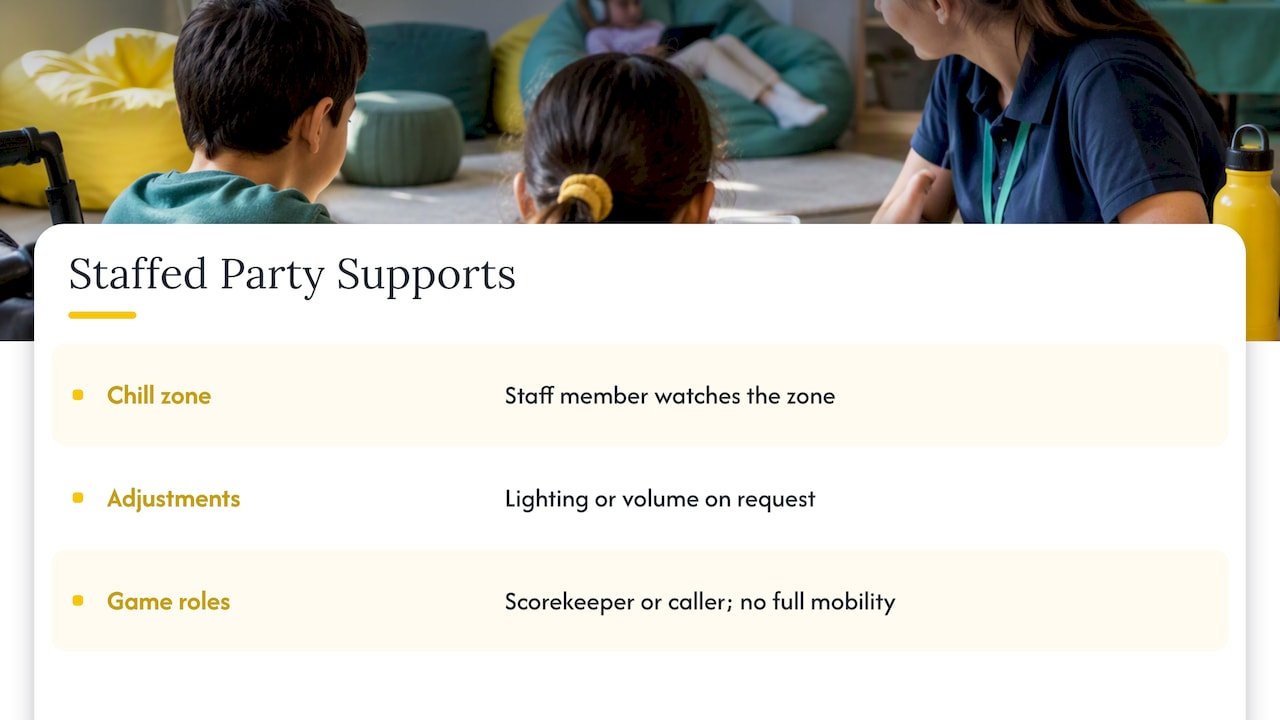
Running group activities for mixed-age, mixed-ability birthday groups taught us that the checklist above works best when someone is dedicated to watching for it in real time. We staff a chill zone during kids’ parties, keep a team member ready to adjust lighting or volume on request, and build games with roles that don’t require full mobility, like scorekeeper or caller. If you have a specific accessibility question before booking, we’re glad to talk it through directly.
Plan an inclusive party with staffed support built in
If you’d rather hand off the sensory checks, the seating logistics, and the game adaptations to someone on-site, our kids’ birthday party packages include a staffed setup where we handle transitions, activity pacing, and a quiet space as part of the booking. The Game On Birthday Party starts at $399, the Epic Birthday Party at $499, and the Momentum Birthday Party at $2,395, each listed on our kids’ birthday packages page.

Before you book, confirm accessible restroom access, staff availability to assist a guest, and how customizable the activity list is for your group. A quick checklist to bring to that conversation:
- Ask whether lighting and music can be adjusted during the party
- Confirm a quiet or low-stimulation space is available on-site
- Check which games can be modified for mobility or sensory needs
Our event packages page covers broader options if you’re planning for a mixed-age group beyond kids’ birthdays. Reach out through our booking page to ask about accessibility support before you confirm a date.
FAQ
How do you plan a birthday party on a low budget?
Keep the guest list smaller, choose a free or low-cost venue like a backyard or community room, and focus spending on one memorable activity instead of spreading it across decorations and favors. Buffet-style food and a pick-your-favor table also cut waste and cost at the same time.
What are some unique birthday party ideas?
A buddy scavenger hunt, a cooperative relay with assigned roles like scorekeeper or clue-reader, and a sensory-friendly craft station all stand out because they let kids of different abilities contribute in their own way. Pairing an activity-led venue option, such as archery or arcade games, with a quiet corner for breaks also makes for a memorable, low-stress party.
Is $500 a lot for a birthday party?
Whether $500 is a lot depends on group size, venue, and what’s included, since a packaged party with staff support and activities covers more than a DIY setup at the same price point. Our Epic Birthday Party starts at $499 and includes staffed activities as a reference point for that budget range.
How do you celebrate a birthday on a low budget?
Shorten the party to 60 to 90 minutes, which also happens to reduce overstimulation according to SpecialNeeds.com, and lean on simple games that need little equipment, like a buddy scavenger hunt or a craft table with pre-cut materials. Serving one plain, labeled food option instead of a full spread also keeps costs and complexity down.
Sources
- Sensory-Friendly Party Ideas – Child Mind Institute
- Specialneeds
- 13. Reception areas – Accessibility Standards Canada
- Eatright


