

Yes, dodgeball works as a youth-group bonding night when you structure it instead of letting kids free-play. Pick a format that fits your group size, read out safety rules before the first ball flies, and slot in short team-building moments between rounds. Do those three things and a dodgeball night stops being chaos and starts being a real team-bonding tool.
TL;DR:
- A dodgeball night for over 30 participants should include splitting into stations or multiple courts to keep everyone active and engaged.
- Safety rules such as no headshots and maintaining a safe throwing distance must be communicated clearly and confirmed before play begins.
- Incorporating team-building moments like selecting team goals or awarding assist points enhances social bonding during active games.
- Using foam balls for younger or mixed-ability groups reduces injury risk and is recommended regardless of group size for safety.
- Hosting a 90-minute session, including warm-up, multiple game blocks, breaks, and a debrief, ensures a structured and enjoyable experience for all participants.
Table of Contents
- Choosing the Right Youth Group Dodgeball Night Format
- Setting Safety Rules and Supervision for a Dodgeball Night
- Building Team Bonds Into the Game Itself
- A Sample 90-Minute Run Sheet You Can Copy
- Equipment and Venue Checklist for Youth Dodgeball Night
- Making Dodgeball Work for Every Skill Level
- What Running These Nights Has Taught Us
- Let Us Run the Night So You Can Just Show Up and Coach
- Sources
- FAQ
Choosing the Right Youth Group Dodgeball Night Format
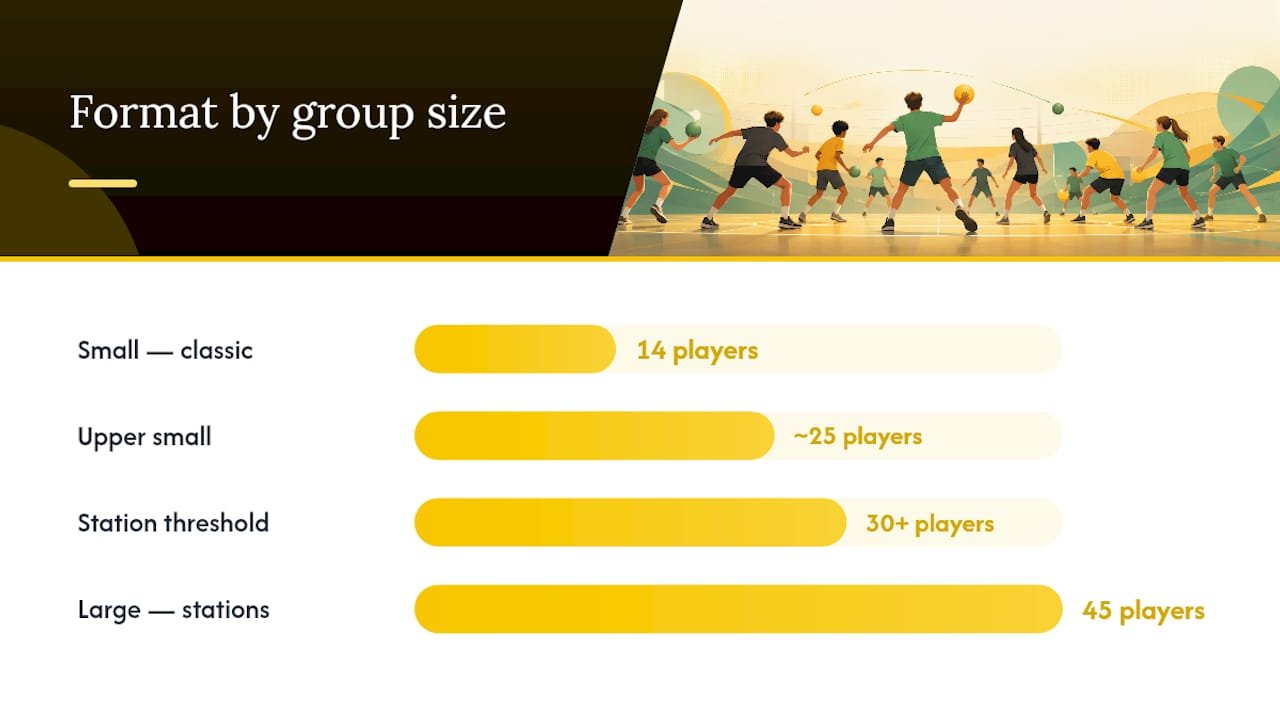
The format you pick should match your headcount before it matches your enthusiasm. A dodgeball night for 14 kids looks nothing like one for 45, and picking the wrong setup is the fastest way to end up with a gym full of bored teenagers standing against the wall.
Classic team dodgeball is still the default for a reason. Split into two teams of about half a dozen to a dozen each, standard elimination or timed rounds, and it runs cleanly for small to medium groups. This is the format most leaders picture when they hear “dodgeball night,” and it’s the easiest to explain in thirty seconds flat.
Once the group gets larger, a single court turns into a waiting line. That’s when you split into stations or run multiple simultaneous courts, which keeps everyone moving instead of watching from the sideline for long periods. Youth group activity guides recommend exactly this for large crowds, since long wait times are what kill energy at bigger events faster than anything else.
For younger kids or mixed-ability groups, drop the rubber balls entirely. Foam or “marshmallow” dodgeball variants cut injury risk while keeping the game recognizable, and they’re a smart default whenever you’re not sure how physical your group wants to get.
Beyond straight dodgeball, a few hybrid formats keep repeat nights fresh:
- Spud works well for 10 to 30 players and needs almost no setup, just a soft ball and a number called out
- Capture-zone dodgeball, where eliminated players can re-enter by tagging a zone
- Multi-ball chaos rounds, running three or four balls at once for short, high-energy bursts
A rough sequence for picking your format:
- Count your confirmed attendees
- Under 25, run classic team dodgeball on one court
- Over 30, split into stations or parallel courts
- Mixed ages or first-timers, default to foam balls regardless of group size
Spud and similar throwing games scale easily with extra balls or themed variations, which makes them a solid backup if your primary court runs long.
Setting Safety Rules and Supervision for a Dodgeball Night
Every dodgeball night needs a spoken safety brief before the first throw, not a rulebook nobody reads. Gather everyone, state the rules out loud, and confirm they understood before the whistle blows.
The non-negotiable rules to read aloud:
- No headshots, ever. A hit above the shoulders doesn’t count and the thrower sits out one round.
- Keep a safe throwing distance. No point-blank throws at close range.
- No sliding, diving, or tackling for a ball.
- One referee per court has final say on disputed calls.
Supervision matters more than most leaders expect going in. A workable ratio is one adult supervisor per court plus one floating adult for first aid and general oversight, more if your group skews younger or includes first-timers. Program providers running junior dodgeball sessions consistently point to a clear safety brief and on-court supervision as the baseline, not an optional extra.
Before play starts, have on hand: a basic first-aid kit, a printed emergency contact list, and an agreed pause signal, usually a whistle blast or a raised hand, that stops play instantly if someone’s hurt.
Set up the court with a visible centerline, taped or coned boundaries, and a spectator zone at least a few feet back from the sidelines. This keeps stray balls from clipping bystanders and gives the referee a clean line of sight.
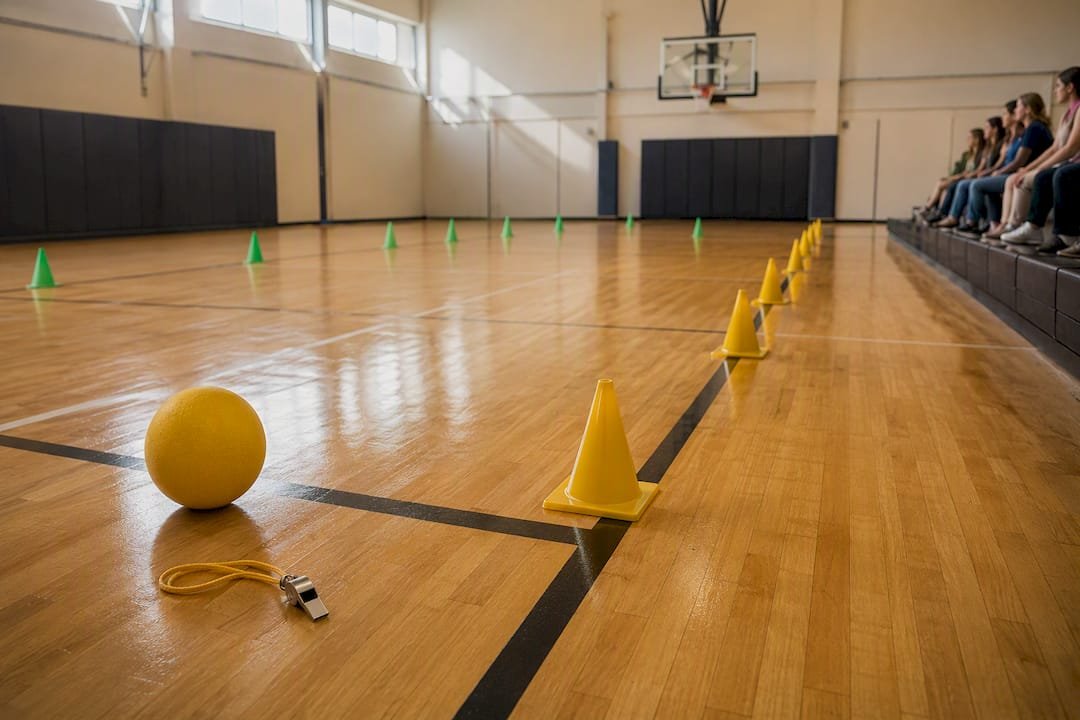
Pro Tip: Assign one “conflict corner” near the court where disputed calls get settled in ten seconds flat, not a five-minute argument that stalls the whole game. Whoever’s reffing makes the call, both teams move on.
Building Team Bonds Into the Game Itself
Dodgeball builds team spirit only when you engineer moments for it, not by accident. Youth ministry research on structured play finds that deliberately adding team-builder moments to high-energy games creates stronger social outcomes than just letting kids play unstructured rounds.
Three simple interventions do most of the work:
- Before the game, give each team 90 seconds to pick a team name and one shared goal for the night, not just “win,” but something like “everybody throws at least once.”
- During breaks between rounds, award “assist points” for setting up a teammate’s catch or covering someone who got hit early, and rotate the team captain every round so leadership doesn’t sit with the same one or two kids all night.
- After the final round, run a 60-second debrief: what worked, who covered for a teammate, what they’d try differently next time.
Keeping reflection checkpoints to two or three minutes matters. Stretch them longer and you lose the energy the game built up.
Pro Tip: Skip the “most valuable player” award entirely. Give a “best teammate” award instead, voted by the players themselves. It rewards exactly the behavior you’re trying to build.
Measuring success doesn’t require a survey. Watch for participation across the whole roster, not just the loudest kids, and listen for spontaneous encouragement between throws. That’s the signal the format is working.
A Sample 90-Minute Run Sheet You Can Copy
- 0 to 10 minutes: Arrival, equipment check, assign referees and first-aid point person
- 10 to 20 minutes: Warm-up game and quick icebreaker, low intensity, gets bodies moving and breaks the ice before real play starts
- 20 to 45 minutes: Core game block one, full teams, standard rules, one round rest between games
- 45 to 55 minutes: Water break and a low-energy option, a seated trivia round or quiet mixer for anyone who needs to catch their breath
- 55 to 80 minutes: Core game blocks two and three, rotate captains, introduce a hybrid format like Spud for variety
- 80 to 90 minutes: Wrap-up debrief, best-teammate award, announce next event
Warm-up games and short icebreakers before active play cut injury risk and get kids engaged faster than jumping straight into full-contact rounds.
Equipment and Venue Checklist for Youth Dodgeball Night
Ball choice depends entirely on age and how physical you want the night to get. Softer foam balls suit younger kids or first-time players, while standard rubber dodgeballs work fine for teens who’ve played before and want more speed.
Before you commit to a venue, check three things: floor surface, since carpet slows the ball and hardwood speeds it up, ceiling clearance for high throws, and clearly marked emergency exits.
Pack list for the night:
- Cones or floor tape for boundaries
- Colored bibs or vests to separate teams at a glance
- A whistle and stopwatch for the referee
- A first-aid kit and printed contact sheet
- Water bottles or a water station
Optional extras that lift the energy without adding cost: a playlist for between-round downtime, a simple scoreboard, and small prizes for participation rather than just winning.
One detail worth flagging: foam-based ball variants paired with a strict no-head rule are two of the simplest safety controls you can put in place immediately, no extra budget or training required.
Making Dodgeball Work for Every Skill Level
A dodgeball night only builds team spirit if nobody’s sitting out feeling excluded. A few rule tweaks fix that without diluting the fun:
- Switch to a lives system instead of single-hit elimination, so one early hit doesn’t end someone’s night
- Add shared team goals, like total assists, so the score isn’t the only thing that matters
- Create role-based positions, designated throwers, catchers, and “encouragers” who cheer and strategize from the sideline
- Adjust the court size or add seated zones for anyone with mobility limits or sensory sensitivities
Tell participants and guardians about these adaptations ahead of time, in the sign-up message or the welcome announcement. A quick heads-up removes the awkwardness of explaining a rule change mid-game and lets kids opt into the role that fits them best.
What Running These Nights Has Taught Us
The most common mistake we see is leaders skipping the safety brief because “everyone knows how dodgeball works.” They don’t, not the version with a no-headshot rule and a lives system. A five-minute brief prevents most disputes before they start. One group that switched from single-elimination to a lives system saw kids who’d normally sit out the whole night stay engaged through the final round. The takeaway: structure the game before you play it, not after something goes wrong.
— Archers
Let Us Run the Night So You Can Just Show Up and Coach
Planning a dodgeball night from scratch means chasing down foam balls, taping boundaries, and hoping your one volunteer referee doesn’t have to settle every disputed call. Private session bookings typically include equipment, supervision, court setup, and a safety brief before play begins.

Our dodgeball activity page covers what a venue-managed session includes, and our team-building programs show how we layer cooperative challenges into active games rather than leaving that to chance. Groups that want a full evening can also pair dodgeball with a second activity from our categorized games index to keep energy up across a longer booking.
Check dates and group pricing through our private events page, or send us your headcount and preferred night and we’ll confirm availability directly.
Sources
FAQ
What Age Group Is Best for a Youth Group Dodgeball Night?
Dodgeball adapts to nearly any age group once you adjust the ball type and rules; foam balls and a lives system suit younger kids, while standard rules work fine for teens.
How Many Adults Should Supervise a Dodgeball Night?
Plan for at least one adult supervisor per court plus one floating adult for first aid, increasing that ratio for younger or first-time groups.
How Long Should a Youth Group Dodgeball Night Run?
A 90-minute session works well for most groups, covering warm-up, three core game blocks, a hydration break, and a wrap-up debrief.
Can Archers Battlefield Host a Youth Group Dodgeball Event?
Yes, our dodgeball sessions are set up for group bookings, including equipment, supervision, and a safety brief, with pricing and availability available through our booking page.
What Equipment Do We Need for an Outdoor Youth Dodgeball Game?
You need boundary markers, soft or standard balls depending on age, team bibs, a whistle, and a basic first-aid kit, plus a check on the playing surface and clear space around the court.


