
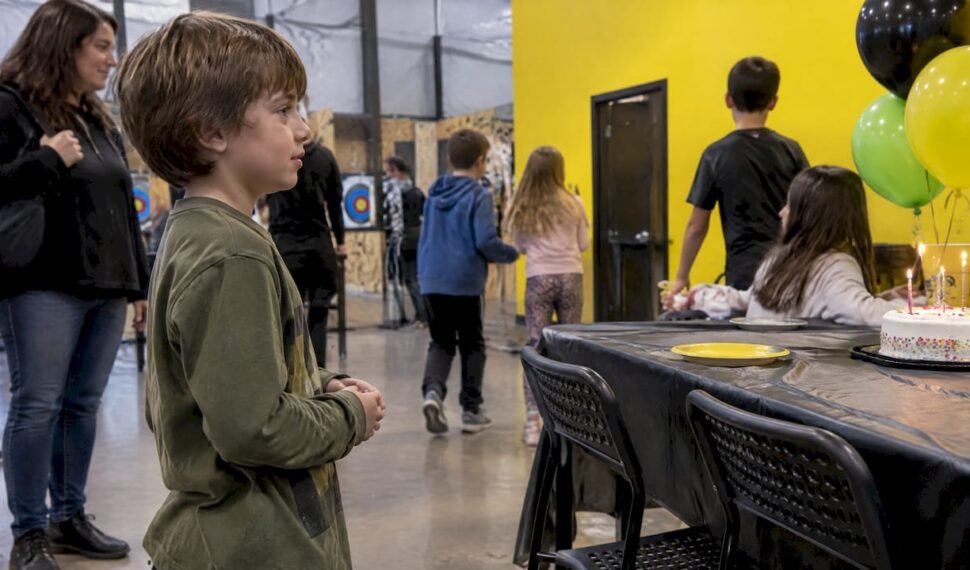
A sensory-friendly birthday is not a smaller party. It is a party where the noise, the pace, the crowd and the food are planned around how your child and their guests actually experience the world. The best ideas share three traits: activities that happen in short, structured turns, a quiet place to step away, and no surprises, because everyone knows the plan beforehand. At Archers Battlefield we build birthday parties around group size and the activities each child enjoys, and our team helps plan the day with you, so the plan can be shaped around your child from the first call.
TL;DR
- Choose active games with clear rules and limited, timed turns, so nobody waits in a crowd or gets overwhelmed.
- Set up a quiet spot before the party starts and tell your child where it is.
- Send an invitation with a short schedule and ask each parent about sensory, food and allergy needs.
- Plan the food around what your child will actually eat, and skip the candle ritual if singing or flames are too much.
- At a venue, ask about group size, noise and room options before you book, and say what your child needs.
Table of Contents
- What “sensory friendly” means for a birthday
- Activity ideas that work with sensory needs
- Plan the setting and the schedule
- Give every child a quiet place to reset
- Food, cake and the candle moment
- Invitations and preparing the guests
- Preparing your child on the day
- Planning a sensory-aware party with us
- Our perspective
- FAQ
- Sources
What “sensory friendly” means for a birthday
Some children are bothered by loud sound, bright light, strong smells, unexpected touch or constant movement around them. Others seek movement and pressure and are happiest when they can run, push and throw. A birthday party can contain all of this at once: a crowd, a song, flashing lights, cake, balloons popping. Children’s Treatment Network, an Ontario children’s rehabilitation organization, names sound, smells and movement as common sources of overstimulation at parties.
So the goal is not to remove fun. It is to give each child control: what they do, for how long, and where they can go when it gets to be too much. If you remember one rule, make it this one. Start from your child’s own preferences. Pennsylvania’s autism services collaborative, ASERT, recommends choosing a location and activities your child already knows and getting their input where possible. A child who picked the games is far more likely to enjoy them.
Activity ideas that work with sensory needs
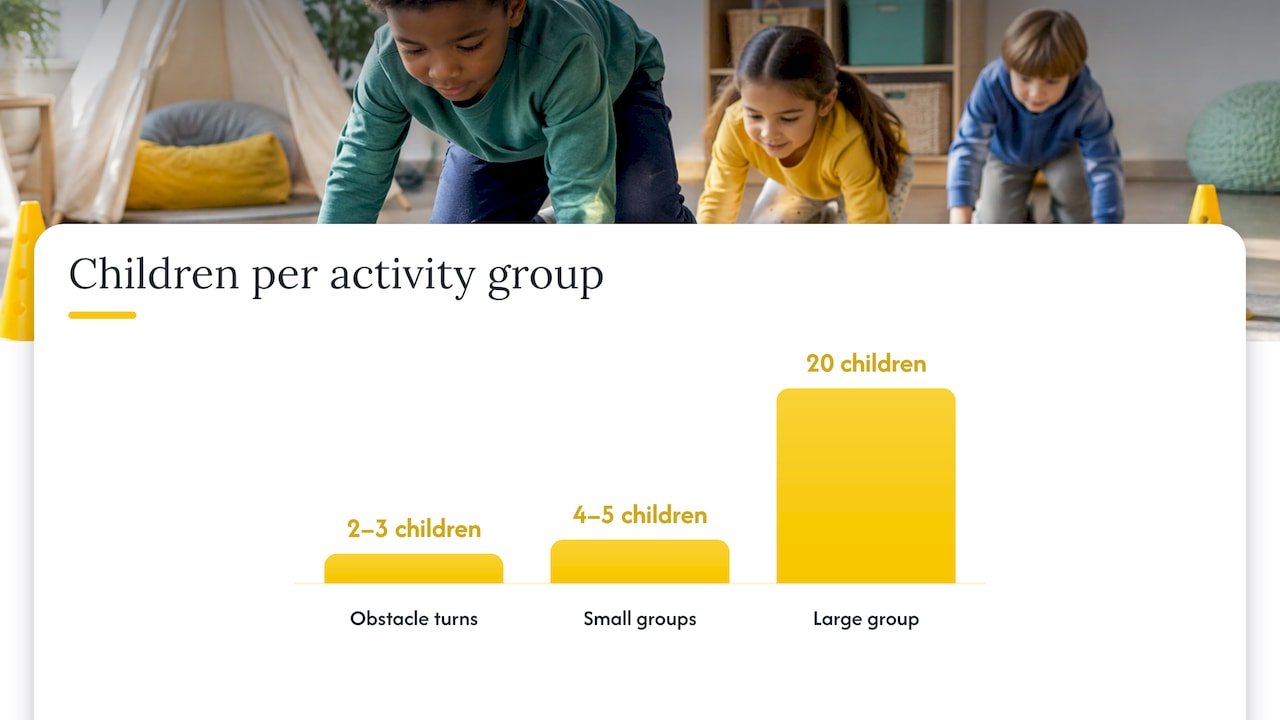
The Child Mind Institute, a children’s mental health nonprofit, suggests movement activities such as obstacle courses or trampolines, with a limited number of children taking part at once and consistent timed turns. The same guide lists water play, collaborative scavenger hunts, crafts where each child gets their own set of materials, fingerpainting, and short films with individual seating.
The pattern is useful beyond that list. Good sensory-friendly activities usually have:
- A clear start and finish. A round lasts a few minutes, then it is over.
- Small groups. Four or five children at a time, not twenty.
- A visible rule set. Children know what happens next.
- A way to opt out. Watching from the side is a valid way to attend.
Here is how common party formats line up with those traits.
| Idea | What suits sensory needs | How to adjust it |
|---|---|---|
| Obstacle course or movement stations | Heavy movement, timed turns, a clear route | Two or three children per turn, a visual order of stations |
| Water play | Calming for many children, easy to do in small groups | Offer towels and a dry change of clothes |
| Crafts and fingerpainting | Hands-on, individual materials, no competition | Give each child their own set so nobody has to share |
| Scavenger hunt | Cooperative, no winners and losers | Pair children up and use pictures as clues |
| Short film | Seated, predictable, easy to leave | Individual seats, with the volume agreed ahead of time |
| Ping pong or paddle games | Small groups, simple rules, short rallies | Rotate players every few minutes |
| Foam-dart or foam-ball games | Active play with a clear goal and a team structure | Short rounds, with a break between each |
If your child loves action, you do not have to avoid it. Many children who dislike crowds and noise still thrive in structured active play, because the rules are clear and the turns are short. Our Nerf battle and party games for mixed ages are run in rounds, which makes it easy to build in the pauses described above.
Plan the setting and the schedule
Predictability does most of the work. The Child Mind Institute suggests dividing the party into activity zones children can move between, with music and dancing kept apart from quieter activities. A simple version at home or at a venue looks like this:
- An active zone for the main game or games.
- A hands-on zone for crafts or table games.
- A calm zone for resting, reading or just watching.
Keep the party short. Ninety minutes to two hours is plenty for many groups, and a shorter party that ends while everyone is still happy is better than a long one that ends in tears. Put the most demanding part, usually the games, early, when energy is highest, and keep the cake for a calm moment.
If you are booking a venue, ask specific questions rather than general ones. Which rooms are available? How many children will be in the space at once? Can the schedule be adjusted? Our guide to questions to ask an event venue before you book covers what to confirm, and our one-page birthday party checklist helps you build the timeline.
Give every child a quiet place to reset
A quiet space is the single most useful addition to any party. Children’s Treatment Network recommends arranging a quiet space where a child can retreat to regulate on their own or with another child or adult. The Child Mind Institute describes a calm area with pillows, books or simple crafts.
A few practical points:
- Set it up before guests arrive and show your child where it is, so they know it exists.
- Make it a choice, never a punishment. Say it is for anyone who wants a break.
- Keep it dim and soft. Cushions, a blanket and a few quiet items are enough.
- Let a trusted adult stay close. Some children settle fastest with a parent, sibling or support worker nearby.
That last point matters at the door too. The Ontario guidance says to let parents, siblings or support workers accompany children who need support. Say so in the invitation, so a parent never has to ask. If you are working with a venue, ask early how extra adults are handled. Our guide to inclusive birthday party ideas explains how to talk through adjustments and support.
Food, cake and the candle moment
Food is a sensory event: smell, texture, temperature, and sometimes a rule that children must try something. Plan it around what your child will actually eat. The ASERT guide recommends considering food preferences and sensory or dietary needs, and notes that singing and lighting candles may be too much for some children. If that sounds like your child, skip the song, blow out a candle in a quiet moment beforehand, or use cupcakes and a quick photo instead.
Some simple choices:
- Serve plain, familiar items alongside anything new: pizza slices, fruit, crackers, cheese, pasta.
- Keep strong smells away from the calm zone.
- Label ingredients and ask about allergies before the day. Children’s Treatment Network suggests asking guests ahead of time about allergies and feeding differences and using an RSVP form to collect the details.
- Plan the menu around what children will eat. These easy picky-eater meal ideas are a handy place to find simple dishes most kids accept.
If your venue handles food for you, tell the planner what your child eats and what other guests cannot have, and confirm what can be brought from home.
Invitations and preparing the guests
Most sensory trouble starts with surprise, so remove surprise ahead of time. The Child Mind Institute recommends sending an invitation with a short activity schedule and asking invitees’ parents about sensory considerations. Fraser, a Minnesota organization serving autistic children and families, suggests including a visual timeline, photos or illustrations of the venue, and practical details such as parking, entrances, exits, restrooms, food and available accommodations.
A good invitation answers these questions:
- Where is the party, and what does the entrance look like?
- What is the order of events, and about how long is each?
- Will there be loud sounds, music, lights or flying objects?
- Where is the quiet space, and may a parent or support person stay?
- What is on the menu, and what should parents tell you about allergies?
Fraser also recommends explaining potentially challenging parts of the experience in advance and naming the strategies and sensory tools or quiet spaces on offer. If the games involve foam darts or soft balls, say so in plain words and show a picture.
Guest count is a sensory decision as much as a budget one. Fewer children means less noise and fewer collisions. Our kids party guest list guide helps you decide who and how many to invite. For timing, our age-by-age planning timeline shows when to start, and if your venue needs a signed release, our birthday party waiver templates cover the fields to include.
Preparing your child on the day
Children handle events better when they have rehearsed them. Walk through the day with your child using photos, a drawn schedule or a list of steps. Agree on a simple signal, a word or a card, that means “I need a break.” Pack comfort items: headphones, a favourite snack, a fidget or a change of clothes.
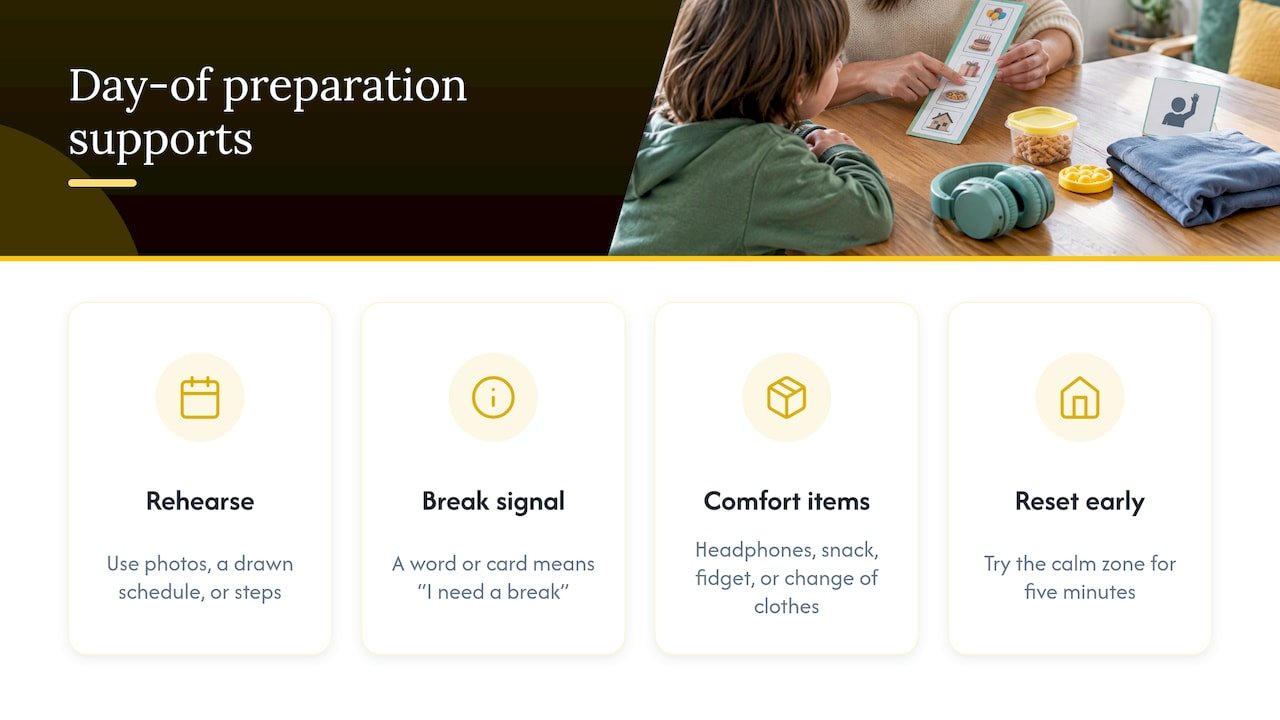
When a child starts to struggle, move early. Changing the surroundings, stepping outside or going to the calm zone for five minutes usually works better than waiting for things to escalate. A break is not the end of the party. Most children return to the game once they have reset.
Planning a sensory-aware party with us
If you want active play without building the whole event yourself, our kids birthday party packages are built around group size, and our team supports you through the planning. Game On Birthday Party starts at $399 and Epic Birthday Party at $499. For a smaller paddle-based option, Pong & Party On on our event packages page starts at $299. Adult celebrations are covered by the Momentum Adult Birthday Bash, from $2395.

When you inquire, tell us who is coming, what your child enjoys and what they find hard. That lets us shape the party around the guest of honour. You can see all of our activities, from combat archery and Nerf battles to ping pong and dodgeball, on the Archers Battlefield homepage.
Our perspective
Every child has a different threshold for noise, movement and crowds, and a good party respects that without losing the fun. That is why we offer a range of games, from ping pong and dodgeball to combat archery and Nerf battles, and why our packages are customizable to group size.
We think the best parties give children a role and a rhythm. Rounds with a clear start and end, small teams and simple rules make it easy for a child to jump in and just as easy to step out. Safety and positive guest experiences come first for us.
Planning matters more than any single activity. Tell us what your child loves, what bothers them and how many guests are coming, and our planning support helps shape the party so everyone, including the birthday child, enjoys it.
Archers
FAQ
What are good sensory-friendly birthday ideas for an autistic child?
Start with what your child already loves and build the party around it. Structured movement games, crafts with individual materials, water play and short films with seating are all common choices. Keep the group small, the schedule short and a quiet space ready.
How do I make a birthday party less overwhelming?
Control the noise, the crowd and the surprises. Limit the guest list, keep music apart from quieter activities, and send an invitation with a short schedule so everyone knows what to expect. A quiet corner with pillows or books gives any child a place to reset.
Should I skip the birthday song and candles?
You can if they bother your child. ASERT notes that singing and lighting candles can be too much for some children. Many families blow out a candle privately beforehand, or serve cupcakes without the song.
What should I tell other parents before the party?
Share the schedule, the location, what kinds of sounds and activities to expect, and where the quiet space is. Ask about allergies, food needs and any sensory considerations for their child. Let them know whether parents, siblings or support workers are welcome to stay.
Sources
- Sensory-Friendly Party Ideas, Child Mind Institute
- 5 Tips to Make Birthday Parties More Inclusive, Children’s Treatment Network
- Planning a Birthday Party for a Child with Autism, Pennsylvania ASERT
- One Easy Way to Make Your Party More Sensory-Friendly, Fraser


