Activity-based events, low- and no-proof drink socials, outdoor gatherings, and entertainment outings all work better than the traditional bar-and-drinks-tickets model for most groups today. Each category solves a different problem: activities give people something to do besides drink, zero-proof programs remove the pressure to order alcohol, and outdoor options add fresh air and movement. Sober guests and coworkers tend to enjoy all four just as much as anyone else.
TL;DR:
- Offering activity-based events or outdoor gatherings creates shared focus and reduces the need for alcohol at social functions.
- Structured templates such as group walks, mocktail tastings, or scheduled games help replace unstructured, drink-heavy social time with inclusive options.
- Designating sober leaders, managing transportation, and clearly labeling allergens lower risks and foster a more inclusive environment for all guests.
- The rise in infrequent drinking and health-conscious attitudes among Canadians makes genuine alcohol-free programs and venues more expected and accepted.
- Booking ready-made experiences, like those from Archers Battlefield, simplifies planning and ensures engaging, alcohol-free group activities.
Table of Contents
- 1. Practical activities you can book or organize this week
- 2. Work-appropriate templates HR and team leads can copy
- 3. Hosting steps that reduce risk and improve inclusion
- 4. Why alcohol-free socializing is gaining ground right now
- 5. Archers Battlefield: a ready, bookable activity-based alternative
- 6. Budget-friendly ways to socialize without alcohol
- 7. How social drinking traditions differ from place to place
- 6. Quick editorial view: rotate formats and treat this as an upgrade
- 7. Book a session instead of planning one from scratch
- Sources
- FAQ
1. Practical activities you can book or organize this week
The fastest way to replace a drinks-only gathering is to give people something to do. Activity-based events work because they create a shared focus, so conversation happens around the task instead of around the bar.
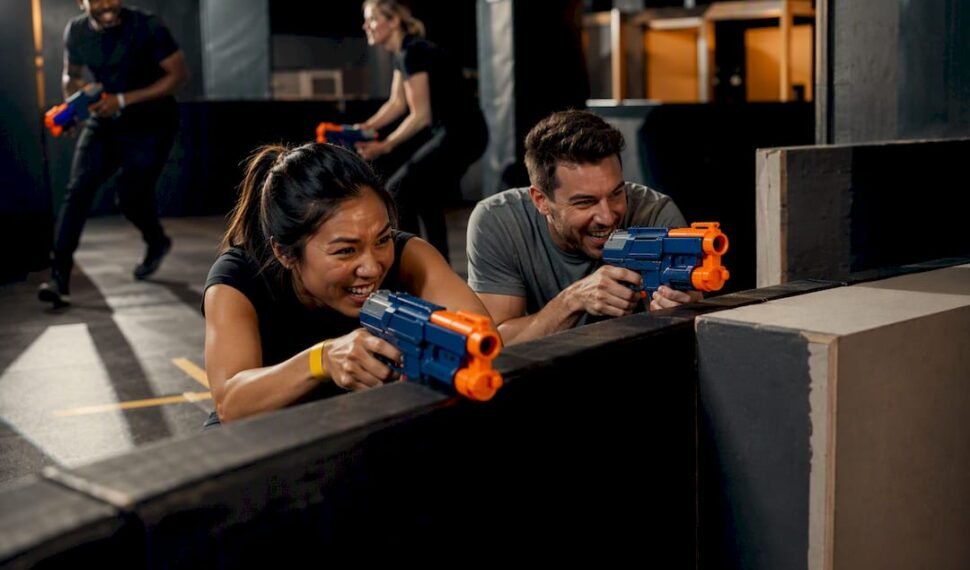
Combat-style games like archery tag, Nerf battles, and dodgeball are popular for this reason: they’re structured, time-boxed, and require no drinking to enjoy — see more Jeux d’ambiance pour adultes. Axe throwing and bowling work the same way, and escape rooms add a problem-solving angle that keeps quieter guests engaged. If you want a plug-and-play version, Pong style games and full-length Nerf Battle sessions are built for exactly this kind of group hour.
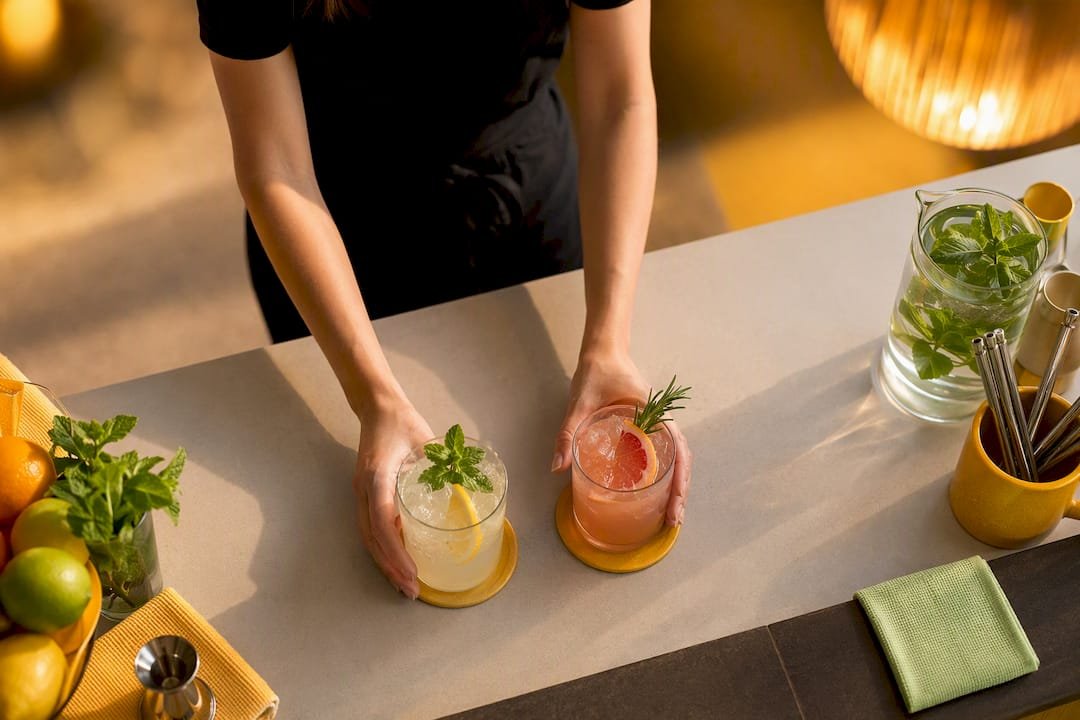
Low- and no-proof drink socials are the second big category. A morning coffee hour, a mocktail tasting, or a zero-proof beer and wine night gives people the ritual of a drink without the alcohol. The trick is treating the non-alcoholic menu with the same care as a cocktail list: fresh citrus, real syrups, interesting bitters substitutes, and a few house specialties rather than a lone can of soda.
Outdoor and active options cost little and travel well. A few reliable formats:
- A group walk or short hike at a local trail, free aside from parking.
- A casual pickup game of volleyball, soccer, or ultimate frisbee at a park.
- A group bike ride with a coffee stop at the halfway point.
- A weekend picnic potluck that doubles as a low-cost social hour.
Weather is the main constraint, so keep a rain-check plan (a board game café or bowling alley) ready.
Culture and entertainment outings round out the list. Trivia nights, small comedy shows, local concerts, and after-hours museum events all give groups a shared experience to talk about afterward. Book ahead for trivia and comedy, since popular spots fill fast on weeknights.
For remote or hybrid teams, virtual-first options close the gap: online trivia platforms, a guided virtual cooking or mixology class using non-alcoholic ingredients, or a multiplayer game night over video call. These cost little and need almost no setup beyond a shared link.
Pro Tip: Pick one activity-based option and one low-key conversational option each month so different personality types both get a format they enjoy.
2. Work-appropriate templates HR and team leads can copy
Replacing a drinks-focused gathering at work doesn’t require a big production. It requires structure, since unstructured time is exactly what makes alcohol feel like the default activity.
A few templates that work with minimal planning:
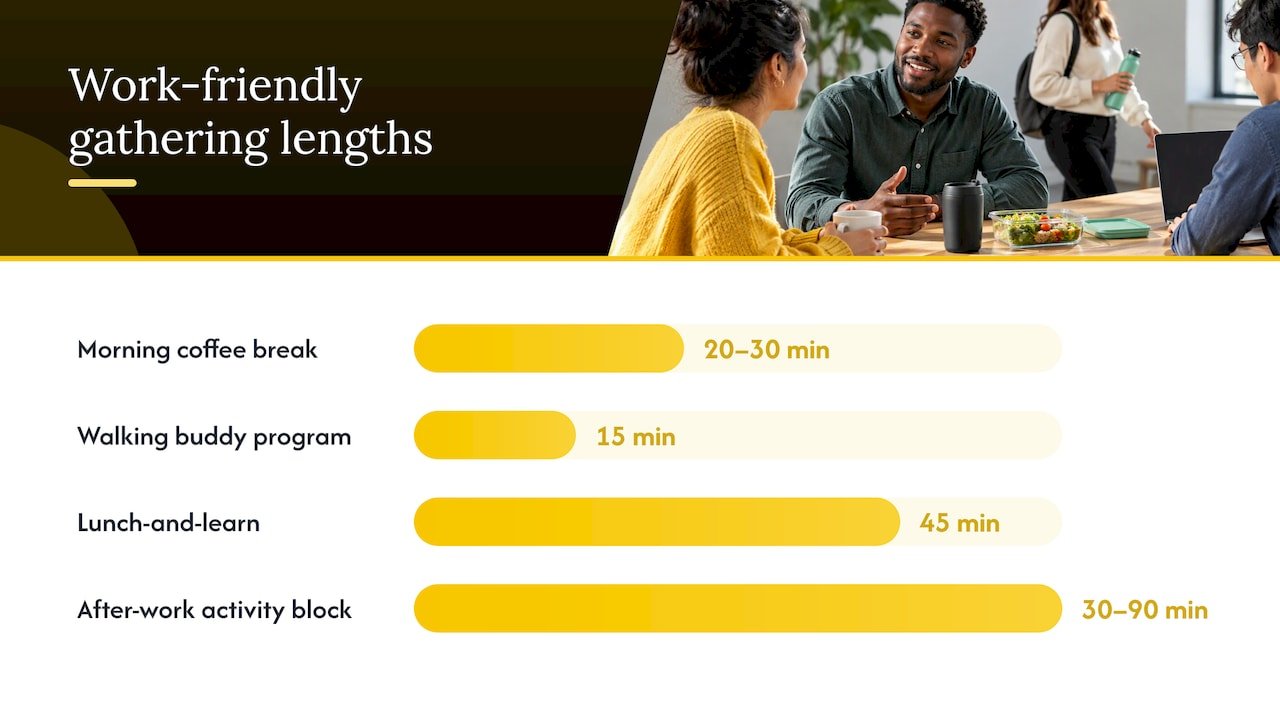
- Morning coffee break: 20 to 30 minutes, coffee and pastries, no agenda beyond casual conversation.
- Walking buddy program: pair up coworkers for a 15-minute walk once a week, rotating pairs monthly.
- Lunch-and-learn with an interactive piece: 45 minutes, a short presentation followed by a hands-on activity or quiz.
- After-work activity block: 30 to 90 minutes, a booked activity (bowling, an archery session, trivia) with a clear start and end time.
A simple agenda for the after-work option: five minutes to gather and do a quick icebreaker, the main activity for the bulk of the time, and a short close where people can leave without lingering awkwardly.
Invite language matters as much as the activity. Use wording like “optional, no pressure to attend” and “non-alcoholic drinks and snacks provided” so attendance doesn’t feel mandatory and sober guests don’t feel like an afterthought. CMHA British Columbia recommends offering curated mocktails and engaging entertainment such as games, music, or activities so people who don’t drink still feel included rather than accommodated as an exception.
Put the non-alcoholic options first on any drink menu or signage, not tucked at the bottom under the beer list. That small ordering choice signals they’re a real option, not a fallback.
3. Hosting steps that reduce risk and improve inclusion
A few practical choices lower both legal exposure and the chance that someone feels left out.
- Designate a sober manager or two who stay alert and can step in if needed.
- Offer drink tickets instead of an open bar to create a natural cap.
- Arrange transportation or rideshare credit rather than assuming people will sort it out themselves.
- Label food clearly for common allergens and dietary needs.
- Confirm the venue is physically accessible before booking.
- Keep food circulating throughout the event rather than serving it all at once.
Avoid pairing alcohol with physical activities such as axe throwing or archery. If the event includes movement-based games, run those first and save any drinking for afterward, or skip alcohol at that event entirely.
Employer guidance from Sherrard Kuzz recommends a formal alcohol policy, drink tickets over an open bar, non-alcoholic options, arranged transportation, and designated sober leaders as standard best practice for any workplace event that includes drinking.
Total alcohol sales in Canada declined modestly in value and volume in the most recent fiscal year measured, according to Statistics Canada. Fewer drinkers at any given event means these precautions matter more, not less, since a smaller group of drinkers can still create outsized risk if unmanaged.
4. Why alcohol-free socializing is gaining ground right now
The abstention rate among Canadian adults has risen notably over the past decade, and among those who still drink, the share drinking infrequently has also increased, according to Statistics Canada. This reflects a meaningful shift in drinking patterns.
Health concerns, cost, and a broader sober-curious cultural shift are all pushing this along. Venues and event organizers are responding with real non-alcoholic beverage programs instead of an afterthought soda option. For anyone planning a gathering, this means guests increasingly expect a genuine alcohol-free choice, not a consolation prize, and events built entirely around activity or atmosphere now read as thoughtful rather than unusual.
5. Archers Battlefield: a ready, bookable activity-based alternative
If you’d rather book something than build an agenda from scratch, Archers Battlefield runs combat archery, Nerf battles, bazooka ball, dodgeball, ping pong, axe throwing, and arcade games at one venue. The format does the heavy lifting that a happy hour usually leaves to the bar: a clear activity, a set time block, and a shared goal that gets a group talking without a drink in hand.
Packages are built for different group types and sizes, from casual friend groups to full corporate teams, with event planning support included so organizers aren’t figuring out logistics alone. Safety and a genuinely fun guest experience are treated as the baseline, not an add-on, which matters when you’re mixing skill levels or ages in the same session.
6. Budget-friendly ways to socialize without alcohol
Skipping the bar tab often means the event costs less overall, not more. A park picnic, a group walk, or a living-room game night costs close to nothing beyond snacks, and a rotating potluck spreads that cost across the whole group instead of one host.
Free and low-cost options worth building a rotation around:
- Public trivia nights at cafés or libraries, often free to attend.
- Board game cafés with a flat per-person fee that covers unlimited play.
- Community fitness classes or free outdoor yoga sessions.
- A home cooking or mocktail-making night where everyone brings one ingredient.
For groups that want a bookable activity without a big price tag, short group sessions on games like Ping Pong or Dodgeball run for a flat per-person rate, making it easy to budget ahead of time rather than guessing at a bar tab. Splitting a booked activity across a group often ends up cheaper per person than a round or two of drinks at a bar, especially once you account for tips and inflated happy-hour menu prices.
The general rule holds across formats: activities with a fixed, known cost per person are easier to budget than an open bar, where the final bill depends entirely on how much the group drinks.
7. How social drinking traditions differ from place to place
Social drinking norms vary widely by region and culture, which shapes what a good alternative looks like locally. In some communities, an after-work drink is a near-universal ritual; in others, tea, coffee, or a shared meal plays that same social role without alcohol ever entering the picture.
Alcohol historian Rod Phillips and other observers describe a broader cultural shift in which drinking is becoming less tied to social status or success, a trend visible in commentary from Carleton University. That shift shows up differently depending on the setting: younger professionals in some cities lean toward coffee meetups and fitness-based socializing, while other groups still default to a bar because it’s the familiar option, not necessarily the preferred one.
Religious and cultural practices also shape which alternatives feel natural. Communities where alcohol has never been central to socializing already have a full menu of options: shared meals, tea ceremonies, game nights, and community events built around food rather than drink. Borrowing from these existing traditions, rather than treating alcohol-free socializing as a new invention, is often the simplest way to find a format that fits a specific group.
The takeaway for organizers is to ask what your specific group already enjoys doing together outside of drinking, since that answer usually points straight to the right alternative.
6. Quick editorial view: rotate formats and treat this as an upgrade
Pick one alternative and run it in the next 30 days rather than debating the perfect format. Rotate between activity-based events and quieter socials so both extroverts and introverts get a format that suits them. Treat the drink menu and the activity choice as deliberate upgrades, not compromises: a well-made mocktail or a genuinely fun booked activity beats a lukewarm open bar every time.
— Archers
7. Book a session instead of planning one from scratch
If reading through activity ideas has you leaning toward “just book something,” Archers Battlefield covers most of the group sizes and occasions this article has walked through.
- Team-building sessions fit HR leads replacing a drinks-only social with a structured group activity.
- Adult birthday bashes fit friend groups who want a full evening built around games instead of a bar crawl.
- Private events fit anyone organizing a one-off gathering that needs its own space and schedule.
| Package type | Best fit | Where to look |
|---|---|---|
| Team-building packages | Corporate groups replacing happy hour with an activity | Team building |
| Adult birthday packages | Friend groups wanting a full activity-based night | Event packages |
| Private event packages | One-off gatherings needing dedicated space | Private events |
Browse the event packages page to compare options and request a quote for your group size.
Sources
- Control and sale of alcoholic beverages and cannabis, April 1, 2024 to March 31, 2025
- Hosting work events with alcohol – CMHA British Columbia
- Hosting a Holiday Party? Make a List of Legal Duties and Best Practices (and check it twice!) – Sherrard Kuzz
FAQ
What’s another way of saying happy hour?
Common alternatives include “social hour,” “mixer,” or simply “after-work meetup,” and increasingly “mocktail hour” for alcohol-free versions. The phrase you choose often signals whether alcohol is central to the event or optional.
What do Gen Z drink instead of alcohol?
Zero-proof beer, alcohol-free wine, sparkling water with flavor additions, and crafted mocktails are common substitutes at social events. Coffee and tea-based drinks also show up frequently at daytime or work-related gatherings.
What can I do instead of cocktail hour?
Activity-based events like game nights, bowling, archery sessions, or trivia give a group something to focus on besides drinks. Outdoor options such as group walks or bike rides work well too, especially for daytime gatherings.
Why aren’t people going to happy hour anymore?
Abstention among Canadian adults rose from 23% in 2015 to 29% in 2024, and drinking frequency among remaining drinkers has also dropped, according to Statistics Canada. Health concerns, cost, and a broader sober-curious shift in social norms are the main drivers behind this change.


