
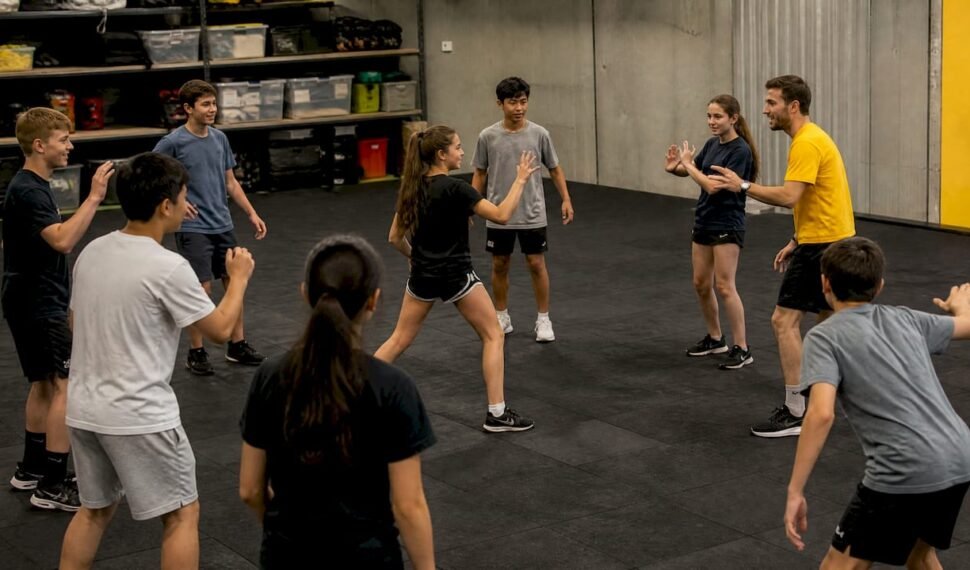
This page gives you a curated set of low-prep, teen-friendly icebreakers grouped by purpose, so you can pick one and run it in the next five minutes. You’ll find name games, energizers, question prompts, and small-group mixers, each with time and group-size notes. We’ve also built in facilitation, safety, and accessibility guidance so every participant can join in.
TL;DR:
- Name-building activities like Name, Motion, Echo and Two Truths improve name recall and help shy participants warm up without pressure.
- Movement games such as Group Juggle and Islands energize groups but should be adapted for mobility and space limitations.
- Deeper engagement requires question prompts like Question Jar or This or That, which foster honest conversation and are adaptable for different comfort levels.
- Facilitators should use the 4 P’s structure—preparation, practice, play, and debrief—to ensure safety, clarity, and inclusive participation.
- For larger or more active groups, professional event packages provide safe, structured fun with minimal prep, accommodating various group sizes and occasions.
Table of Contents
- 1. Icebreakers you can run right now, grouped by type
- 2. How do you pick the right icebreaker for your group?
- 3. Facilitation, safety, and inclusion rules every leader should use
- 4. Modifications and variations for age, ability, and space
- 5. Resources, templates, and quick scripts you can copy
- 6. Why these icebreakers and facilitation choices hold up
- 7. When your group wants more than an icebreaker
- FAQ
- Sources
1. Icebreakers you can run right now, grouped by type
These activities need almost no setup. Pick based on how much space, time, and energy you have.
Name-building games help a new or mixed group learn names fast without awkward silence.
- Name, Motion, Echo: Goal is learning names through repetition. Each person says their name with a hand motion; the group echoes both back. Takes 5 minutes, works for 8 to 30 people, no equipment. Adaptation: swap the motion for a sound if mobility is limited.
- Two Truths and a Nickname: Goal is memorable introductions. Each person shares two true facts and a nickname they’d pick for themselves; the group guesses which fact feels most surprising. Takes 10 minutes, fits 6 to 20 people. Adaptation: let shy members write answers on cards instead of speaking.
- Human Bingo: Goal is mingling while learning names. Hand out cards with traits like “plays an instrument”; participants mingle to fill squares with names. Takes 10 to 15 minutes, works for any size group. Adaptation: pair up non-readers with a buddy to fill in the card.
- Name Train: Goal is repeating and reinforcing names. Each person repeats every name said before theirs, adding their own at the end. Takes 5 to 10 minutes, best for groups under 15. Adaptation: shorten the chain by starting a new line every five names.
Movement and energizers work best when attention is dropping or the room needs to wake up.
- Group Juggle: Goal is quick teamwork and focus. Toss a soft ball around a circle in a set pattern, then add more balls. Takes 5 minutes, fits 8 to 25 people, needs one or two soft balls. Adaptation: roll the ball on the ground for seated or mobility-limited players.
- Islands: Goal is cooperation under light pressure. Scatter paper “islands” on the floor; call out numbers and have everyone fit onto that many islands. Takes 10 minutes, fits 10 to 30 people, needs paper or mats. Adaptation: reduce the shrinking pace for groups with mobility needs.
- Zip Zap Zop: Goal is energy and quick reflexes. Participants point and call “zip,” “zap,” or “zop” in sequence around a circle. Takes 5 minutes, fits any size group, no equipment. Adaptation: use a soft clap instead of pointing for players who prefer less direct gesture.
- Shrinking Circle Tag: Goal is light movement with safe contact. Use safe-tagging language like “butterfly fingers” so tags stay gentle. Takes 10 minutes, fits 10 to 25 people, needs open space. Adaptation: freeze tag instead of chasing for a lower-intensity version.
Get-to-know questions build real conversation once the group is past basic names.
- Would You Rather, Youth Edition: Goal is light self-disclosure. One person reads a would-you-rather prompt; others move to a side of the room representing their answer. Takes 10 minutes, fits any size, no equipment. Adaptation: use a show of hands instead of moving for small or seated rooms.
- This or That Speed Round: Goal is rapid-fire personality sharing. Call out paired options (pizza or tacos) and have everyone answer out loud at once. Takes 5 minutes, fits any size group. Adaptation: use thumbs-up or thumbs-down for quieter responses.
- Question Jar: Goal is deeper sharing in a low-pressure format. Participants draw a question from a jar and answer, with an option to pass. Takes 10 to 15 minutes, fits 6 to 15 people. Adaptation: let participants write answers anonymously and read them aloud themselves.
Small-group mixers work well once you need to split a larger crowd into working teams.
- Speed Friending: Goal is one-on-one connection before group work. Pair participants for 90 seconds each with a rotating prompt, then switch partners. Takes 10 minutes, fits 10 to 30 people. Adaptation: keep pairs seated if space is tight.
- Common Ground: Goal is finding shared interests in small teams. Groups of four find five things they all have in common. Takes 10 minutes, fits any size group split into fours. Adaptation: give a prompt list for groups that freeze up.
- Silent Lineup: Goal is nonverbal cooperation. Without talking, the group lines up by birthday month or height. Takes 5 minutes, fits 10 to 30 people. Adaptation: use written cards instead of talking for a fully silent version, useful for low-sensory settings.
Creative prompts round out the set when you want something a little different.
- Object Introduction: Goal is storytelling through objects. Each person shares an item from their pocket or bag and what it says about them. Takes 10 minutes, fits any size group. Adaptation: keep a basket of generic objects on hand for anyone who didn’t bring one.
- Draw Your Week: Goal is quick creative expression. Participants sketch their week as a comic strip in under two minutes, then share with a partner. Takes 10 minutes, fits any size, needs paper and markers.
- Superlative Circle: Goal is playful recognition. Go around the circle giving each person a silly, kind superlative (most likely to laugh first). Takes 10 minutes, fits 8 to 20 people.
Quick question prompts for teens work as stand-alone conversation starters or fillers between games:
- What’s a small thing that made you smile this week?
- If you could instantly master one skill, what would it be?
- What’s a song you’d put on a group playlist right now?
- Who’s someone you look up to, and why?
- What’s the best thing about your friend group?
2. How do you pick the right icebreaker for your group?
The right icebreaker depends on where your group is in its bonding stage, not just how much time you have. A new or unfamiliar group needs low-risk, name-and-fact activities before anything that asks for personal sharing. An established group that already knows each other can handle cooperative challenges or deeper question prompts without the same warm-up. UNICEF’s Adolescent Circles Activity Pack structures adolescent activities in phases, starting with simple introductions and moving toward connecting with others, which gives leaders a useful sequence to follow rather than jumping straight to vulnerable sharing.
Before picking an activity, run through a short checklist:
- Time: do you have 5 minutes to fill or 20 minutes to build real connection?
- Space: is there room to move, or are you working in a classroom or circle of chairs?
- Mobility: does anyone in the group need a seated or low-movement version?
- Cultural sensitivity: does the prompt assume a shared background, diet, or family structure that not everyone shares?
- Anonymity: would some participants answer more honestly if they could write instead of speak?
Three quick scenarios show how this plays out. A new small group of eight meeting for the first time does best with Name, Motion, Echo followed by Common Ground, both low-risk and fast. A large, noisy room of 40 teens needs something physical and loud enough to cut through the chatter, like Zip Zap Zop or Shrinking Circle Tag. A shy or quiet group benefits from written or paired formats, like the Question Jar with a pass option, rather than anything that puts one person on the spot in front of everyone.
3. Facilitation, safety, and inclusion rules every leader should use
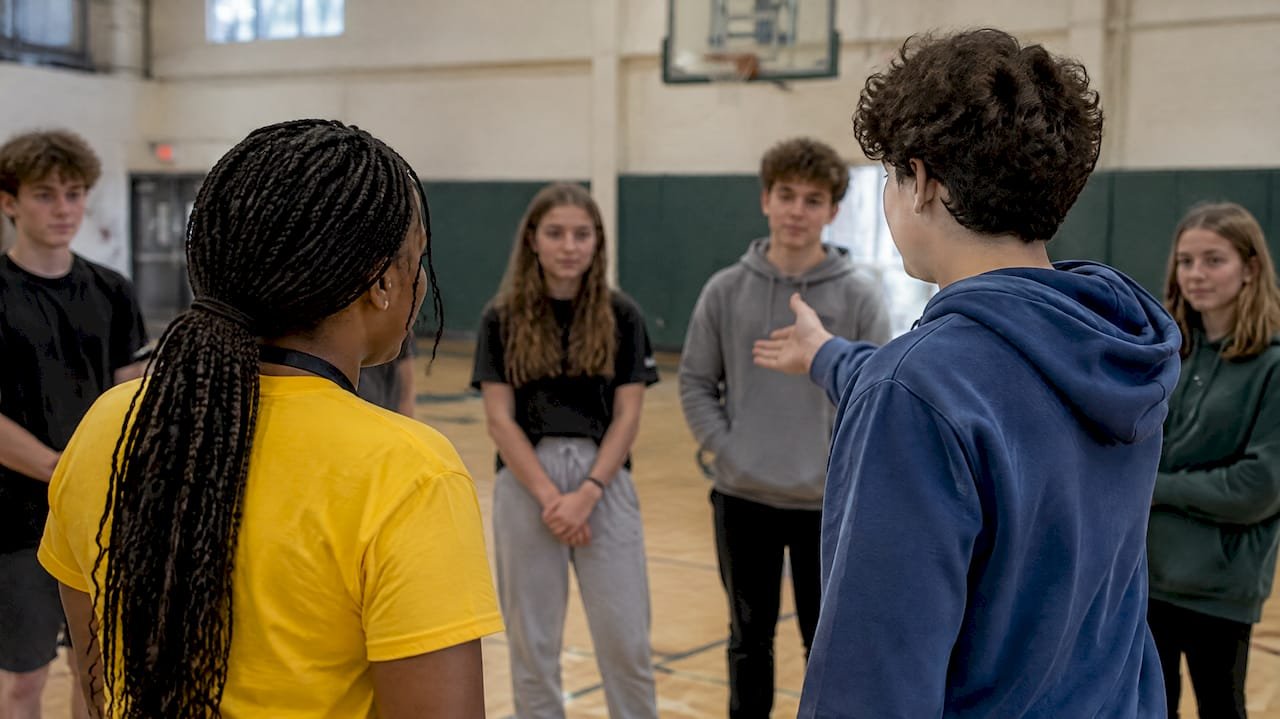
Good icebreakers fall apart without basic facilitation structure. Playworks’ game facilitation badge recommends the 4 P’s: Pre-game (explain the goal and rules briefly), Practice (run one quick round so everyone understands), Play (the real game), and Post-game (a short debrief). This structure helps even new youth leaders hand off facilitation to each other without losing the group’s attention.
Safety and inclusion come down to a few concrete habits:
- Set a start word and a stop word before any physical game begins.
- Teach safe tagging, like “butterfly fingers,” so contact stays light during tag-based games, a technique Playworks’ Skill Development Game Guide builds into its activity instructions.
- Use positive-language norms: no trash talk, no put-downs, cheer for effort over winning.
- Give every participant a clear opt-out option without making them explain why.
Pro Tip: Keep a one-line debrief ready, like “What was the best moment of that game for you?” so you can close any activity in under a minute without losing momentum.
When someone starts misbehaving, redirect instead of removing them from play: give them a specific job (score-keeper, next caller) rather than pulling them out, which keeps the group’s energy intact and avoids turning a game into a punishment.
4. Modifications and variations for age, ability, and space
Every game on this list can flex to fit the room you’re actually in. A few swaps cover most situations:
- Swap spoken answers for written cards or hand signals for non-verbal or low-sensory participation.
- Use seated or tabletop versions, like answering prompts on index cards passed around a table, when space is tight or mobility is limited.
- Choose culturally neutral prompts that don’t assume a shared religion, family structure, or diet, and always offer opt-out language (“pass” is a full answer) so nobody feels forced to share more than they want.
- For large rooms, split into clusters of six to eight so quieter voices aren’t drowned out.
UNICEF notes that letting young people help set their own participation rules increases buy-in and makes sharing feel safer, which is worth building into any modification you make.
5. Resources, templates, and quick scripts you can copy
A sample 4 P’s script: “We’re playing Islands. The goal is teamwork, not speed. [Pre-game] Here’s how it works. [Practice] Let’s try one round together. [Play] Now let’s go for real. [Post-game] What worked well that round?”
Print a short materials checklist before any session: soft balls, paper or mats for floor games, index cards for written prompts, and a timer. Budget 5 minutes for fast games, 10 to 15 for mixers, and leave a buffer for transitions between activities.
- Playworks’ facilitator playbook offers modifications and reflection prompts for deeper facilitation training.
- Playworks’ game facilitation badge walks through the 4 P’s framework step by step.
- UNICEF’s Adolescent Circles Activity Pack provides a phased activity library for deeper group work.
6. Why these icebreakers and facilitation choices hold up
We built this list around games that actually get played, not just games that look good on paper: short setup, clear safety language, and real room for shy participants to opt in at their own pace. Group activities that give teens a structured way to bond tend to strengthen peer friendships over time, which is the whole point of running one.
— Archers
7. When your group wants more than an icebreaker
Sometimes a group outgrows the warm-up and needs a full event, especially for a milestone birthday, a team kickoff, or an end-of-season celebration. For those occasions, we offer group experiences built around physical, high-energy games with staff facilitation handling the setup, safety briefing, and pacing so leaders don’t have to.
Our event packages cover a range of group sizes and occasions, from the Pong & Party On package to the Ultimate Paddle Party, and our kids birthday party packages handle everything from the Game On Birthday Party to the Momentum Birthday Party. For school or sports teams, our team-building packages add structured, cooperative games like archery tag and dodgeball to the mix.
- No prep required: we handle setup, equipment, and game design.
- Professional facilitation keeps games moving and safe for mixed-age groups.
- Packages scale from small friend groups to large team or school outings.
If your next youth gathering needs more than a 10-minute icebreaker, check our event packages to see what fits your group size and date.
FAQ
What are some cool icebreakers for youth groups?
Name, Motion, Echo and Human Bingo work well for cool, low-pressure icebreakers because they build name familiarity without putting anyone on the spot. For more energy, Zip Zap Zop or Shrinking Circle Tag get a room moving fast with minimal setup.
What are some fun games for a youth group?
Group Juggle, Islands, and Speed Friending all work as fun, fast-moving games that fit most youth group spaces. Each takes 5 to 15 minutes and needs little to no equipment, making them easy to slot between activities.
What are some good icebreakers for small groups?
Common Ground and the Question Jar both work well for small groups of six to fifteen, since they rely on close conversation rather than big movement. Silent Lineup also works for small groups that want a quiet, cooperative option.
What are some good icebreaker questions for teens?
Simple, low-stakes prompts work best, like asking what song they’d add to a group playlist or who they look up to and why. Questions that focus on everyday preferences rather than deep personal history tend to get more honest, relaxed answers from teens.
Sources
- Playworks — Skill Development Game Guide (2025)
- Playworks — Game facilitation badge (4 P’s)
- UNICEF — Adolescent Circles Activity Pack (2022)
- APA / PsycNet — Extracurricular activities and adolescent friendships


