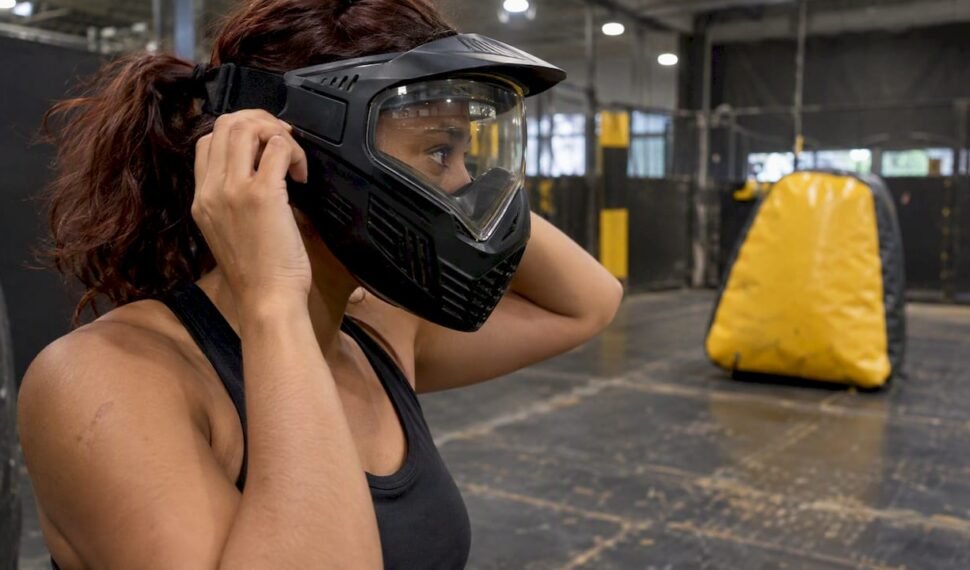
A combat archery mask is a face guard that covers your eyes, ears and mouth, and every player on the field has to wear one. It is the one piece of gear you cannot skip. If you are shopping for one, the main thing to know is that a mask built for archery tag is not the same product as the airsoft and paintball masks that fill the search results. If you are booking a session, you mostly need to know what to expect on the day. This guide covers both.
TL;DR
- A combat archery mask covers the eyes, ears and mouth. The instruction sheet for the game lists exactly that for each player.
- Everyone in the play area wears one, including referees and sideline participants, and it has to fit snugly so it does not slip down.
- Canadian eye specialists recommend CSA-approved eye protection for anyone within range of foam-tipped bows.
- Hits are described by the game’s rights holder as causing virtually no pain, though where you are hit matters.
- Remove earrings, other jewelry and piercings before you play, and tie back long hair.
Table of Contents
- What a combat archery mask is
- Why an airsoft or paintball mask is not the same thing
- What the safety guidance says
- How to check a mask fits
- Does combat archery hurt?
- Rest of the safety setup
- Perspective: what we tell every group
- Buying a mask for home use
- Play it at the venue instead
- Packing and prep for the day
- FAQ
- Sources
What a combat archery mask is
Combat archery, also sold as archery tag, is dodgeball with bows. Players shoot foam-tipped arrows at each other across a field with barriers. The arrows are soft, but they still travel at a person’s face if someone aims or ducks the wrong way. That is why the mask exists.
The instructions that ship with an archery tag set say each player needs a mask that covers the eyes, ears and mouth. Think of it as three jobs in one:
- Eyes: the part that matters most. A foam tip is designed to be gentle, but the eye is the one place where a soft object can still do real harm.
- Ears: the mask covers them so a direct hit does not land on the ear itself.
- Mouth: it keeps teeth and lips away from an arrow tip.
The typical archery tag mask looks like a cage or visor, usually with a wide field of view and a strap that goes behind the head. It is made for foam, not for hard projectiles, and it is meant to be light enough that you forget it after a few minutes.
Why an airsoft or paintball mask is not the same thing
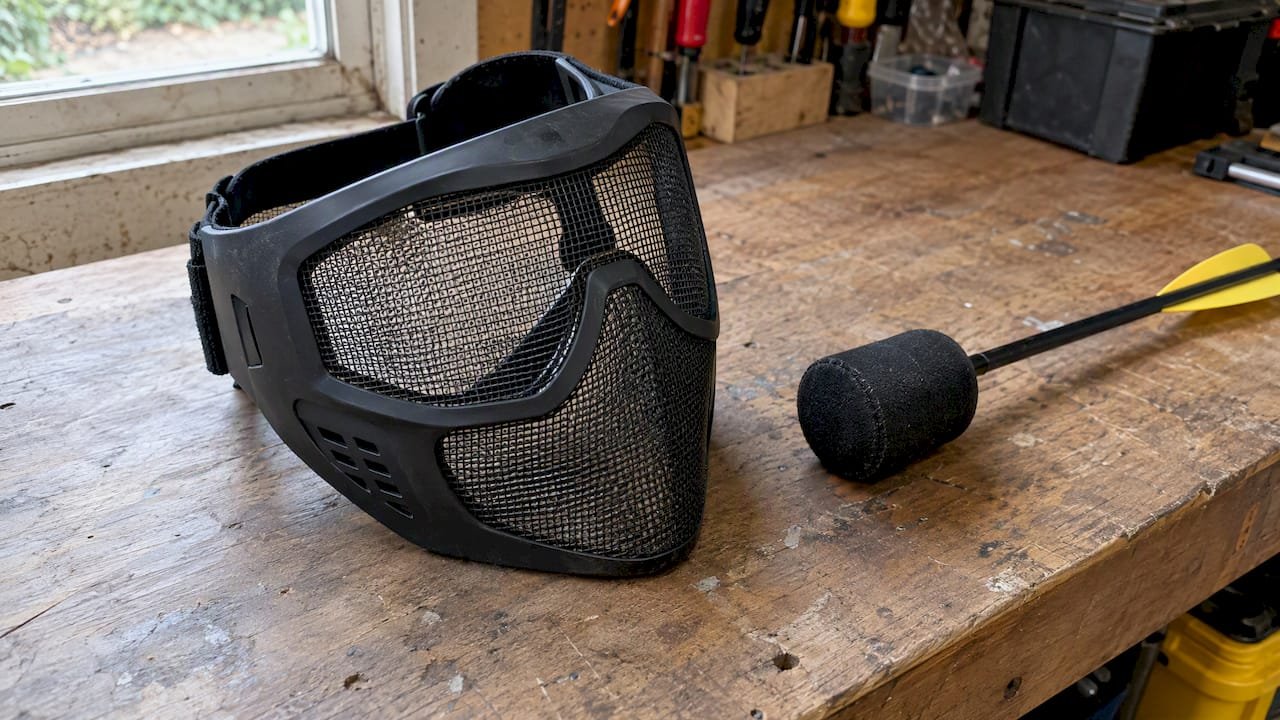
Search for “combat archery masks” and most of what you see is tactical gear: steel mesh half masks, nylon balaclavas, foldable airsoft faces. Those listings are written for hard pellets and paintballs, and some advertise impact ratings measured in feet per second. Combat archery is a different activity with a different risk.
Three practical differences:
- Coverage. Archery tag masks are specified to cover eyes, ears and mouth. A half mask that guards only the lower face does not meet that description, and a mesh mask that leaves the eyes to separate goggles adds another thing to slip.
- Fit and comfort. You will be running, ducking and looking up and down. A heavy tactical mask pulls on your head. A light archery tag mask stays put.
- Rules of the venue or league. Organizers set the face protection they accept. If you bring your own, ask first. Many venues require their own masks on the field for consistency.
If you play with a venue, you may not need to buy anything. If you are buying for a backyard set, buy a mask sold for archery tag, not a general tactical mask chosen because the photo looks good.
What the safety guidance says
The published guidance is consistent: face protection is mandatory and it has to fit.
- The safety page from the Archery Tag® brand’s rights holder requires every participant to wear an Archery Tag face mask. That includes players, sideline participants and referees.
- The same page says the mask must fit securely, so it does not move around excessively or slide down.
- It also asks participants to remove earrings, other jewelry and piercings before gameplay.
In Canada, the Canadian Ophthalmological Society position statement on nonpowder projectile weapons goes further. It groups bows shooting foam-tipped arrows with other nonpowder weapons, recommends CSA-approved eye protection for everyone within firing range, and says these weapons should never be aimed at the face or eyes.
Two takeaways for Ontario players. First, “everyone within range” includes the parent standing by the barrier and the person keeping score, not only the shooters. Second, the aim-away-from-faces rule is a game rule as much as a gear rule. A mask is the backup, not the plan.
How to check a mask fits
A mask that is nominally correct but loose is a problem. Before you play, run through this quick check:
- Put it on and shake your head. It should not rock or slide.
- Look down at your feet and up at the ceiling. If the mask drops over your nose or lifts off your chin, tighten the strap.
- Check your vision. You should see to the sides without turning your whole body.
- Check glasses. If you wear glasses, tell the staff before you play so they can advise what works with the mask. Do not assume your frames count as protection.
- Hair and accessories. Tie back long hair, and take off earrings, other jewelry and piercings that could be pushed into you by the mask or an arrow.
Kids are where fit goes wrong most often. A mask that is too big slides, and a child will pull it up with a hand mid-game. If you are booking a birthday party, ask for a smaller size for younger players before the day, not on the field with a dozen kids waiting.
Does combat archery hurt?
This is the question that comes up most after “what do I wear.” The short answer: much less than people expect.
The Archery Tag® FAQ says hits cause virtually no pain, though it depends on where a player is hit, and that most players are more surprised than hurt. That matches what we see: a hit is a sudden tap, a bit of a sting on bare skin, and then everyone laughs.
What changes how a hit feels:
- Where it lands. Fleshy areas such as the thigh or back feel different from a bony knuckle or shin.
- Bare skin or clothing. A layer of normal clothing softens it. Our guide on what to wear for foam-dart games applies here too: sleeves, long pants and closed shoes.
- Distance. Close-range shots feel sharper than shots across the field.
- Surprise. A hit you did not see coming feels bigger than one you were expecting.
The face is the exception to the “barely hurts” rule, and that is the reason for the mask. A soft arrow to the arm is a nuisance. A soft arrow to an unprotected eye is a medical issue. If an arrow does strike near the eye, even with a mask on, stop playing and have the person looked at by staff. If there is pain, blurred vision or redness that does not settle, see a doctor or an eye care professional.
Rest of the safety setup
The mask is one layer. The field and the equipment matter too.
- Padding. The Archery Tag® safety guidance says hard surfaces such as walls, doors, fences, posts and pillars should be padded. This is a venue responsibility, and a good thing to notice when you walk in.
- Equipment age. The same page suggests replacing arrows and bow limbs yearly. Cracked foam or a damaged limb is a reason to swap the item, not to carry on.
- Pregame briefing. Players need to hear the rules before the first round. Our combat archery rules to read aloud cover the seven points we go over with every group.
- Game modes. Different formats change how much running and close shooting happens. See how archery tag game modes can be adapted for age and group size.
Perspective: what we tell every group
We run combat archery next to Nerf battles, dodgeball and axe throwing, so we see how people actually behave when gear is on and the game starts. Our view is simple: the mask is the first thing we check, and the briefing is the second. Most problems come from a loose strap, long hair under the mask, or a player who lifts it to talk mid-round.
We would rather start a round two minutes late than start it with a mask that slides. We keep groups of different ages in mind too, because a ten-year-old and a thirty-five-year-old do not need the same pace or the same rules. Safety and a good time are not trade-offs here. People relax and play harder when they trust the setup.
— Archers
Buying a mask for home use
If you own a set and want your own masks, here is a sensible checklist:
| What to check | Why it matters |
|---|---|
| Sold for archery tag or foam-arrow games | Matches the game’s coverage rule for eyes, ears and mouth |
| Adjustable strap | Lets you tighten it so it does not slip down |
| Wide field of view | You can see teammates and barriers without turning |
| Light weight | You will wear it for a long session |
| Sizes for kids | Adult masks tend to slide on small heads |
| No cracks or loose parts | A damaged mask is not protection |
For Canadian buyers, ask the seller whether the eye protection meets CSA standards, since that is what the Canadian Ophthalmological Society recommends. If the listing does not say, treat it as unverified.
Tactical or airsoft mesh masks can look the part, but they are made for another sport. If you already own one, check it against the coverage rule before using it with foam arrows.
Play it at the venue instead
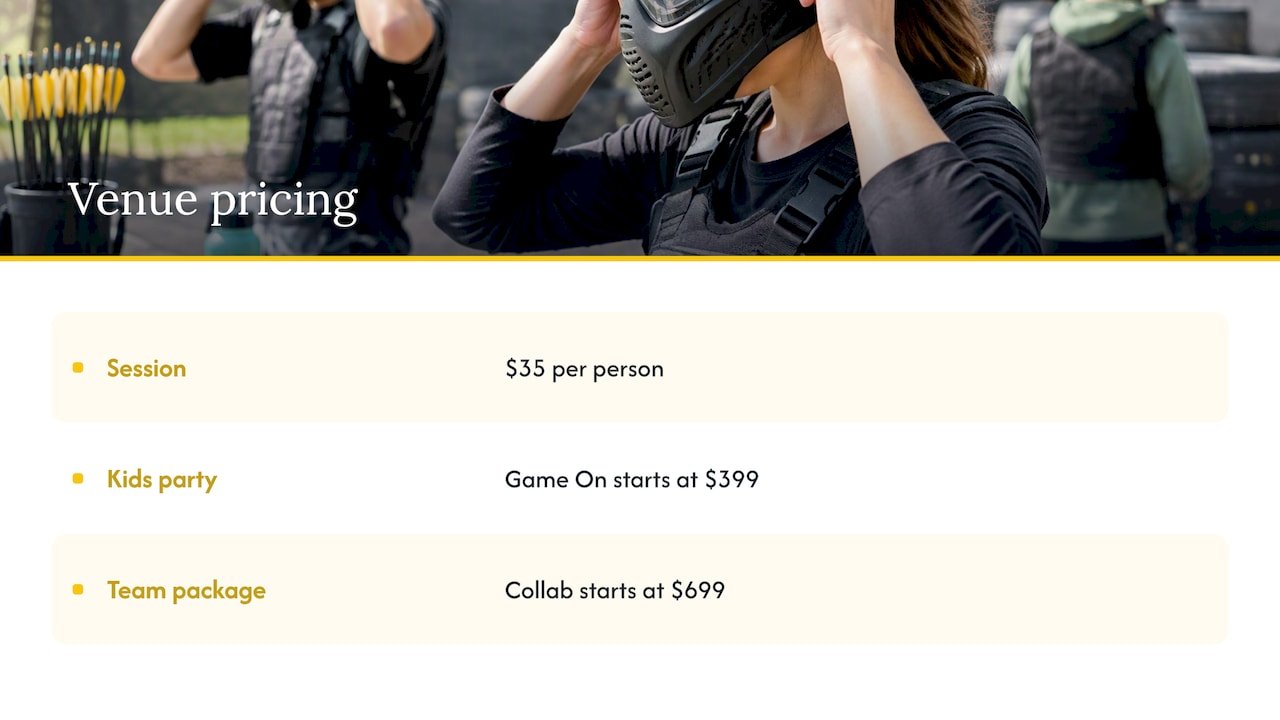
The simplest way to avoid mask shopping is to book a session. Combat archery at Archers Battlefield is 35 $ per person for a session. If you are planning something bigger, party packages start at 399 $ with Game On for kids, and team packages start at 699 $ with the Collab Package. Start with the archery booking page to choose a time, and ask about masks and sizes for your group when you book. For a birthday plan, see our combat archery birthday packages.
Packing and prep for the day
A few small habits make the session smoother:
- Wear closed shoes you can run in.
- Choose long sleeves and long pants if you are sensitive to stings.
- Leave jewelry at home, since you will be asked to take it off anyway.
- Arrive a few minutes early so the briefing and mask fitting do not eat your game time.
- Tell staff about glasses, long hair or any medical concern before the round.
For a work outing, our corporate event dress code guide helps people show up ready and keeps check-in short.
FAQ
Do I have to wear a mask in combat archery?
Yes. The Archery Tag® safety guidance requires every participant to wear a face mask, including players, sideline participants and referees. The mask has to fit securely. Anyone who cannot keep it on should stay out of the play area.
Do archery tag masks cover the whole face?
They cover the eyes, ears and mouth, according to the instruction sheet that comes with archery tag sets. They are lighter than tactical or airsoft masks and are made for foam-tipped arrows, not hard projectiles.
Does combat archery hurt?
The Archery Tag® FAQ says hits cause virtually no pain, though it depends on where you are hit, and most people are more surprised than hurt. Bare skin and close range feel sharper. If a hit near the eye causes pain or vision changes, see a medical professional.
Can I wear my own airsoft or paintball mask?
Ask the venue before you bring it. Many organizers set their own face protection rules, and a half mask may not cover the eyes, ears and mouth. The safest choice is the mask the venue provides or one sold for archery tag.
Can I wear glasses under the mask?
Tell staff before the game. Fit varies by mask and frame, and regular glasses are not a substitute for proper eye protection. Staff can tell you what works with the gear on site.
Sources
- Archery Tag® safety guidance
- Archery Tag® FAQ: does it hurt to be hit with the arrow
- Archery tag equipment instruction sheet


