
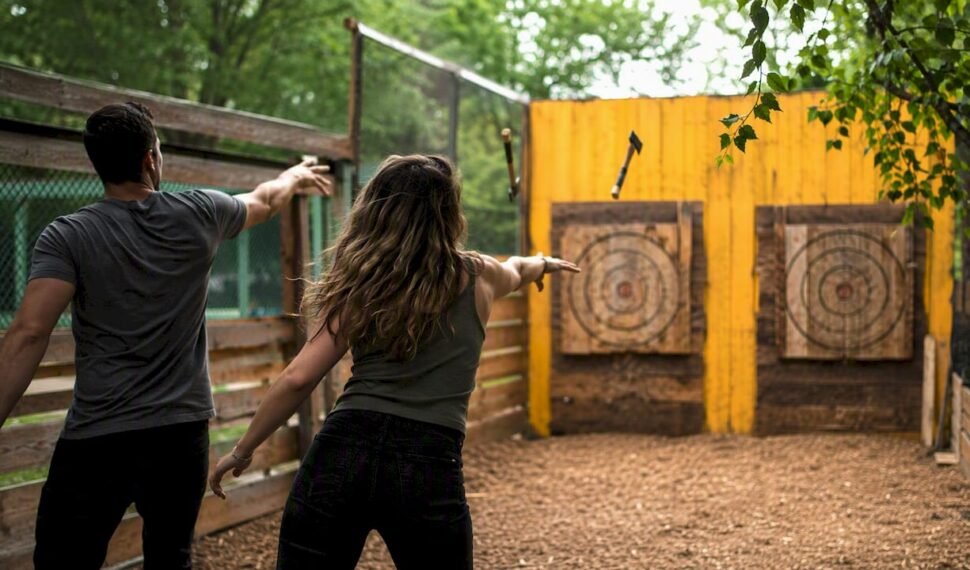
Axe throwing makes an excellent date night because it’s coached, low on athletic pressure, and built around the kind of shared adrenaline that gets two people laughing within the first ten minutes. If you’re picking a night this week, here’s the move: book a midweek couples session or reserve a private lane so you’re not sharing coaching attention with a bachelorette party.
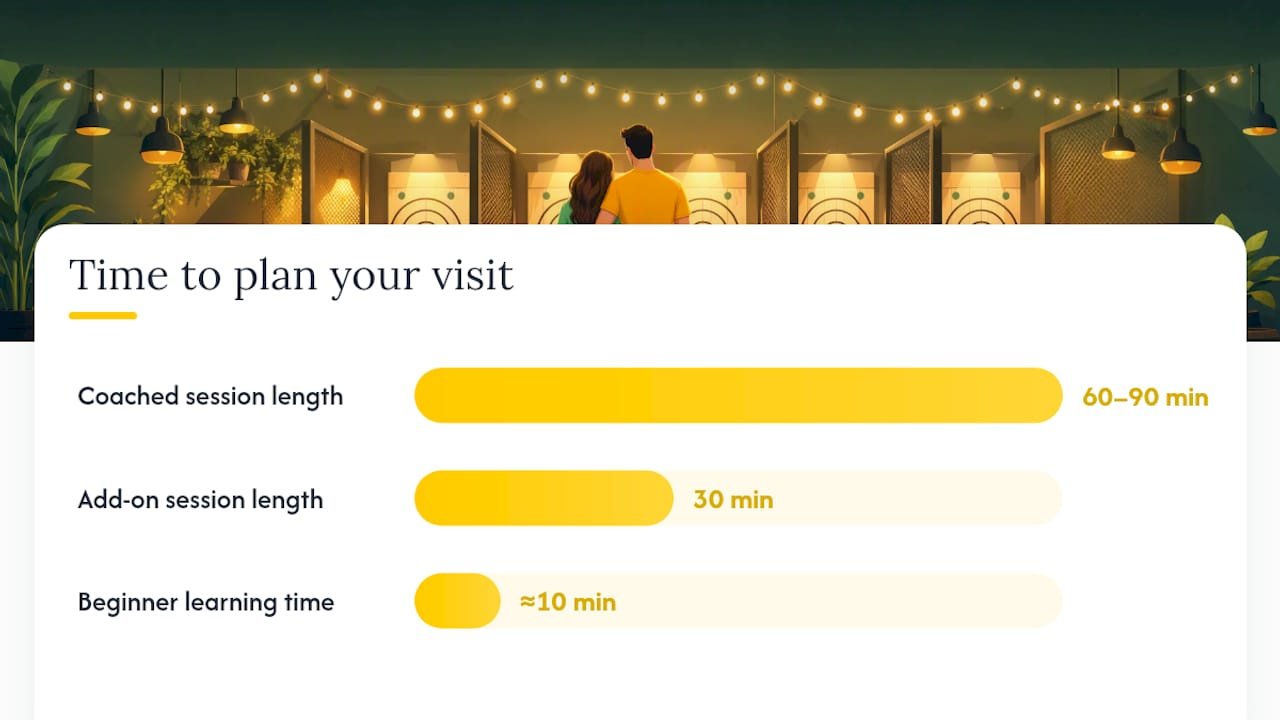
A typical session runs 60 to 90 minutes and includes a safety briefing plus hands-on instruction before anyone picks up an axe. Expect to pay somewhere in the neighborhood of a casual dinner out, sign a waiver, and walk in wearing closed-toe shoes. That’s really the whole barrier to entry.
Quick wins before you book:
- Pick a midweek night. Instructors tend to have more time to coach two people rather than splitting their attention across a busy session.
- Reserve a private lane if you want fewer distractions and more one-on-one banter.
- Bring a photo ID. Every venue requires a signed waiver before anyone throws, with no exceptions.
Ready to lock in a night? Archers Battlefield takes online reservations for axe throwing and several other activities under one roof, which makes it simple to build a full evening around one booking.
Key Takeaways
Axe throwing works as a date night because it pairs coach-led safety with a short learning curve, turning two strangers or two regulars into a small, laughing team within minutes.
| Point | Details |
|---|---|
| Book a weeknight | Tuesday or Wednesday sessions mean quieter lanes and more coaching attention. |
| Bring ID and expect a waiver | Every venue requires photo ID and a signed liability waiver before throwing. |
| Wear closed-toe shoes | Loose jewelry, scarves, and open-toe shoes are safety risks on the lane. |
| Plan for 60 to 90 minutes | That’s the typical range for a coached couples session, private lane or not. |
| Confirm the alcohol policy | Some venues serve drinks, but intoxicated guests are typically refused participation. |
| Book through Archers Battlefield | The venue offers coach-supervised axe throwing plus other on-site games in one reservation. |
Table of Contents
- Why Axe Throwing Date Night Ideas Actually Work
- What To Expect From Your First Session
- What A Couples Session Typically Costs
- What To Wear And How To Act On The Lane
- How Venues Handle Safety And Alcohol
- Who Can Book And When To Consider Something Else
- Ideas To Make The Date Feel Bigger Than One Hour
- What Most Date-Night Guides Get Wrong
- Book Your Axe Throwing Date At Archers Battlefield
- Where To Learn More Or Book A Lane
- Frequently Asked Questions
- Sources
Why Axe Throwing Date Night Ideas Actually Work
Most date-night activities fall into two camps: sit-and-talk (dinner, wine bar) or watch-and-talk (a movie, a show). Axe throwing is neither. It forces two people to do something physical, slightly nerve-wracking, and genuinely funny at the same time, which tends to produce better conversation than a menu ever will.
The emotional payoff is simple. You get a shared challenge, a little playful competition, and small wins you can celebrate together, like sticking your first bullseye or watching your partner miss the board entirely. Nobody has to fill silence with small talk because the activity does that work for you.
On the practical side, axe throwing has almost no fitness barrier. You don’t need strength or coordination going in. Coach-led instruction gets most beginners throwing within about ten minutes, and the learning curve flattens fast enough that both partners are usually competitive with each other by round two.
Different date types, different reasons it works:
- First date: Low pressure, built-in activity, and an easy exit point after the session if the chemistry isn’t there.
- Anniversary: A break from the usual dinner reservation, with a story you’ll actually retell later.
- Double date: Two couples can split a lane and turn it into a friendly bracket.
- Low-key weeknight: Quiet venue, shorter wait, more one-on-one coaching time.
Axe throwing also tells you something real about a person. How someone handles missing a target, or losing a round, says more about their temperament than a dinner conversation usually reveals.
Pro Tip: Watch how your date reacts to a bad throw, not a good one. Grace under a miss is a better first-date signal than a perfect bullseye.
What To Expect From Your First Session
Plan to arrive shortly before your slot so you have time for ID checks and waiver signing without cutting into throwing time. That window covers ID checks and waiver signing, so you’re not cutting into actual throwing time.
Once you’re on the lane, an instructor walks you through grip, stance, and release. This part is quick. Most venues get people throwing safely within the first several minutes of instruction, and the early focus is on form rather than accuracy. Accuracy comes later, once the motion feels natural.
A typical session breaks into three phases:
- Warm-up throws where you get comfortable with the weight and release point.
- Structured games like bullseye rounds, tic-tac-toe target grids, or a cricket-style scoring format.
- Final scoring where the group tallies results and usually declares a winner over some good-natured ribbing.
Total time on the lane runs 30 to 90 minutes depending on the package. A private lane or couples-specific package tends to run longer because you’re not rotating with other groups, and you get more one-on-one attention from your instructor throughout.
What A Couples Session Typically Costs
Pricing varies by venue, group size, and whether you book a shared or private lane, but the ranges are consistent enough to budget around.
| Package Type | Typical Price | What’s Included |
|---|---|---|
| Standard coached session | $25 per person | 60–90 minutes, instructor, target rentals |
| Couple’s session | About $50–$90 total | Same as standard, priced per couple |
| Private lane add-on | Varies by venue | Dedicated instructor time, no lane sharing |
| Drinks/food add-ons | Priced separately | Beer, cocktails, or snacks depending on venue license |
Some venues price per person, others price per couple, and private lanes usually carry a separate rate on top of the base session. Read the fine print before you book. A $25 “per person” rate can look cheaper than a $50 “couple’s rate” until you realize they’re the same number written two different ways.
A few booking tips worth following:
- Reserve at least a few days ahead for weekend slots. They fill fast, especially Friday and Saturday evenings.
- Weeknights usually mean smaller crowds and more relaxed coaching, which is better for a first-time thrower.
- Ask directly whether the venue offers a couples package or date-night special. Many venues advertise these but don’t always list them prominently online.
- Bring a payment card and confirm the cancellation or rescheduling policy before you pay, especially if weather or work schedules might change your plans.
What To Wear And How To Act On The Lane
Closed-toe shoes are non-negotiable at almost every venue. Sneakers or boots work fine; sandals and flip-flops don’t. Wear a top that lets your arms move freely, since the throwing motion needs a full shoulder swing. Skip dangling jewelry, long scarves, or anything loose that could catch on an axe mid-swing.

Bring your ID, a payment method, and your reservation confirmation if you booked online. A small bag or your phone’s wallet app covers everything you need; leave bulky bags in the car if you can.
On etiquette: let the instructor run the safety briefing without interruption, even if one of you has thrown before. Rules exist because axe throwing lanes are shared spaces, and a distracted instructor is a safety risk for everyone on the floor. Keep trash talk light and friendly. Respect your lane’s turn order if you’re sharing space with another group.
Pro Tip: Resist the urge to film every throw. Put the phone down for the first few rounds and let your date have a moment without a camera pointed at them. You’ll get better photos later when nerves have settled.
How Venues Handle Safety And Alcohol
Every reputable venue runs a coach-led safety briefing before anyone throws, and coached sessions commonly include roughly a five-minute rundown on technique and lane rules before the first axe leaves anyone’s hand, according to industry guidance on couples sessions. Lanes are enclosed, equipment stays lane-specific, and throwing only happens under direct supervision.
Alcohol policies vary. Some venues serve beer or cocktails, but service is regulated, and instructors are trained to cut off anyone who’s had too much before they’re allowed near a target. Intoxicated guests typically get refused participation altogether, since a wobbly throw is a real hazard in a room full of sharp steel.
Before you book, confirm a few things:
- Instructor-to-lane ratio, especially if you’re hoping for close one-on-one coaching.
- Whether private lanes are available if you want fewer people around.
- Basic first-aid procedures on-site, even though incidents are rare at supervised venues.
Every guest signs a liability waiver before throwing. It’s standard practice, not a red flag. If you’re planning to drink, save it for after your throws rather than before. Sober hands learn the release motion faster, and you’ll actually remember the parts of the date where you nailed a bullseye.
Who Can Book And When To Consider Something Else
Minimum age requirements vary by venue, and rules for minors differ depending on local regulation, so confirm directly with whichever venue you’re booking. Most commercial venues require participants to be teenagers or older, often with adult supervision required for younger guests.
Physically, axe throwing asks very little of you. There’s no running, no heavy lifting, and no real aerobic demand. You’ll stand for most of the session and repeat a throwing motion that’s more about timing than strength. Some venues can offer modifications for guests with limited mobility, so it’s worth asking ahead if that’s a concern.
That said, axe throwing isn’t the right fit for everyone. Severe mobility limitations, a strong aversion to sharp objects, or discomfort around alcohol-serving environments are all good reasons to consider something else.
Pro Tip: If one partner isn’t comfortable throwing, most venues let a non-participating guest watch and cheer from a seating area, so the date doesn’t have to be called off entirely.
If axe throwing isn’t quite right, plenty of venues offering it also run other low-key games, like dodgeball or table tennis, that make for an easier alternative on the same visit.
Ideas To Make The Date Feel Bigger Than One Hour
Sequencing changes the whole feel of the night. Throwing first, then walking to dinner, keeps the adrenaline going into a calmer conversation over food. Dinner first, then a lighter throwing session, works well if you want to talk before the competitive energy kicks in. Either order beats cramming both into a rushed evening.
A few add-ons worth considering:
- Reserve a private lane if you want the whole hour to yourselves without sharing coaching attention.
- Treat the winner to dessert or the first round of drinks afterward. Small stakes make the games funnier.
- Run a best-of-five series instead of one round. It gives both people a real shot at winning and extends the fun.
- Plan a photo-op moment where the venue allows it, since a shot of your first bullseye is a better keepsake than a dinner receipt.
For a double date, split a lane between two couples and run a simple bracket. It keeps pressure low for a first meeting between friends and gives everyone something to talk about besides the usual getting-to-know-you questions. Pairing axe throwing with another activity on-site, like Nerf battles, can also stretch a one-hour booking into a full evening without needing to change locations.
What Most Date-Night Guides Get Wrong
Most advice on axe throwing date nights treats it as a novelty stunt, something you do once for the story rather than something worth repeating. That undersells it. The coached, low-fitness structure of a real session means the barrier to trying it again is almost nonexistent, and the competitive format actually improves with repetition since both partners get better and the games get closer.
The other gap in most guides is timing advice. Plenty of articles tell you to “just book a session” without mentioning that a Friday night booking and a Tuesday night booking are almost different experiences. Weeknights get you real coaching attention and a quieter lane. Weekend slots get you crowd energy but less individual instruction. Neither is wrong, but couples looking for genuine connection over a bigger group vibe should lean weeknight, every time.
What we’d prioritize first isn’t the game format or the target type. It’s picking a venue that treats the safety briefing as real instruction rather than a formality to rush through before selling you drinks. That single detail separates a genuinely good first-time experience from one where you spend half the session confused about grip and release.
Book Your Axe Throwing Date At Archers Battlefield
Archers Battlefield gives you one booking that can cover the whole evening instead of hopping between venues. Beyond axe throwing, the venue runs combat archery, Nerf battles, dodgeball, and arcade games under one roof, so a date night can start with axes and end with a completely different game if you want to keep the momentum going.

Every session starts with coach-led instruction and a safety briefing before anyone throws, and private-lane setups are available for couples who want the hour to themselves rather than sharing a coach with a crowd. If you’re planning something more custom, like a milestone anniversary or a small group date night, the team building and event packages page covers how private setups get arranged.
Booking takes a few minutes online. Head to the axe throwing booking page, pick a midweek evening if you want quieter coaching attention, and reserve your lane before the good weeknight slots fill up.
Where To Learn More Or Book A Lane
- Book Now — the fastest path to lock in a date and time.
- Team building and private event packages — details on private lanes and custom couples setups.
Frequently Asked Questions
Is axe throwing a good idea for a first date?
Yes. The coached structure removes the pressure of carrying a conversation on your own, and the shared challenge tends to produce natural laughs within the first few throws.
How long does an axe throwing date usually last?
Most coached sessions run 60 to 90 minutes, though some venues offer shorter 30 minute add-on formats if you’re pairing it with dinner or another activity.
What should I wear to an axe throwing date?
Closed-toe shoes are required, and a top that allows full arm movement works best. Skip dangling jewelry and loose scarves.
Do venues serve alcohol during axe throwing sessions?
Some do, but service is regulated and instructors will refuse participation to anyone who appears intoxicated, since safe throwing requires steady hands.
What’s a realistic budget for a couples session?
Expect roughly $50 to $90 total for two people for a standard coached session lasting about an hour to an hour and a half, before considering drinks or private-lane add-ons.
Can beginners really pick this up quickly?
Yes. Coach-led instruction typically gets newcomers throwing safely within about ten minutes, and most people improve noticeably within a single session.
Sources
- Axe Throwing for Couples: Why It Works and How to Plan the Perfect Session | AxeThrowingPlaces


