
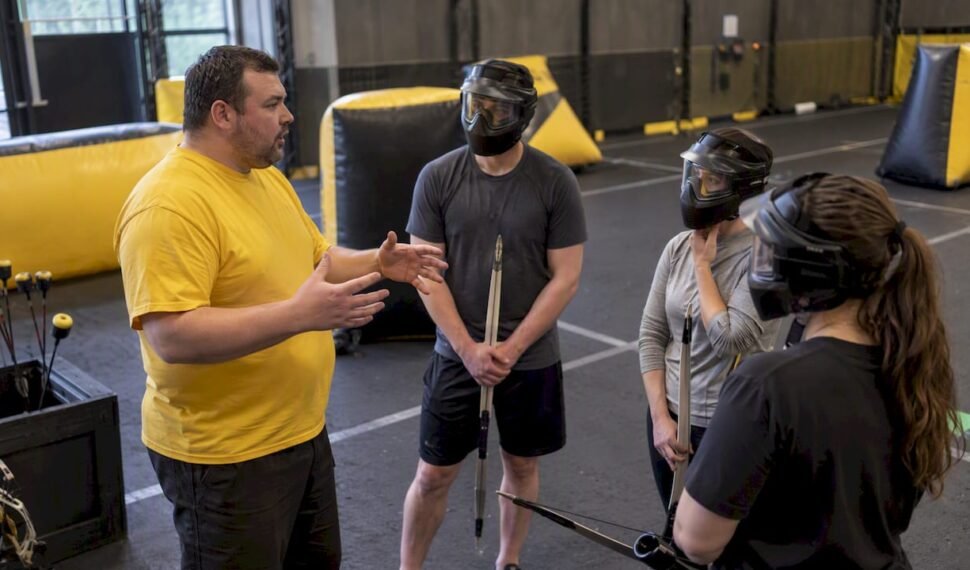
Recreational combat archery pits two teams against each other with foam-tipped arrows and low-draw bows, eliminating or scoring players on a hit, with a caught arrow sometimes reviving a teammate. Every match runs on one non-negotiable rule: masks, inspected gear, and a trained referee come before the whistle ever blows.
TL;DR:
- Require every player to wear a fitted face mask, use venue supplied bows and inspected arrows, and leave damaged or personal equipment off the field.
- Choose points mode for groups with mixed skill levels because hits score without eliminating players; choose elimination when catching arrows can revive teammates.
- Mark the center neutral zone, install perimeter barriers, and keep spectators outside the shooting area; players retrieve arrows only after the stop signal.
- Have a trained staff member supervise every match, set age guidance for draw weight and group maturity, and brief participants on footwear and emergency signals.
Table of Contents
- Quick Rules at a Glance: An Organizer’s Pre-Match Checklist
- Equipment and Safety Checks Before Every Session
- Core Gameplay and the Game Modes Organizers Run
- Field Layout, Boundaries, and Line-Control Signals
- Organizing a Session: Teams, Match Length, and Supervision
- The Safety Briefing Every Participant Hears First
- A Note From Archers Battlefield on Running Safe Matches
- How to Book a Combat Archery Session With Us
- FAQ
- Sources
Quick Rules at a Glance: An Organizer’s Pre-Match Checklist
Read this list before any group steps onto the field. It covers the behavior and mechanics every player needs to know, and it doubles as a run-sheet script.
- No headshots, intentionally or otherwise: aim for the body, never the face mask directly.
- No physical contact between players; this is a shooting game, not a tackling one.
- Keep bows pointed at the ground or the target area whenever you are not actively shooting.
- A hit on the body or gear counts as out, and eliminated players leave the field immediately.
- A caught arrow can revive one teammate, depending on the mode being run.
- Stop shooting the instant the stop signal sounds, no exceptions.
- Personal bows, outside arrows, or any damaged equipment are never allowed on the field.
Pin this list to the check-in table or read it aloud before teams split up. A brief read-through can help prevent disputes before they start.
Equipment and Safety Checks Before Every Session
Gear inspection is the foundation of a safe match, and Archery Canada’s rule book treats equipment integrity the same way: damaged arrows are never used, and gear must meet basic safety specifications before it touches the field.
- Face masks are mandatory for every participant, and the opening should be small enough that an arrow tip cannot reach the skin.
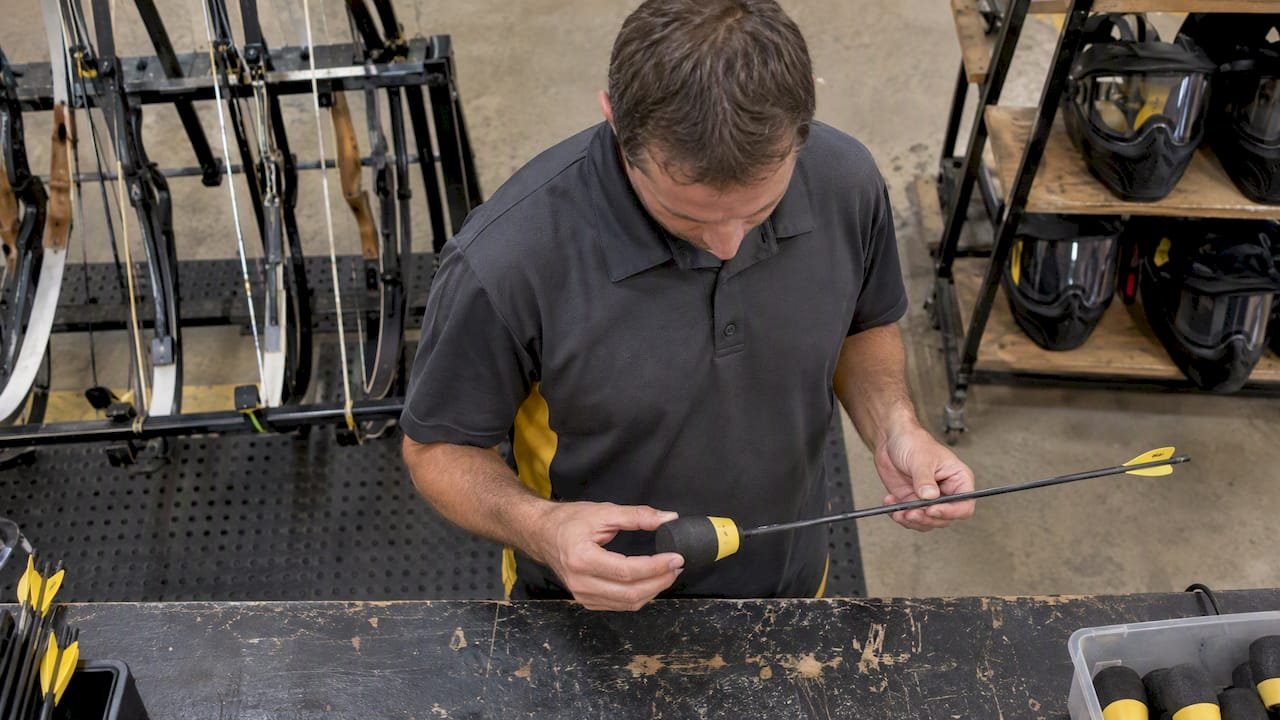
- Check each arrow for a secure foam tip, cracks along the shaft, and correct length for the bow’s draw length; discard anything questionable.
- Bows stay at venue-supplied draw weights, and personal bows are never permitted.
- Before each session, inspect masks, bows, arrows, netting or barriers, and confirm first-aid supplies are stocked and accessible.
Pro Tip: Store bows vertically between rounds rather than leaning them flat on the ground, so nobody trips or triggers an accidental release.
A consistent inspection routine, run the same way every session, helps catch worn gear before it becomes a safety problem.
Core Gameplay and the Game Modes Organizers Run
Most sessions follow one of a few established formats, and picking the right one depends on group size, skill mix, and how much time you have on the clock.
- Classic elimination: arrows sit in a pile at center field, a whistle sends both teams in to grab them, and a hit sends a player out, while catching an opponent’s arrow mid-air can bring a teammate back in, following the dodgeball-style format the game is built around.
- League or points mode: instead of eliminating players, teams score a point per confirmed hit within a timed round, which keeps weaker shooters in the game and suits mixed-ability groups better than straight elimination.
- Capture-the-flag and king-of-the-hill variants: these swap pure elimination for an objective, like grabbing a flag from the opposing zone or holding a marked area, and they reward positioning over raw accuracy.
- Protected-zone variants: a designated safe area where a player can’t be eliminated adds a tactical layer, forcing teams to flush opponents out rather than just outshoot them.
Across every mode, the same tactical habit applies: use the neutral zone and available cover, communicate with teammates, and avoid closing to point-blank range just to force a hit. Operators can pull additional archery tag game mode variations when a group wants something beyond the standard rotation.
Field Layout, Boundaries, and Line-Control Signals
A safe field depends on clear boundaries and signals everyone understands before the first arrow flies.
- Keep a neutral zone down the center of the field to separate teams and discourage shots at close range.
- Use consistent start and stop signals: Archery Canada’s range safety guidance recommends two whistle blasts to approach the line, one blast to begin shooting, and three blasts to end it, and the same logic works with red, yellow, and green visual signals for louder venues.
- Retrieve arrows only after a clear stop signal, and send players to the pile one at a time rather than in a rush.
- Install netting or physical barriers around the field perimeter, and keep spectators in a marked zone well clear of any shooting line.
These boundaries aren’t just about keeping score fair. They’re what keeps a fast-moving game from turning into a collision or an accidental hit outside the play area.
Organizing a Session: Teams, Match Length, and Supervision
Once the field and gear are set, the logistics decide whether the match actually runs smoothly.
- Choose team sizes that keep rounds moving and give everyone time to play, rotating substitutes between rounds.
- Short rounds can work well for parties, while league formats can stack rounds back to back for a running score.
- Scoring can follow straight elimination (last team standing wins the round) or points per hit, with a sudden-death round as a simple tie-breaker.
- A trained staff member should actively run and watch each match, with the venue setting age guidance based on bow draw weight and group maturity.
Matching the format to the group keeps everyone engaged without stretching a session past its natural length.
The Safety Briefing Every Participant Hears First
Before any group picks up a bow, a short verbal briefing sets expectations and gets everyone on the same page.
- Read the core rules aloud: masks stay on at all times, no headshots, no contact, and anyone hit leaves the field immediately without arguing the call.
- Cover the waiver essentials: participants accept the physical risk of the activity, agree to follow staff instructions on the field, and consent to photos if the venue takes them.
- Confirm clothing and footwear: closed-toe shoes are required, and dangling jewelry or loose scarves need to come off before stepping on the field.
- Walk through emergency procedures: everyone needs to recognize the stop signal, know where first aid is kept, and know which staff member to flag down if something goes wrong.
Pro Tip: Keep the briefing concise and focused so participants stay attentive to the safety information.
A Note From Archers Battlefield on Running Safe Matches
We prioritize safety during our sessions. Rules flex for the group in front of us, a kids’ birthday party plays looser than a corporate league, but the safety baseline never moves. Reach out anytime you want a custom run sheet built around your group’s size or timing.
— Archers
How to Book a Combat Archery Session With Us
Picking a venue that treats gear checks and referee presence as the baseline, not an upsell, matters more than picking a specific game mode. We built our combat archery sessions around that principle, with rule sets we can adapt for different groups.

A standalone combat archery session runs $35 at our venue, and groups planning a full event can browse our event packages for party and team bundles. If you’re organizing a birthday party specifically, our kids’ birthday packages can help you plan the celebration.
- Check availability and reserve your time slot on our archery booking page.
- Ask us for a tailored run sheet if you’re planning a specific match format or timing.
- Corporate groups and sports teams can also look at our team-building packages for a structured session built around group size.
Ready to lock in a date? Book now and we’ll take care of the rest.
FAQ
What counts as a hit in combat archery?
A hit is any arrow that strikes a player’s body or gear, and it immediately sends that player out for the round. The hit doesn’t need to be hard: foam-tipped arrows are designed for light contact, and most of what players feel is comparable to a soft toss rather than real impact.
How does catching an arrow work?
Catching an opposing team’s arrow out of the air, rather than letting it hit you, can revive an eliminated teammate depending on the mode being played. This mechanic exists in the dodgeball-style elimination format that most classic combat archery sessions are built on.
What safety gear is required to play?
A face mask is mandatory for every player, and the opening needs to be small enough that no arrow tip can reach the skin. Bows and arrows are venue-supplied and inspected before each session, following the same equipment-integrity standard Archery Canada’s rule book sets for damaged or non-compliant gear.
How much does a combat archery session cost?
A standalone combat archery session is $35 at our venue, and party or team packages that bundle archery with other activities start at different price points depending on group size and features. Check our event packages page for the full bundle options.
What size neutral zone keeps a match safe?
A neutral zone down the center of the field can help separate teams and reduce close-range shots. Line-control signals, like whistle blasts or colored lights, work alongside that spacing to manage when players can approach the line, following the same signal logic Archery Canada’s range safety manual uses for target ranges.


