
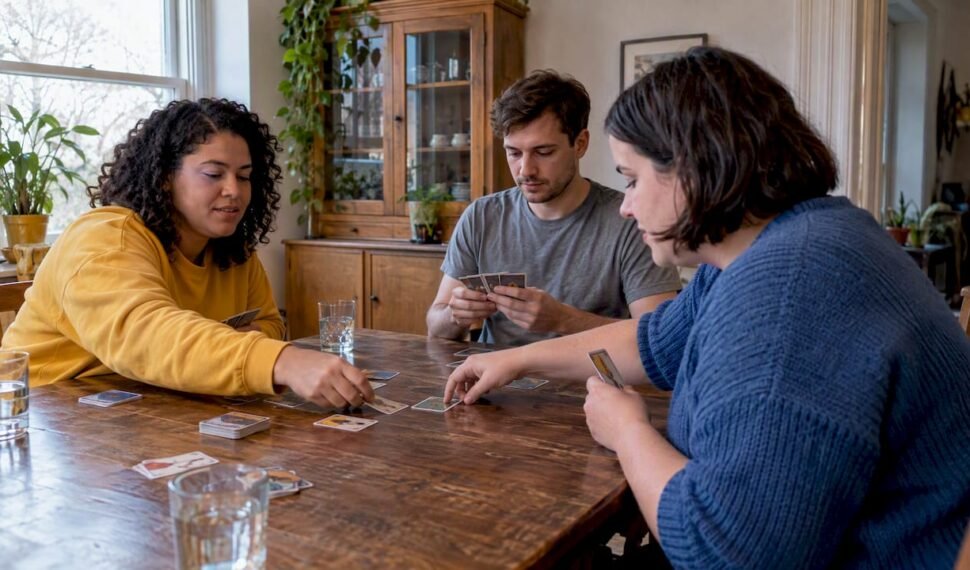
The fastest way to a great indoor game night is a short warm-up, one main game matched to your group’s size and energy, and a clear ending time so the night winds down instead of fizzling out. Below, we organize games by group size (2 to 4, 4 to 8, and 8 or more) and pair each with quick setup notes, so you can pick an icebreaker, a team party game, or a low-prep digital option and start playing in minutes.
TL;DR:
- For 2 to 4 players, choose conversation and strategy games; groups of 4 to 8 suit team or deduction formats, while larger crowds need simultaneous play.
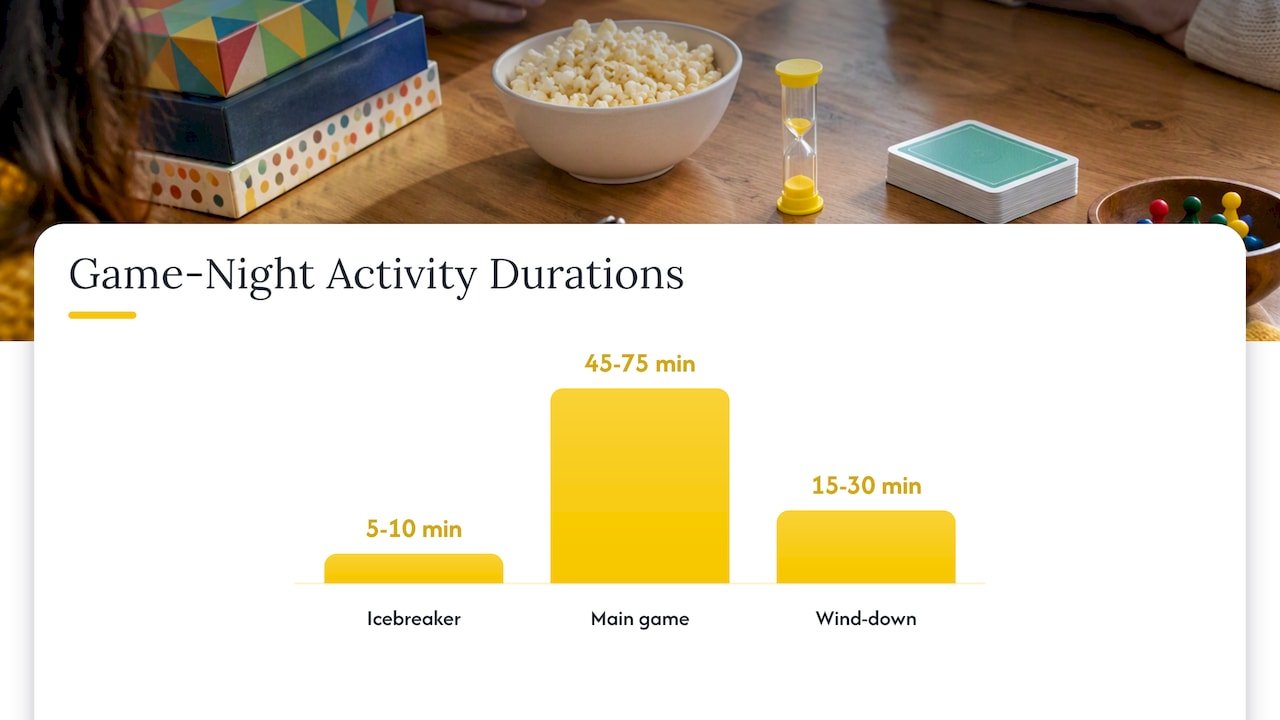
- Use a 5 to 10 minute icebreaker, a 45 to 75 minute main game, and a 15 to 30 minute closing activity.
- Jackbox style games need one shared screen and stable internet, while players join by phone; remote groups should keep video and voice running.
- Choose a staffed venue when the group is large or ages vary; hosts avoid equipment, setup, safety briefings, and cleanup by confirming headcount early.
Table of Contents
- 1. Games Organized by Group Size and Vibe
- 2. Hosting Checklist and Pacing That Keeps Energy Steady
- 3. Low-Prep Tech Options for Mixed or Limited-Setup Groups
- 4. When Booking a Venue Beats Hosting at Home
- 5. Bringing Interactive Venue Games Into Your Lineup
- 6. Customizing a Package for Your Specific Group
- 7. Staying Safe During Interactive Indoor Games
- 8. Booking and Planning Your Event Step by Step
- A Host-Tested Note on What Actually Works
- Archers Battlefield Packages for Your Next Game Night
- FAQ
- Sources
1. Games Organized by Group Size and Vibe
Matching the game to your headcount matters more than picking the “best” game on any list. A hosting guide from Science of People recommends deeper, strategic games for small groups, team-based social games for medium groups, and party formats or rotating stations for large crowds, since bigger groups need everyone active at once rather than waiting their turn.
Small groups (2 to 4 players) work best with games that reward conversation and strategy, since there is nowhere to hide and every player matters.
- Codenames: Two teams guess words from one-word clues; 10 minutes to learn, 20 to 30 minutes to play, and it rewards clever wordplay over luck.
- Ticket to Ride: A route-building board game with simple rules and real strategic depth; expect 45 to 60 minutes once everyone knows the basics.
- Time’s Up!: A three-round guessing game using the same set of names; the official rules) are easy to reference if anyone forgets a round’s twist.
- Jackbox’s Drawful: Players draw bad prompts and guess each other’s doodles; perfect for a mixed group that wants to laugh without much setup.
- Coup: A bluffing card game that runs 15 to 20 minutes per round and works well for repeat play.
- Wavelength: One player gives a clue, everyone else guesses where it lands on a spectrum; quick to explain and surprisingly deep.
Medium groups (4 to 8 players) do well with team-based or social deduction games where splitting into pairs or small teams keeps everyone engaged.
- Jackbox Party Pack (any entry): Everyone uses a phone as a controller, so there is no app to install for players, only a shared screen; great for mixed comfort levels with games.
- Ultimate Werewolf: A social deduction game where players secretly take on hidden roles; one person moderates while the rest debate who is lying.
- Charades or Pictionary with team splits: Divide into two teams of equal size; rotating who acts or draws keeps the pace quick.
- Trivia Murder Party: Combines trivia with light competitive pressure, which works well once a group has warmed up.
- Scattergories: Fast rounds, simple scoring, and easy to adapt for however many teams you have.
Large groups (8 or more) need party formats or rotating stations so nobody sits out for long. The same hosting guide notes that rotating stations or concurrent mini-games reduce wait times and keep energy high in bigger crowds.
- Mafia or Werewolf with a moderator: Scales well past eight players since more roles simply mean a longer, livelier debate.
- Human Bingo: Give everyone a card of prompts to match with other guests; it doubles as an icebreaker for groups who do not know each other well.
- Relay-style trivia stations: Split into small teams and rotate through three or four stations every 10 minutes, so no team waits too long between rounds.
- Quiplash (Jackbox): Works for large groups since everyone answers from their phone at once, and the game displays everyone’s submissions together.
A cooperative round mixed into a competitive lineup also helps. Research on board games and group belonging associates cooperative play with stronger feelings of belonging among peers compared with purely competitive formats, which is worth remembering if your group includes people who do not know each other yet.
2. Hosting Checklist and Pacing That Keeps Energy Steady
A good game night follows a simple shape: a short warm-up, one solid main event, and a relaxed wind-down. Start with a 5 to 10 minute icebreaker while stragglers arrive, run your main game for 45 to 75 minutes, then close with a lighter 15 to 30 minute activity that lets conversation take over as people start to tire.
- Set up seating in a loose circle or U-shape so everyone has a clear sightline to the play area or screen.
- Use layered, warm lighting rather than one overhead light, since it keeps the room comfortable for several hours.
- Stock one-handed snacks (chips, sliders, skewers) so plates do not interrupt gameplay.
- Set up a self-serve drink station so you are not pulled away from hosting every few minutes.
- Have a backup game ready in case the main one runs short or falls flat with your group.
Late arrivals are easiest to handle by folding them into the next round rather than pausing the game in progress. Quiet guests often loosen up once a team game gives them a defined role, so pairing a shy guest with a more talkative partner works better than putting them on the spot solo.
Pro Tip: Announce an end time when guests arrive. Knowing the night has a natural close point helps everyone relax into the games instead of watching the clock.
3. Low-Prep Tech Options for Mixed or Limited-Setup Groups
Phone-as-controller games remove the biggest friction point in group gaming: nobody needs to download anything or own a console. Jackbox-style games only need one shared screen (a TV, laptop, or projector) and a stable internet connection; everyone else joins from their phone’s browser using a short room code, which is ideal for groups with a mix of gaming experience.
- Browser-based party games often require no downloads or accounts, so a group can start playing in under a minute.
- For remote or hybrid players, run voice or video alongside the game so the social back-and-forth survives the screen.
- Interdependent game mechanics paired with video calls can genuinely strengthen social connection among co-located and remote players alike, since the game becomes a reason to talk rather than a replacement for it.
- Keep remote players’ screens visible to the whole room so they feel looped into reactions and side comments, not just the scoreboard.
4. When Booking a Venue Beats Hosting at Home
Hosting works well for small, casual groups, but once the guest list grows, ages mix, or nobody wants to spend the evening managing logistics, a turnkey venue package solves that trade-off. A typical event package bundles the activities, staff supervision, equipment, setup, and cleanup into one booking, so the host’s job shrinks to showing up and enjoying the night.
- Larger groups benefit most, since rotating activity stations keep everyone active without a host managing teams manually.
- Mixed-age gatherings work better at a venue built for varied skill levels, since staff can adjust instructions on the fly.
- Hosts who do not want to buy equipment, clean up, or troubleshoot game rules get a fully managed night instead.
- Corporate groups and sports teams often prefer a venue’s built-in format over assembling office-appropriate games from scratch.
For details on what is included, our event packages page breaks down options by group size and activity type.
5. Bringing Interactive Venue Games Into Your Lineup
Board games and party games cover a lot of ground, but physical, interactive formats add a different kind of energy that a living room setup cannot fully replicate. Combat archery, nerf battles, bazooka ball, dodgeball, ping pong, axe throwing, and arcade games each bring structured competition with a built-in win condition, which works well for groups that want movement alongside the usual sit-down games.
Combat archery and nerf battles both borrow dodgeball’s team elimination format but add foam projectiles and protective gear, which makes them approachable for first-timers and strong players alike. Bazooka ball brings a similar team-versus-team structure with a different projectile and pace. Ping pong and arcade games work well as rotating stations between rounds of a bigger event, since they only need one or two players at a time and let people drop in and out freely. Axe throwing adds a skill-based, turn-taking format that pairs naturally with a scored tournament bracket.
Folding one or two of these into an otherwise board-game-focused night gives a group a physical centerpiece activity, then lets everyone settle into quieter card or party games afterward. It also solves the large-group problem directly: instead of one game with sixteen people watching, you get several simultaneous activities that keep the whole room moving.
6. Customizing a Package for Your Specific Group
The right package depends heavily on who is actually in the room. Families with a wide age range tend to do best with shorter activity blocks and simpler scoring, so nobody feels left out when the youngest or oldest guest has a different skill level. Corporate teams usually benefit from formats that force collaboration, like relay-style team challenges, since the goal is building working relationships rather than crowning a single winner.
Sporting groups and sports teams often prefer a straightforward competitive format they already understand, like elimination brackets or timed rounds, since it mirrors the structure they are used to from their own sport. Birthday parties, especially for kids, typically need a tighter schedule with a clear highlight activity in the middle and built-in time for cake or presents at the end.
Our team-building packages and sports team event packages are structured around these differences, and our kids’ birthday packages build in that shorter, highlight-driven pacing. Matching the package type to the group upfront saves a lot of mid-event adjustment, since staff can set expectations correctly from the first briefing instead of improvising once the group’s dynamic becomes clear.
7. Staying Safe During Interactive Indoor Games
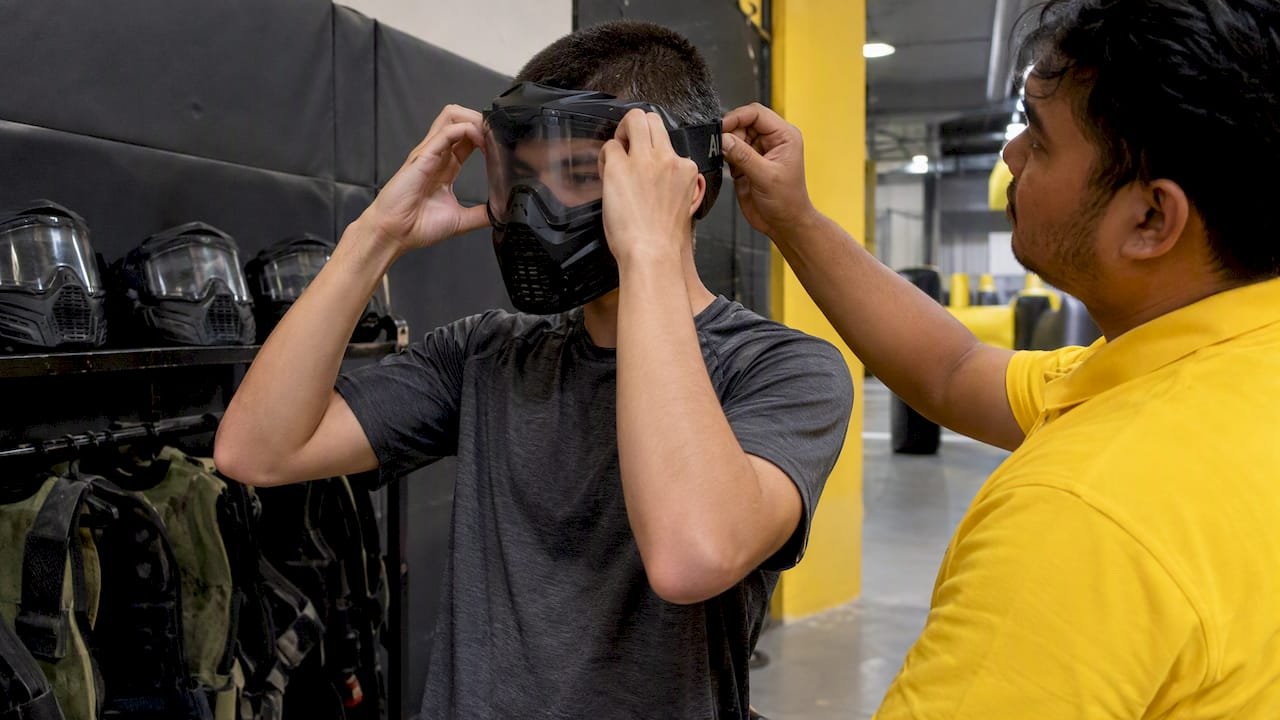
Physical games like combat archery, nerf battles, and axe throwing involve equipment and movement, so a few safety basics matter regardless of where you play. Protective gear (masks, vests, or safety glasses depending on the activity) should fit properly before a round starts, and staff or a designated host should walk through the rules once before anyone picks up equipment.
Clear boundary lines between the play area and spectators prevent accidental contact, and this matters even more in bigger groups where not everyone is actively playing at once. Axe throwing in particular needs a defined throwing line and a enforced waiting area, since retrieving an axe mid-round is one of the more common accident points. A quick equipment check between rounds, and a staff member or host keeping an eye on overall energy levels, keeps competitive excitement from tipping into carelessness.
Groups hosting at home with nerf or foam-based games should keep the same logic: define a boundary, agree on a stop signal, and make sure younger or less experienced players get a slower first round before the pace picks up.
8. Booking and Planning Your Event Step by Step
Booking a venue-hosted game night usually follows a simple sequence. Start by deciding your group size and the activities you want (combat archery, axe throwing, arcade games, or a mix), then check our event packages page for a format that matches.
From there, submit an inquiry with your preferred date, headcount, and group type (birthday, corporate, sports team, or general group outing), and a staff member will confirm availability and walk through package details, including what is included and any add-ons. Once the format is set, you can book directly to lock in your date.
It helps to confirm your final headcount a few days ahead, since some packages are priced or structured by group size, and to flag any accessibility or age-related needs early so staff can adjust activity pacing. Showing up 10 to 15 minutes before your scheduled time gives enough buffer for a safety briefing and gear fitting before the first activity starts.
A Host-Tested Note on What Actually Works
After running countless group events, the pattern holds: the games people remember are rarely the most complicated ones. A simple team format with a clear winner, paired with one cooperative round, consistently outperforms an overstuffed lineup. Pick fewer games and let them breathe.
— Archers
Archers Battlefield Packages for Your Next Game Night
If hosting logistics feel like more work than the game night itself, we handle the setup, staffing, and cleanup so you can focus on the group. Our event packages cover combat archery, nerf battles, bazooka ball, dodgeball, ping pong, axe throwing, and arcade games, with options built for birthdays, adult celebrations, and corporate team-building.
For birthdays, we offer several birthday party packages with various features and pricing, detailed on our kids’ birthday packages page. Adult groups can explore suitable celebration packages on the event packages page. If food is part of your planning, a pizza party playbook is a solid reference for feeding a group without fuss. Ready to lock in a date? Book now and skip the setup entirely.
FAQ
What are some ideas for an indoor game night?
Strong options include Codenames or Ticket to Ride for small groups, Jackbox-style party games or Ultimate Werewolf for medium groups, and rotating stations or Mafia for larger crowds. Pairing a short icebreaker with one main game and a relaxed wind-down activity, as recommended by a hosting guide from Science of People, keeps the night from dragging.
What are 10 popular indoor games?
Popular picks include Codenames, Ticket to Ride, Coup, Wavelength, Charades, Scattergories, Ultimate Werewolf, Quiplash, Human Bingo, and Trivia Murder Party. Each works for a different group size, so matching the game to your headcount matters more than picking by popularity alone.
What are some fun game ideas for a game night?
Fun options range from quick card games like Coup to team-based party games like Jackbox’s Quiplash or Drawful, plus physical options like combat archery or ping pong for groups that want movement. Mixing a competitive round with one cooperative game tends to keep energy balanced across a mixed group.
What are 10 popular indoor games for adults?
Adult-friendly favorites include Codenames, Coup, Ultimate Werewolf, Wavelength, Jackbox Party Packs, Trivia Murder Party, Scattergories, Quiplash, Human Bingo, and card-based bluffing games like Coup’s expansions. Many of these scale from small apartment gatherings to larger group events without changing the core rules.
How long should an indoor game night last?
A typical format runs a 5 to 10 minute warm-up, a 45 to 75 minute main game, and a 15 to 30 minute wind-down, totaling roughly 3 to 4 hours. This pacing keeps energy steady and gives the night a natural close instead of fizzling out mid-conversation.
Sources
- The Ultimate Game Night: 31 Ideas & How to Host One
- Toward a Design Theory of Game-Mediated Social Experiences – Among Us diary study


