
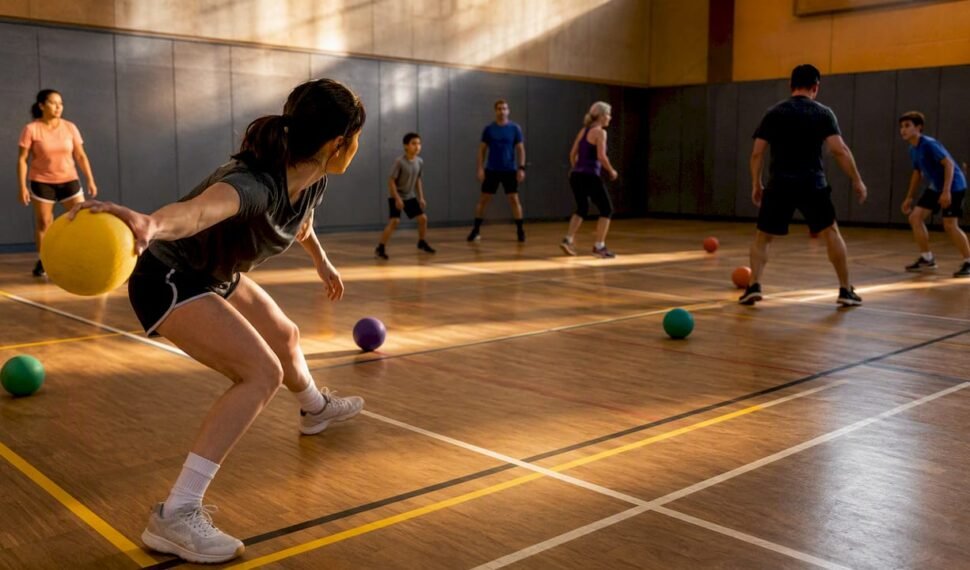
Dodgeball has dozens of playable modes, and this guide lists the most used variants across four families: elimination, continuous/rescue, zone-based, and objective games. You will find setup notes, basic rule templates adapted from frameworks like British Dodgeball, safety fixes, and mode picks for PE classes, birthday parties, camps, and adult rec nights, plus running tips from venues like Archers Battlefield that host dodgeball sessions regularly.
TL;DR:
- Rescue mechanics like medic or jail dodgeball help keep players engaged by allowing eliminated players to re-enter the game, especially in mixed-skill groups.
- Limited equipment such as soft foam balls and strategic rule adaptations like no-head-contact or underarm throws significantly enhance safety and inclusion.
- Zone and rescue games are more manageable for larger groups, require less supervision, and are suitable for lower skill levels or younger children.
- Fast-paced elimination formats like bombardment appeal to adults seeking quick rounds, while objective games like hoop shoot shift focus to scoring rather than elimination.
- Consistent refereeing that prioritizes player intent and simple rules like ball limits and revival mechanics are critical for running successful dodgeball sessions.
Table of Contents
- How dodgeball modes are grouped and why it matters
- Named mode catalog: dodgeball variants you can run today
- Standard rule templates you can copy and adapt
- Safety, inclusion, and officiating that actually work
- Choosing the right mode for your group
- Adapting modes across different settings
- How Archers Battlefield runs dodgeball sessions safely
- What actually makes a dodgeball session work
- Book a dodgeball session with Archers Battlefield
- Sources
- FAQ
How dodgeball modes are grouped and why it matters
Most dodgeball variants fall into one of four families, and knowing which family you are working with tells you almost everything about how the game will feel to run. Elimination games (classic dodgeball, Bombardment) remove hit players until one side or one player remains, which creates high stakes but can sideline weaker throwers fast. Continuous or rescue games (Medic, Jail, Island) bring eliminated players back into play through a mechanic, so nobody sits out for long. Zone-based games (Barrier, Four Quadrants) split the court into sections with their own rules, slowing the pace and giving newer players room to learn. Objective games (Powerball, Hoop Shoot) shift the goal away from pure elimination toward scoring or protecting something, which changes the strategy entirely.
The category you pick shapes three things: how long a round lasts, how much equipment you need, and how forgiving the game is for mixed skill levels. A gym full of second graders needs a rescue mechanic so nobody spends ten minutes on the sideline. A competitive adult league can handle straight elimination because the players expect the intensity, and they often enjoy jeux d’ambiance pour adultes that pair well with dodgeball modes for social events.
When choosing a category, weigh these factors:
- Space available: Zone games need clear boundary markers; elimination games work in almost any rectangle.
- Supervision level: Rescue and zone games are easier for one adult to referee than fast-moving elimination formats.
- Session goal: Pick continuous or objective modes for social fun, and elimination modes when the point is competitive skill practice.
Named mode catalog: dodgeball variants you can run today
Here are the most common variants organizers reach for, based on collected recreational lists like the one from Dodgeball is not an appropriate physical education activity — SHAPE America and camp resources covering youth play.
Medic/Doctor Dodgeball
One or two players on each team are designated medics. A hit player sits out until a medic tags them back in, so the game never fully empties a side. Setup needs a standard rectangular court and two to four soft foam balls. Core rule: medics can be hit too, and once a medic is out, that team loses its revival option until someone appoints a new one. Works well for camps and birthday parties where keeping everyone moving matters more than a clean winner.
Jail/Prisonball
Hit players go to a “jail” area behind the opposing team’s back line instead of leaving the game. They can escape by catching a ball thrown to them by a teammate outside the jail. This needs a court divided into three zones (two team zones plus a shared jail area) and works best with 10 to 20 players. The catch-to-escape rule keeps engagement high and gives eliminated players something to do besides wait.
Island
A twist on jail, where hit players go to a neutral “island” in the middle of the court instead of behind enemy lines. From the island, they can throw at either team, changing the tactical picture for everyone. Court setup mirrors Jail but with a marked central zone. Island suits mixed-age groups because it rewards positioning and awareness over pure arm strength.
Barrier/Pin Guard
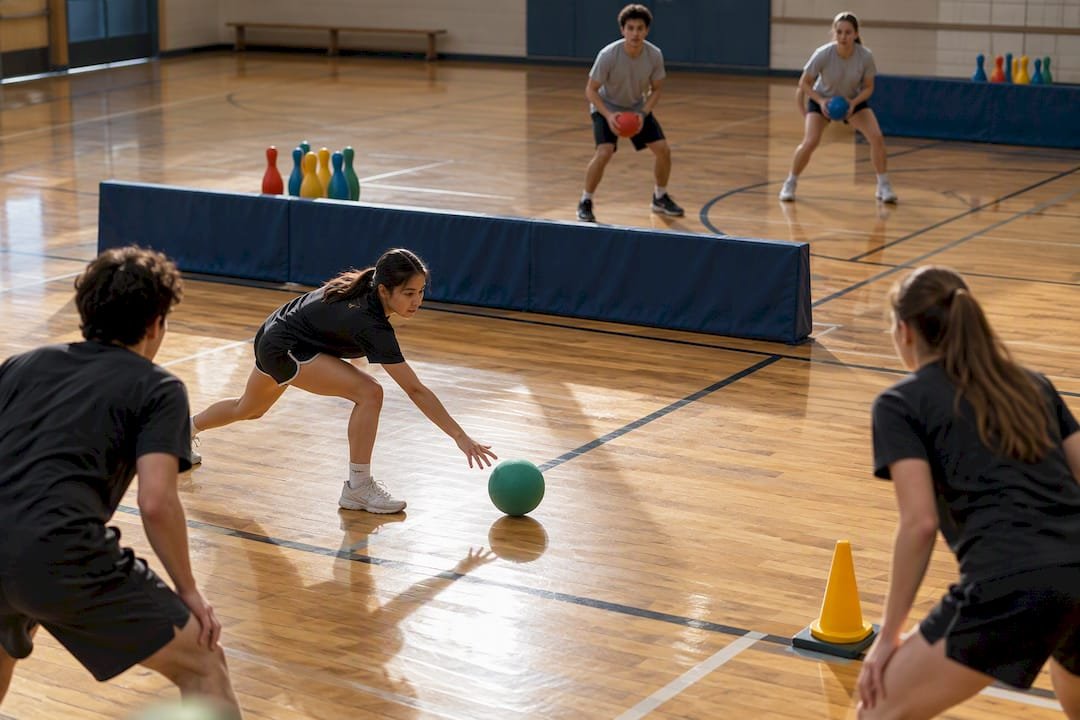
Each team defends a set of pins, cones, or targets behind their back line using a low barrier or bench as cover. Players are eliminated normally, but the game also ends if all of a team’s pins get knocked down. This needs pins or cones, a barrier object per side, and four to six balls. Barrier works well for groups that want a secondary win condition beyond last-player-standing.
Powerball/Money Ball
A single special ball, often a different color, is worth bonus points or an instant win condition if it hits the right target. Standard elimination rules apply otherwise. This adds a layer of strategy since teams must decide whether to chase the power ball or play safe. Good for adult rec leagues that want variety within a familiar format.
Blob/Blob Ball
Players who get hit join hands with the thrower who eliminated them, forming a growing “blob” that must move and throw together. Eventually the blob becomes large enough to corner the last few free players. This needs open space and works best with 15 or more participants. It is closer to a tag game than traditional dodgeball, and it is a strong icebreaker for groups that do not know each other well.
Bombardment
A high-intensity elimination format with a large number of balls in play at once, often six or more on a standard court. There is no revival mechanic, so rounds end quickly. This suits older kids and adults who want fast, repeatable rounds rather than long strategic play.
Hoop Shoot
Instead of eliminating opponents, players score points by throwing balls through a hoop or into a bin on the opposing side. This shifts dodgeball from a survival game into a scoring game and needs hoops or bins plus enough balls to keep shots coming. Good for younger kids who find elimination stressful.
Four Quadrants
The court is divided into four zones, often with two teams per side split further, and players can only move within their assigned quadrant. This limits chaotic running and makes the game easier to referee with large groups. Works well for PE classes managing 25 or more students at once.
Benchball
Eliminated players sit on a bench and can be “rescued” if a teammate throws them a ball they successfully catch while seated. This is a gentler variant that keeps everyone included and needs minimal extra equipment beyond a bench or line of chairs.
Celebrity/Target Dodgeball
One player per team is designated the “celebrity” and is worth extra points or an instant win if hit. Everyone still plays standard rules, but defense often shifts to protecting that one player. This adds a light strategic layer without changing the core game much.
Opposite-Hand Dodgeball
Players must throw with their non-dominant hand, which levels the skill gap between strong and weak throwers. This is less a standalone mode and more a handicap rule layered onto any format, useful when one team clearly outmatches another.
Crackabout
A free-for-all variant with no fixed teams. Every player is out for themselves, and the last person standing wins. This needs a smaller court and works best with eight to 15 players who want a quick, chaotic round between other activities.
Submarine Tag
Players crawl or move low to the ground while trying to hit others, often in a shallow pool or on mats to soften falls. This is a niche variant suited to water-based camps or specialty programs rather than general indoor play.
Pro Tip: Run a two-minute demo round of any unfamiliar mode before scoring counts, since most disputes come from players not understanding the revival or scoring rule, not from the game itself.
Standard rule templates you can copy and adapt
Every dodgeball session needs a baseline before you layer in a named variant. These three templates cover the settings most organizers run into.
- Casual/party template. Use a court roughly the size of a badminton court, four to eight soft foam balls, and groups of eight to 20 players split evenly. A player is typically out when hit by a valid target area or when their thrown ball is caught, with variations on the exact hit location to improve safety. Sessions often run for a moderate duration, split into several short rounds with resets between each.
- PE class template. Add a “no retrievers” rule where players fetch their own balls to keep everyone moving, or assign rotating retriever roles to manage large classes. Use a recycling mechanic like Medic or Benchball instead of full elimination, since research on dodgeball pedagogy indicates that rule changes emphasizing skill practice reduce negative effects and improve inclusion. Cap rounds at five minutes to manage classes of 25 or more.
- Organized/league template. Matches are typically played as sets, and British Dodgeball’s regulations describe a set ending either on full elimination of one team or after a continuous-play cap commonly set at three minutes, with league matches often run as two halves of several minutes depending on the event format. Minimum viable teams run six per side, and a designated referee tracks eliminations, catches, and boundary violations.
Safety, inclusion, and officiating that actually work
Dodgeball’s reputation problem usually traces back to how it is run, not the game itself. Research from Plymouth University points to specific pedagogical choices that reduce negative effects and improve inclusion, and organizers can put most of them in place without much effort.
- Use soft foam balls exclusively, never anything with a hard shell or excess weight.
- Enforce no-head-contact rules and treat head shots as a dead ball rather than a valid elimination.
- Offer underarm-only throwing for young kids or beginner sessions to reduce force and improve safety.
- Limit ball hoarding by capping how many balls one player can hold or how many consecutive throws they get.
- Supervise retrieving so players are not sprinting into live-ball areas to grab loose balls.
Rule changes that limit hoarding and require underarm throws for younger players increase participation and reduce negative behaviors tied to elimination formats, according to pedagogy research on dodgeball. That single finding explains why most successful youth sessions look nothing like the free-for-all version many adults remember from school.
Inclusive refereeing, a practice British Dodgeball’s own referee guidance emphasizes, focuses on player intent rather than rigid technicality: stop play for safety issues, not for minor form errors, and adapt catching rules for newer players without changing them for everyone. A general supervision guideline worth following is one adult per 10 to 15 players for casual sessions, more if the group includes very young children.
Choosing the right mode for your group
Pick a mode by working through five factors in order: age range, group size, available space, skill level, and whether the goal is fitness, fun, or competition.
- Age and skill spread: Wider skill gaps favor rescue or zone modes over pure elimination.
- Group size: Groups over 20 usually need a zone-based mode like Four Quadrants to stay manageable.
- Space and equipment: Confirm court size and ball count before committing to a barrier or hoop-based mode.
Three quick scenarios:
- Elementary PE class of 25. Use Four Quadrants or Benchball with underarm-only rules and a five-minute round cap.
- A 12-year-old’s indoor birthday party. Medic or Jail Dodgeball keeps a mixed-skill group of friends engaged without long waits on the sideline.
- Adult rec league night. Bombardment or Powerball with standard overhand rules and a short set cap matches the pace most adult players expect.
For a first run of any mode, walk through this checklist: confirm ball count and court markers, deliver a 60-second safety brief, run a two-minute warm-up throw, play two or three short practice rounds without scoring, then start the main game.
Adapting modes across different settings
The same mode can work in very different rooms if you adjust the details.
- PE class: Favor Four Quadrants or Benchball, cap rounds at a few minutes, and use a no-retrievers rule to keep students moving instead of standing near the balls.
- Summer camp: Jail and Island work well outdoors with 15 to 30 kids, and rounds can run longer, up to 10 minutes, since camp schedules have more flexibility.
- Birthday party: Medic or Celebrity Dodgeball fit a smaller indoor space and a shorter attention span, with rounds around five to eight minutes.
- Adult rec league: Bombardment or Powerball with a referee and a set format similar to British Dodgeball’s continuous-play cap keep pacing consistent across a night of matches.
When switching between modes in one session, keep the court and ball setup the same where possible and only change one rule at a time (revival mechanic, then scoring, then zones) so players are not relearning everything at once. Rotate players between teams between rounds so nobody sits with the same group all session, which keeps energy up even in modes without a rescue mechanic.
How Archers Battlefield runs dodgeball sessions safely
Archers Battlefield runs Dodgeball as part of its lineup of group activities, alongside combat archery, Nerf battles, bazooka ball, ping pong, and axe throwing, with sessions built for families, corporate groups, sports teams, and individuals. Sessions typically include supervised play and equipment provided on-site, removing the setup burden from organizers.
In practice, group size and pacing matter more than which specific mode gets picked. Smaller groups move faster through rounds, while larger groups benefit from a rescue-style mode so nobody spends long stretches out of play. A common early hiccup in mixed-age groups is uneven throwing strength, which usually gets fixed fast by adding a soft-ball-only rule or an underarm option for younger participants, the same adaptation recreational guides and pedagogy research both point to. The supervised format is built around these kinds of adjustments, so groups can focus on playing rather than managing rule disputes.
What actually makes a dodgeball session work
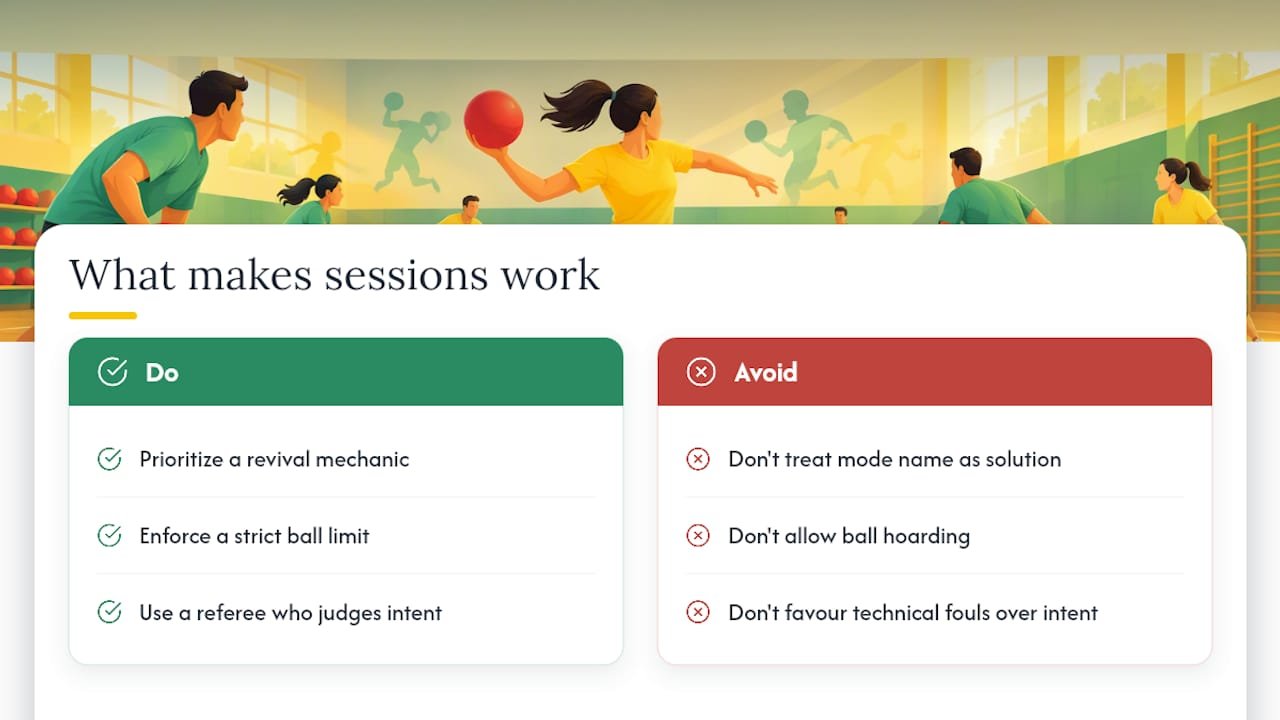
The internet’s obsession with naming every possible dodgeball variant misses the more useful question: which two or three rule changes turn a mediocre session into a great one? Based on the pedagogy research and organized rulesets covered here, the answer keeps coming back to the same short list: a revival mechanic for mixed-skill groups, a ball limit to stop hoarding, and a referee who cares more about intent than technical fouls.
Conventional advice treats mode selection as the whole game, listing dozens of variants as if picking the right name solves everything. It does not. A poorly refereed game of Medic Dodgeball can be worse than a well-run game of straight elimination. The mode is the skeleton, but pacing, ball count, and how you handle the first frustrated kid who gets hit twice in a row are what determine whether the session works.
If you take one thing from this guide, prioritize the rescue mechanic and the ball-hoarding limit before you worry about which named variant sounds most fun. Get those two right and almost any mode on this list will land.
— Archers
Book a dodgeball session with Archers Battlefield
Running a great dodgeball session takes court space, enough soft balls for the group size, a clear rule set, and someone willing to referee disputes fairly. Archers Battlefield handles all of that on-site, so a parent, coach, or event planner does not need to source equipment or manage the rules themselves.

For groups looking to book, a few starting points:
- Birthday parties: the kids birthday party packages page covers options like the Game On Birthday Party (from $399) and Epic Birthday Party (from $499).
- Corporate or sports team events: the team building page lists packages like the Collab Package (from $699).
- General event bookings: the event packages page covers options such as Pong & Party On (from $299) for groups combining dodgeball with other activities.
Once you know which package fits your group, book now to lock in a date and let the venue handle the equipment and supervision.
Sources
For formal timing and set structures, British Dodgeball’s regulations are the clearest primary source, alongside their referee guidance on inclusive officiating. For equipment and playground-tested variants, Playworks’ dodgeball resources and a broader list of dodgeball variations are useful cross-checks for lesser-known modes. Anyone planning dodgeball in a school setting should also read SHAPE America’s position statement on the activity’s fit in K-12 PE, and camp organizers may find the summer camp variation guide helpful for quick mode descriptions.
- British Dodgeball regulations 24/25 (match formats)
- Research on dodgeball pedagogy and inclusion (Plymouth University paper)
- Dodgeball is not an appropriate physical education activity — SHAPE America
FAQ
What are the different types of dodgeball games?
Dodgeball variants generally fall into elimination games like Bombardment, rescue games like Medic or Jail, zone-based games like Four Quadrants, and objective games like Powerball or Hoop Shoot. Each family changes the pacing and how long eliminated players stay out of play.
What are the 5 D’s for dodgeball?
There is no single, universally recognized mnemonic framework for dodgeball; definitions vary by coach or program. Some informal versions use multiple ‘D’ words as playful mnemonics, but these are not formal rule sets from a governing body like British Dodgeball.
What are the different categories of ball games?
Ball games are broadly grouped by objective: invasion games (soccer, basketball), net or wall games (volleyball, tennis), striking and fielding games (baseball), and target games (bowling). Dodgeball sits somewhat outside these traditional categories since its core mechanic is player elimination or rescue rather than scoring against a goal.
What are some modified dodgeball games?
Common modifications include underarm-only throwing for younger players, ball-hoarding limits, and revival mechanics like Medic or Jail that bring eliminated players back into the game. Research on dodgeball pedagogy points to these specific changes as effective for improving inclusion and reducing negative behaviors in school and youth settings.
What is medic dodgeball and how does it work?
In Medic Dodgeball, one or two designated medics on each team can tag out players back into the game, so nobody is eliminated for the whole round. If a medic gets hit, their team loses the ability to revive players until a new medic is appointed. It is a common choice for parties and camps where keeping everyone active matters more than a clean elimination winner.


