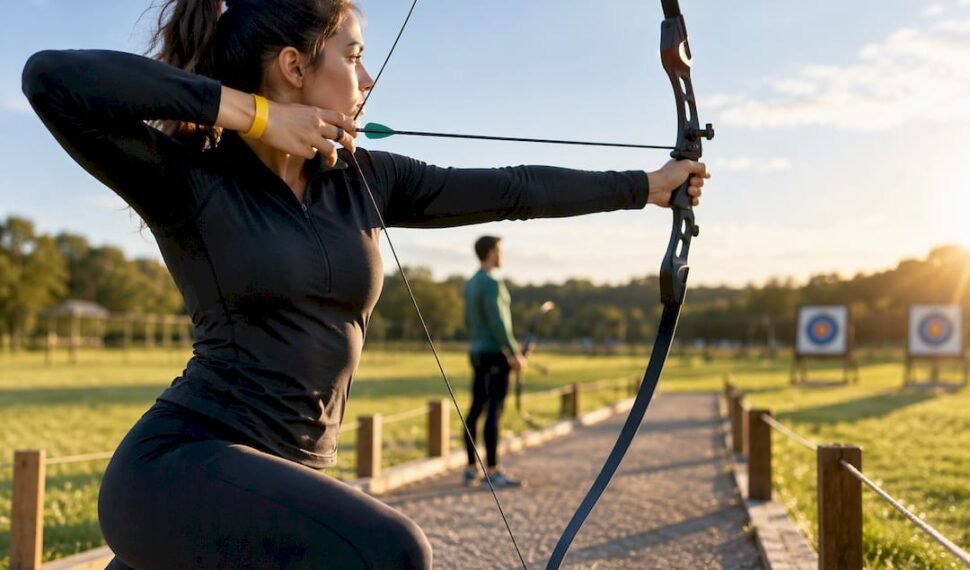
For active corporate team-building at an activity venue, wear athletic, close-fitting, movement-friendly clothing and stable closed-toe shoes, and remove loose jewelry and tie back long hair. Bring a light layer for temperature shifts between activities. Staff can refuse participation over unsafe footwear or accessories, and some games, like combat archery, carry extra rules such as long sleeves under an arm guard.
TL;DR:
- Wearing athletic, close-fitting clothing with stretch fabrics reduces hazards and ensures ease of movement during high-intensity activities like dodgeball and archery.
- Closed-toe, flat-soled athletic shoes are mandatory, while footwear with open toes, heels, or wheels are generally prohibited to maintain stability and safety.
- Attendees should remove dangling jewelry and tie back long hair before participation to prevent snagging equipment or causing distractions.
- Organizers should send detailed dress code and safety instructions 48 to 72 hours prior, including footwear, jewelry, and arrival procedural guidelines.
- Booking full packages from venues like Archers Battlefield bundles activities, safety briefings, and supervision, starting at around $699 for multiple activities.
Table of Contents
- What clothing actually works best for activity venues
- Activity-by-activity rules for archery, axe throwing, and more
- Footwear, jewelry, hair, and nail guidance that gets enforced
- Organizer checklist and a pre-event message that prevents problems
- What to pack and what to leave at home
- Timeline and cost expectations for a booked session
- Dressing for indoor sessions versus outdoor conditions
- Comfort and confidence for every body type
- Layering for effort that changes by the minute
- Fabrics that cause more problems than they solve
- How Archers Battlefield puts these rules into practice
- Book a corporate event with the dress code already handled
- Safety guidance and checklists worth bookmarking
- Sources
- FAQ
What clothing actually works best for activity venues
Athletic clothing means something specific in this setting: fabric with stretch, a fit close enough to the body that nothing dangles or catches, and hems that stay put during a sprint or a lunge. Loose flannel, wide-leg pants, and long scarves might look fine at a desk, but they turn into hazards the moment someone pivots to dodge a ball or draws a bowstring.
Layering matters because effort levels swing hard during a corporate event. A group might stand still for a safety briefing, then sprint through a dodgeball round two minutes later. A short-sleeve athletic top under a light zip-up gives attendees the option to shed a layer once their heart rate climbs, without ever being stuck in something too heavy.
Unstable fabrics create two separate problems. Loose hems can snag on equipment, bows, targets, or other players, and can trip the wearer or a teammate. Slippery synthetic blends with no grip against skin can bunch up mid-activity, which distracts a player at exactly the wrong moment during axe throwing or archery.
- Choose stretch-woven or performance-knit tops and bottoms over cotton dress shirts or denim.
- Skip anything with a hanging drawstring, a long scarf, or an oversized hood.
- Tuck in or tape down any fabric that could catch on a bow, target stand, or throwing lane divider.
- Pack a light zip-up or athletic jacket for cooler indoor zones or breaks between rounds.
Pro Tip: Test your outfit with a few squats and arm swings before you leave the house. If anything shifts, gapes, or drags, change it.
Activity-by-activity rules for archery, axe throwing, and more
Each activity at a venue carries its own equipment and its own specific risks, so the clothing rules shift slightly from station to station.
- Combat archery: tie back long hair, remove dangling jewelry, and wear closed-toe shoes; a long-sleeve top is often recommended so an arm guard sits securely against skin rather than loose fabric, following the same logic laid out in archery risk assessment guidance.
- Axe throwing: closed-toe shoes are mandatory, gum and food are off-limits during active throwing, and participants wait for a full safety briefing before picking up a target, per safety rules for axe-throwing venues.
- Dodgeball: flat-soled athletic shoes with real lateral support are required, and some venues rotate or sanitize shared balls between rounds as part of routine cleaning practices, consistent with the World Dodgeball Federation’s venue guidance.
- Nerf battles: the same footwear and jewelry rules apply as dodgeball, since both involve sudden lateral movement and diving for cover.
- Bazooka ball: treat it like dodgeball for clothing purposes: snug athletic wear, no loose accessories, and shoes built for quick stops and starts.
- Ping pong and arcade games: the physical risk is lower, but loose sleeves and dangling jewelry can still catch on a paddle or a joystick, so the same baseline comfort rules still apply.
Organizers booking a mixed session, say archery tag followed by dodge ball, should tell attendees to dress for the more demanding activity and adjust down from there.
Footwear, jewelry, hair, and nail guidance that gets enforced
Shoe choice causes more on-site friction than almost any other clothing decision. Running shoes and cross-trainers with a flat rubber sole are the standard expectation. Sandals, heels, platform shoes, wheeled sneakers, and anything with an open toe or open heel are typically turned away, since they compromise balance during quick direction changes, according to Physical and Health Education Canada’s dodgeball checklist.
Not all athletic-looking shoes pass: a fashion sneaker with a rigid sole or an elevated heel can still get flagged by staff because it fails the same stability test as a dress shoe.
- Wear or bring: running shoes, cross-trainers, or court shoes with flat, closed soles.
- Leave at home: sandals, flip-flops, heels, platforms, wheeled shoes, and slip-on loafers.
- Remove or secure: dangling earrings, long necklaces, loose bracelets, and rings that could catch on equipment.
- Medical alert bracelets are typically the one exception staff will accommodate rather than remove.
- Tie back hair past shoulder length and trim long nails that could interfere with grip or gameplay.
Staff hold the final call, and a specific rule like closed-toe shoes only beats a vague instruction like dress comfortably every time.
Organizer checklist and a pre-event message that prevents problems
Sending clear instructions 48 to 72 hours before the event heads off the most common on-site delay: someone showing up in the wrong shoes. A short message covering four things does most of the work.
- Dress code line: “Wear athletic, close-fitting clothing you can move freely in.”
- Footwear line: “Closed-toe athletic shoes are required. Sandals, heels, and wheeled shoes will not be permitted.”
- Jewelry and hair line: “Please remove dangling jewelry and tie back long hair before arrival.”
- Logistics line: “Arrive 15 minutes early for waivers and a safety briefing; bring photo ID if required.”
On-site, staff generally run a short setup that pays off during the event itself: safety signage at each station, a pre-shift briefing for staff on that day’s group, a few spare hair ties or tape on hand, and a seating flow that keeps waiting groups clear of active lanes. Reference the venue’s team-building packages directly in your invite so attendees know what to expect before they book.
Pro Tip: Flag the dress code in the subject line of your reminder email. Attendees skim calendar invites, but a subject like “What to wear: closed-toe shoes required” gets read.
A clothing refusal at check-in costs time for the whole group, not just the one person turned away, so the earlier this information goes out, the smoother the schedule stays. Groups running a corporate retreat alongside the activity block can find planning-communication tips in this guide for HR teams.
What to pack and what to leave at home
A short bag beats an overpacked one for these events.
- Closed-toe athletic shoes, even if you plan to arrive in something else.
- A refillable water bottle, since most sessions run without breaks for long.
- A spare pair of socks, especially for shared or rental footwear situations.
- Personal medication or a medical ID card if you carry one.
- Athletic tape or grip gloves, if the venue allows them for activities like axe throwing.
Leave expensive watches, loose cash, and anything you would not want to drop mid-sprint in the car. Most venues offer lockers or a designated storage spot, but the safest valuable is the one you never brought.
Timeline and cost expectations for a booked session
A typical corporate booking runs from arrival through a safety briefing, equipment setup, the activity block itself, and a short wrap-up, usually filling a window of a few hours depending on group size and the number of activities included. Single activities are priced individually: Combat Archery and Nerf Battle run $35, while Ping Pong and Dodge Ball run $30 each, per Archers Battlefield’s pricing.
Groups booking a full event package pay a set rate that bundles multiple activities and planning support. The Collab Package starts from $699, the Ultimate Paddle Package starts from $799, and the Momentum Package starts from $2,395, all listed on the venue’s team-building page. Sports teams have their own tier: Game On Team Battle starts from $399, Epic Team Battle Event starts from $499, and Team Collab Package starts from $699.
Organizers booking for a larger department should factor in the extra check-in time a bigger group needs for waivers and gear checks. Building a 15 to 20 minute buffer before the scheduled start keeps the rest of the timeline intact, since a rushed check-in is where clothing and footwear issues tend to surface.
Dressing for indoor sessions versus outdoor conditions
Indoor activity floors hold a steady temperature, so a single moisture-wicking layer usually covers the whole session without much adjustment. The bigger variable indoors is footing: a floor that’s fine for running shoes in the morning can pick up moisture from an earlier group, so a shoe with real tread still matters even when there’s no weather involved.
Outdoor bookings add real variables. Wind cuts through thin fabric faster than people expect, especially between rounds when the group is standing still for instructions. A light, packable layer that can go on or off quickly handles that better than a bulky jacket that gets left in a pile once the activity starts. Damp grass and mud can also turn athletic shoes with worn tread into a slipping hazard, so a shoe with fresh grip is worth checking before an outdoor event.
Sun matters too. A cap works for most outdoor activities, but it should come off or be secured during archery so the brim doesn’t obstruct sightlines toward the target. Sunscreen applied well before arrival avoids the greasy-palm problem that shows up mid-activity if it’s applied right at check-in.
Whichever setting, the same base rule holds: dress for the activity first, and adjust the outer layer for the weather around it.
Comfort and confidence for every body type
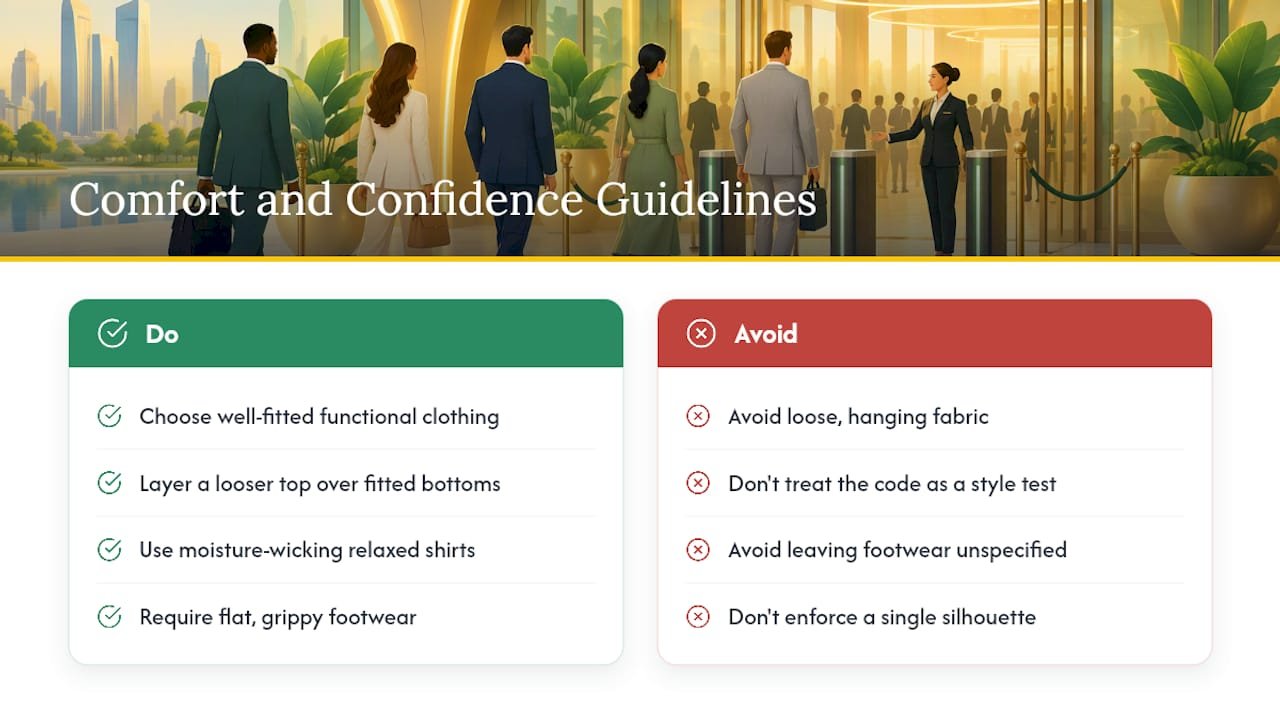
Comfortable, well-fitted clothing matters more than any particular brand or style, and that holds true across every body size and shape. The goal is functional fit: enough room to move through a full range of motion, without so much fabric that it catches or drags. Athletic brands generally offer a wide range of sizing and cuts, so there’s no single “correct” silhouette for these events, just fit that supports free movement.
Attendees who feel self-conscious in fitted athletic wear can layer a looser, athletic-cut top over fitted bottoms, or the reverse, as long as nothing hangs loosely enough to catch on equipment. A relaxed-fit moisture-wicking shirt paired with fitted leggings or joggers gives coverage without sacrificing safety.
Organizers can make a real difference here by setting the tone early: framing the dress code as a safety requirement rather than a style expectation removes a lot of the social pressure attendees might otherwise feel. A pre-event note that says plainly “wear whatever athletic clothing helps you move freely and feel comfortable” invites people to make their own call rather than guess at an unspoken dress standard.
Footwear is the one area with less flexibility, since stability affects everyone equally regardless of body type. A shoe with a flat, grippy sole works the same way for every foot size and shape, so that’s the rule worth holding firm on even while everything else stays flexible.
Layering for effort that changes by the minute
Corporate activity events rarely move at one steady pace. A group might stand through a 10 minute safety briefing, then launch into a high-intensity dodgeball round, then cool down during a ping pong rotation. Clothing that only works for one of those states leaves attendees either too warm or too cold for most of the day.
The fix is a simple two or three piece system. A moisture-wicking base layer handles the bursts of activity, since it moves sweat away from skin rather than trapping it. A light mid layer, a zip-up hoodie or athletic jacket, comes off the moment activity ramps up and goes back on during breaks or briefings. For outdoor sessions or venues that run cool, a thin wind-resistant shell can sit on top without adding bulk that restricts arm movement during archery or axe throwing.
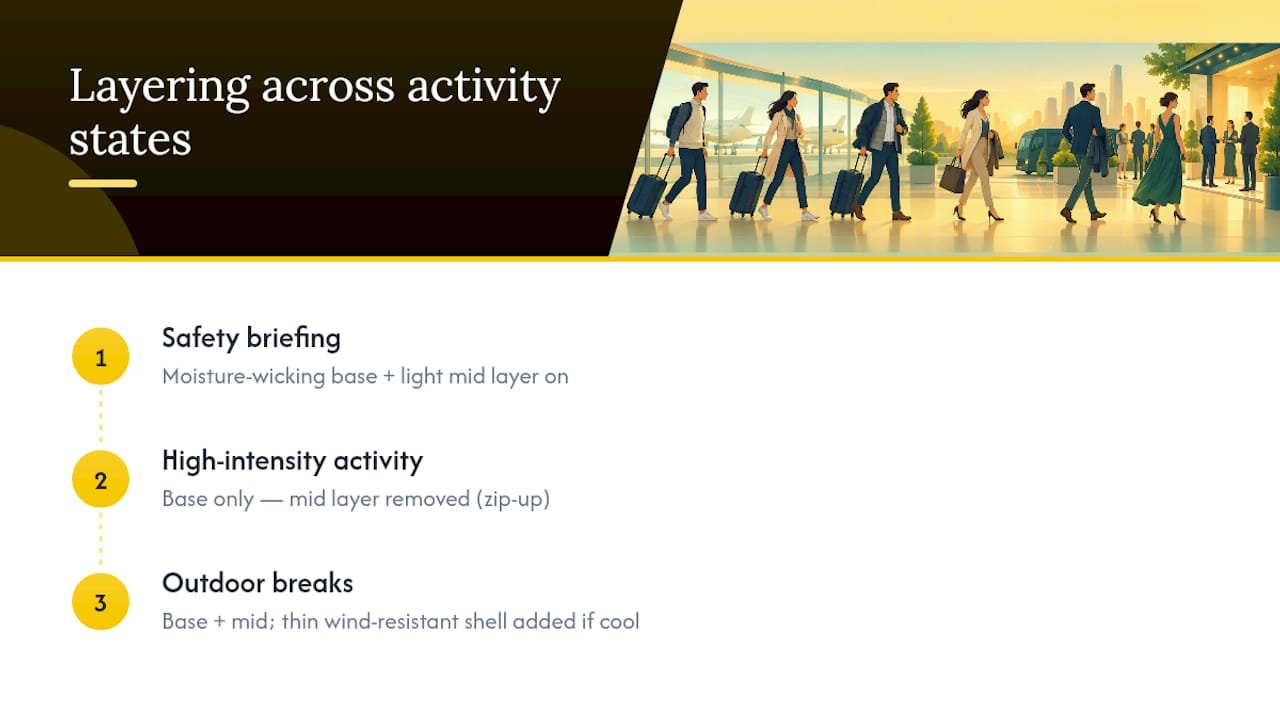
The mistake most people make is dressing for the moment they walk in the door rather than the whole session. Someone who shows up in a heavy sweater because the parking lot felt cold will be overheating twenty minutes later during a dodgeball round, with nowhere to put the sweater except a chair across the room. Zip-up layers solve that problem better than pullover styles, since they can go on or off in seconds without stopping to find a private corner or interrupt the group.
Fabrics that cause more problems than they solve
Some common fabric choices create real discomfort or safety issues once activity starts, even if they look fine standing still.
Heavy cotton soaks up sweat and stays wet, which gets cold and heavy fast once the activity slows down. Non-breathable synthetic fabrics trap heat against skin, which becomes a real problem during a high-effort round of dodgeball or a summer outdoor session, leaving someone overheated well before the activity block ends. Stiff denim restricts the range of motion archery and axe throwing both require, since drawing a bow or completing a throw depends on a full shoulder and hip turn that tight woven fabric resists.
Loose knit fabrics, oversized cardigans, or anything with a wide weave, can snag on equipment or on another player during fast-paced games, and a snag mid-swing is exactly the kind of distraction that leads to a dropped axe or a missed catch. Rhinestones, sequins, or hard embellishments on clothing pose a similar catch risk and can also scratch shared equipment.
The safest general rule is a performance-knit or stretch-woven fabric built for movement, similar to what someone would wear for a gym session or a run. It manages sweat, moves with the body, and carries no hard surfaces or wide weaves that could catch on a bow, an axe, or another player’s gear.
How Archers Battlefield puts these rules into practice
Some activity venues build their packages around a safety-first approach, with staff running a short safety briefing before every activity block and checking footwear and jewelry at check-in rather than leaving it to chance. Many offer customizable event and party packages for groups of different sizes, from corporate teams to sports squads, with planning support to help organizers manage logistics.
When someone shows up in unsuitable shoes or jewelry, staff typically offer a quick fix rather than turning the person away outright: a spare hair tie, a request to remove a bracelet, or a suggestion to sit out one high-contact round rather than the full session. That kind of on-the-spot flexibility keeps the schedule moving without compromising the basic safety rules everyone else in the group is following.
— Archers
Book a corporate event with the dress code already handled
Once your team knows what to wear, the only thing left is picking the right package. Archers Battlefield’s event packages bundle multiple activities, from combat archery to axe throwing, with a safety briefing and staff supervision built into every booking, so organizers spend less time managing logistics and more time running the actual event.

- Browse team-building packages built for corporate groups of different sizes.
- Confirm footwear and jewelry expectations directly in your booking confirmation email so nobody arrives unprepared.
- Ask staff about loaner options for closed-toe shoes if an attendee arrives without appropriate footwear.
Ready to lock in a date? Head to the booking page to check availability and get a quote for your group size.
Safety guidance and checklists worth bookmarking
- Dodgeball activity checklist: footwear and clothing standards from Physical and Health Education Canada.
- Archery risk assessment: hair, jewelry, and footwear rules for archery activities.
- Axe-throwing safety rules: operator guidance on footwear, gum, and briefings.
- Dodgeball venue restart guidance: signage, hygiene, and crowd management practices.
Sources
- Dodgeball — Physical and Health Education Canada (activity checklist)
- Archery risk assessment — Jarman Centre
- Safety rules of participation — Axe-throwing operator guidance
- Return to play — World Dodgeball Federation
FAQ
Can I wear jeans to a corporate archery or dodgeball event?
Jeans are usually discouraged because stiff denim limits the shoulder and hip movement archery and dodgeball both require. Stretch-woven athletic pants or joggers give the same coverage without restricting a full swing or a quick dodge.
What shoes are not allowed at activity venues?
Sandals, heels, platform shoes, wheeled sneakers, and anything with an open toe or open heel are commonly turned away, since they reduce stability during fast direction changes, per dodgeball footwear guidance. Flat-soled running shoes or cross-trainers are the standard expectation.
Do I need to remove all jewelry before playing?
Dangling earrings, long necklaces, and loose bracelets should come off or be secured before activities like archery, since they can snag on equipment, following archery safety guidance. Medical alert bracelets are typically the one item staff will accommodate rather than ask to be removed.
What should I wear specifically for combat archery?
Wear closed-toe shoes, tie back long hair, and remove dangling jewelry before stepping onto the archery floor. A long-sleeve top is often recommended so an arm guard sits flush against the skin rather than loose fabric.
How much does a corporate team-building session cost?
Pricing depends on the package and group size. Single activities like Combat Archery run $35, while bundled team-building packages such as the Collab Package start from $699.


