
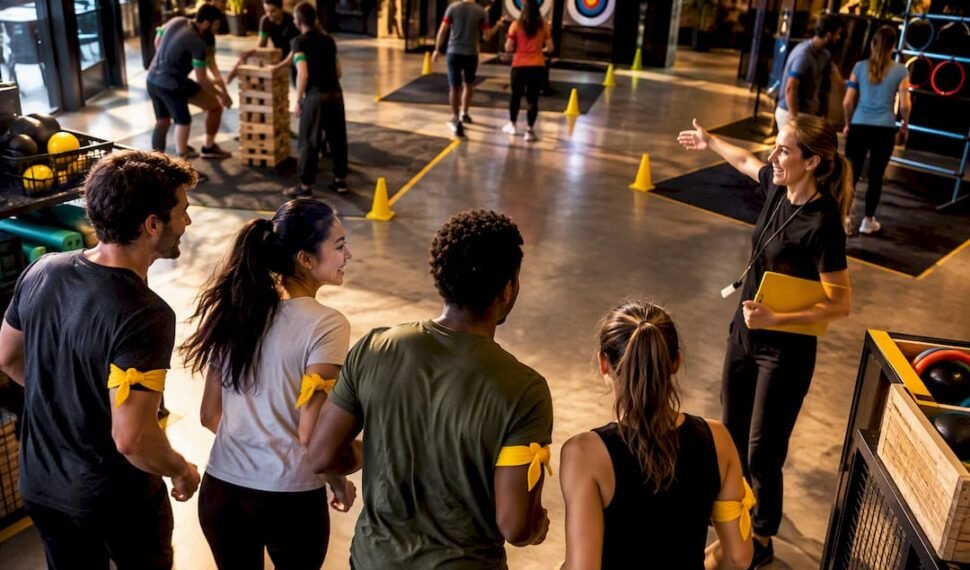
The winning formula is simple: one clear theme, a bracket format matched to your headcount, and short rounds that mix skill so no single guest dominates. Aim for 4 to 8 teams of 3 to 6 people, keep food one-handed, and give someone a whiteboard to run the scoreboard. If you’d rather skip the setup entirely, Archers Battlefield hosts turnkey tournament-style parties with the games, referees, and space already sorted.
TL;DR:
- Bracket formats like double elimination and pool-into-knockout keep teams engaged longer and balance fairness with pacing constraints.
- Short game rounds of 60 to 90 seconds maintain momentum, encourage comebacks, and accommodate multiple event types within limited timeframes.
- Themed parties influence all decor, food, and game choices, with a single, well-executed theme preventing clutter and enhancing atmosphere.
- DIY setups work best when space and equipment are available, but venues like Archers Battlefield offer full-service options that handle safety, rules, and setup.
- For outdoor or large gatherings, strict food safety protocols such as rapid cooling and clear allergen labeling are essential to prevent hazards.
Table of Contents
- Tournament Party Ideas Built Around a Theme
- Choosing the Right Tournament Format
- Games and Activities That Scale With Your Crowd
- Feeding a Crowd Without Stopping the Games
- Prizes and Decorations That Make It Feel Official
- Sample Run-of-Show for Any Tournament Length
- Making Sure Everyone Can Actually Play
- When to DIY and When to Book a Venue
- Book a Turnkey Tournament Party at Archers Battlefield
- Sources
- FAQ
Tournament Party Ideas Built Around a Theme
The theme is what turns a bunch of games into a party people remember. It also decides your food, your décor, and how much prep you’re signing up for.
- March Madness bracket bash: printable brackets on the wall, team signs taped to chairs, and a bowl for upset predictions.
- World Cup watch party: flag stations for each guest’s pick, prediction cards for every match, and a scoreboard updated at halftime.
- Golf and Masters night: green-and-gold table settings, a mini-putt station in the yard, and a “19th hole” drink cart. Charity golf events lean on this same trick, folding a theme into decor, on-course games, and prizes rather than treating decoration as an afterthought.
- Glow sports night: neon bracelets, glow-in-the-dark balls, and LED tape marking out lanes or cornhole boards after dark.
- Retro arcade, backyard tailgate, or beach carnival: multi-sport Olympics format where each “event” is a two-minute mini-game.
Pick one theme and commit. A half-decorated room with three competing color schemes reads as clutter, not celebration.
Choosing the Right Tournament Format
Format decides how much drama, and how much fairness, your party gets. Get this wrong and you’ll either run out of time or bore half the guests by round two.
- Single elimination moves fastest and suits a tight schedule, but one bad round sends a team home for good.
- Double elimination gives teams a second life after one loss. It works well for 4 to 8 teams and rewards a slow start without punishing it outright.
- Round robin is the fairest option since everyone plays everyone, but it eats the most time and only fits small groups who want maximum playtime over speed.
- Pool-into-knockout and cumulative scoring split the difference. Teams play a group stage, then the top scorers advance, which keeps eliminated squads engaged since points still matter. Cumulative scoring or hybrid pool formats specifically keep eliminated teams invested and allow late comebacks, which is what actually keeps the room loud in the final round.
- Whatever format you pick, name a commissioner, print the tie-breaker rules before round one, and keep the bracket visible at all times.
Games and Activities That Scale With Your Crowd
Different spaces call for different games, and pacing matters more than variety. Short rounds beat long ones almost every time.
- Party and table games: Draw & Guess (a Pictionary-style format) works for mixed or corporate groups when you run 4 to 8 teams through 60 to 75-second rounds with a running leaderboard. Trivia tournaments and prediction boards work the same way.
- Lawn and yard games: cornhole, giant Jenga, ladder toss, and mini-putt all score fast and need almost no setup between rounds.
- Indoor and venue games: ping pong, dodgeball variants, nerf battles, and flip cup bring high energy without needing outdoor space.
- Pool tournaments: relay races, accuracy contests, and a cannonball or treasure-hunt challenge mix speed, skill, and pure silliness in one afternoon.
Pro Tip: Cap every round at 60 to 90 seconds, even for games that could run longer. Short heats keep momentum up and make a last-place team’s comeback in round three feel possible instead of hopeless.
Feeding a Crowd Without Stopping the Games
Nobody wants to juggle a fork while flipping cups or shooting darts. Build the whole menu around one hand.
- Sliders, wraps, skewers, and pretzel cups instead of anything that needs a knife.
- Fruit skewers, popcorn, and themed desserts (mini trophies made of cupcakes, anyone?) for the sweet side.
- A separate drink station so the food line doesn’t back up between rounds.
- Clear allergen labels on every dish, and a halftime window to restock instead of constant refilling.
If you’re hosting outdoors or inviting more than just close friends, treat food safety as part of the plan, not an afterthought. Federal guidance on large-group catering flags the 4°C to 60°C “danger zone” for hazardous foods and recommends rapid cooling and insulated transport to keep dishes out of it. For a public event in Ontario, check with your local health unit; Ottawa Public Health notes that permit and inspection requirements shift depending on whether the event is private, public, or catered.
Prizes and Decorations That Make It Feel Official
You don’t need a real budget to make a backyard tournament feel like an actual event. A few cheap touches do most of the work.
- Mini trophies, medals, or ribbon badges beat gift cards for pure photo-op value, though a small gift card or a gag prize (the “Last Place Cup”) rounds things out.
- A bracket wall or whiteboard, a two-color palette, and hand-lettered team signs go further than store-bought banners.
- Set up a photo corner with a few cheap props: sunglasses, foam fingers, a cardboard trophy.
- Run a playlist during play and have one person act as MC, calling out scores between rounds like a real broadcast.
Sample Run-of-Show for Any Tournament Length
Structure kills the awkward lulls where guests stand around waiting for the next match to start. Two models cover most parties.
- The 25 to 30-minute quick bracket: 3 minutes to gather guests, 2 minutes to explain the one-sentence rule set, 10 minutes of heats, 7 minutes for semifinals and the final, and 3 minutes for the award. This mirrors the Draw & Guess run-of-show built for company events, and it works just as well for a living-room game night.
- The 2 to 3-hour multi-event party: stagger 4 to 5 different events, with a food halftime window in the middle, and open a skills station (mini-putt, cornhole) so eliminated teams stay busy instead of standing around. Pool party formats use four to five events across a 2 to 3-hour block for exactly this reason, mixing a speed event, a skill event, and a physical challenge before a closing medal ceremony.
Either way, assign a commissioner up front, keep the bracket where everyone can see it, and track scores on paper, a whiteboard, or a simple app.
Making Sure Everyone Can Actually Play
A tournament that only rewards one kind of athlete loses half the room by round two. Mix event types so speed, accuracy, strategy, and creativity all get a turn to matter, since no single skill should decide every match.
- Run mini-brackets or parallel stations for kids, with lighter balls and lower nets so the scaled version still feels competitive.
- Pair a pure speed event with a skill-based one and a creative or silly challenge, so different guests get their moment.
- Keep at least one low-barrier game (cornhole, trivia, prediction cards) in rotation for guests who’d rather not run or throw.
When to DIY and When to Book a Venue
Running your own tournament works great when you have the space, the gear, and someone willing to referee disputes calmly. Where DIY gets hard is safety oversight and equipment. That’s where a venue earns its cost. Archers Battlefield supports a range of group sizes and party types, from combat archery brackets to dodgeball tournaments, with staff who handle rules, scoring, and safety so you don’t have to. If you’d rather run it yourself, everything above, the format picks, the menu, the run-of-show, is enough to execute a full tournament party at home.
— Archers
Book a Turnkey Tournament Party at Archers Battlefield
If you’ve read this far and the checklist sounds like more setup than you want, skip the shopping list entirely. Archers Battlefield replaces the DIY version of this article with a hosted one: staff-run brackets, referees who settle disputes on the spot, and a facility that works rain or shine, no backyard weather gamble required.
For an adult group, the Action & Chill Bash starts at $599 and covers activity time plus planning support, while the Pong & Party On package runs from $299 for a lighter tournament format. Planning a kid’s birthday? The Game On Birthday Party starts at $399 with combat-style games built right into the party format. Companies organizing a team event can look at the Collab Package, starting at $699, which bundles multiple activities into one afternoon. Whichever format fits your group, book now to check dates and lock in your package.
Sources
For food-safety and temperature guidance at public events, see Ottawa Public Health and Peel Public Health’s special events guidelines. For a ready-made tournament run-of-show, see EngageSlide’s Draw & Guess tournament guide.
- Ottawa Public Health — Food vendors at special events
- Government of Canada — Food safety guidance for community events (Indigenous Services Canada)
- EngageSlide — How to run a Draw & Guess tournament at your next company event
- PoolPartyPlanner — Pool party tournament guide
FAQ
What Are Some Fun Tournament Ideas for a Group?
Bracket-style games like cornhole, flip cup, ping pong, or a Draw & Guess tournament all scale well for groups of 4 to 8 teams. Themed formats, March Madness brackets, World Cup watch parties, or glow-night sports, add structure and make it easy to plan décor and food around one idea.
What Are Some Fun Ideas for a Sports Party?
Pick a sports theme your group already follows, like the World Cup or March Madness, and build a bracket around it with prediction cards and a live scoreboard. Pair that with simple lawn games like cornhole or ladder toss so people who aren’t glued to the screen still have something competitive to do.
What Are Some Creative Tournament Prize Ideas?
Mini trophies, medals, and ribbon badges tend to outperform cash or gift cards for sheer photo-op value at a casual tournament party. A gag prize for last place, like a “Last Place Cup,” adds humor without costing much.
Do I Need a Permit to Host a Tournament Party With Food?
If the event is private and small, most areas don’t require a permit, but public or larger outdoor gatherings often do. Check with your local health unit. Ottawa Public Health and Peel Public Health both outline when a special-event food permit applies.


