
A working kids’ birthday party comes down to three numbers: start 4 to 6 weeks out for kids age 4 and up (3 to 4 weeks for toddlers), keep the party to 90 minutes for toddlers or 2 hours for ages 4 to 7, and budget roughly a moderate amount per child to cover cake, favors, and activities. If you want the whole thing handled for you, a packaged option like Archers Battlefield’s kids birthday party packages covers the venue, activities, and cleanup in one booking.
TL;DR:
- Booking the venue 4 to 6 weeks in advance ensures availability and allows time for personalized decorations and RSVP coordination.
- For toddlers, keep the party to 60 to 90 minutes, ideally scheduled around nap times, with small guest groups of a few children and close supervision.
- Structured activities for ages 4 to 7 should last about 25 minutes each, centered on a main theme or standout game to hold their attention for two hours.
- Indoor venues and packaged parties reduce coordination and supervision efforts, with popular slots booking weeks ahead, especially during peak birthday season.
- Budget per child generally ranges from $15 to $30, covering favors, food, cake, and activities, with venue-based parties costing more but easing planning burdens.
Table of Contents
- Kids Birthday Planning Checklist: Your Week-by-Week Timeline
- How Long Should a Kids’ Birthday Party Last by Age?
- Where Should You Host the Party, and When Should You Book It?
- What Are the Best Party Games and Activities by Age?
- How Do You Plan Food, Cake, and Allergies for a Kids’ Party?
- Budgeting for a Kids’ Birthday: Favors, Decorations, and When to Buy
- Sample Day-Of Schedules You Can Copy
- How Do You Handle a Mixed Age Group at One Party?
- What Do Venue Staff See That Parents Often Miss?
- Book a Turnkey Kids’ Party Without the Planning Load
- Sources
- FAQ
Kids Birthday Planning Checklist: Your Week-by-Week Timeline
Most party stress comes from doing things in the wrong order, not from doing too little. A staged timeline running from four weeks out to the morning of the party keeps you from scrambling for a cake three days before the event or realizing at 9 p.m. the night before that you’re out of tape.
Here’s the breakdown, organized by how far out you are:
- 4 to 6 weeks before: Lock the date, pick a theme, and book the venue if you’re not hosting at home. This is also when you send invitations, whether digital or paper, and start a guest list spreadsheet with an RSVP column.
- 3 weeks before: Order anything that ships, including costumes, personalized decorations, or specialty cake toppers. Shipping delays are the number one cause of last-minute panic buys.
- 2 weeks before: Confirm your activity plan and buy non-perishable party supplies: plates, napkins, tablecloths, goodie bag fillers, and any craft materials.
- 1 week before: Follow up with any parent who hasn’t RSVP’d, confirm the cake order, and finalize your allergy list based on responses. Call the venue or caterer to confirm headcount.
- 2 to 3 days before: Buy perishables, wrap the gift if you’re supplying one for a sibling, and charge your camera or phone.
- The night before: Assemble decorations, prep any food that can wait in the fridge, and lay out the outfit your child is wearing so morning-of isn’t a fight.
- Day of: Set up 60 to 90 minutes before guests arrive, do a final allergy label check, and run your printed schedule so you’re not improvising in front of ten kids.
For RSVP tracking, digital invites through apps or group texts get faster responses than paper, but paper still works well for grandparents or neighbors who aren’t glued to their phones. Either way, set an RSVP deadline about one week before the party. Without one, you’ll be guessing headcounts until the last minute.
Your shopping list should split into two piles: things you can grab any week (paper goods, tape, balloons) and things with a deadline (cake, custom decor, rented equipment). Keep a small first-aid kit on hand too.
Pro Tip: Create your guest list and RSVP tracker in the same document you use for the shopping list. When you’re deciding how much pizza to order, you want the real headcount one click away, not buried in a separate app.
How Long Should a Kids’ Birthday Party Last by Age?
Party length isn’t a style choice. It’s a function of attention span, nap schedules, and how many adults you have watching the room. Get the length wrong and you’ll either run out of things to do or watch kids melt down before cake.
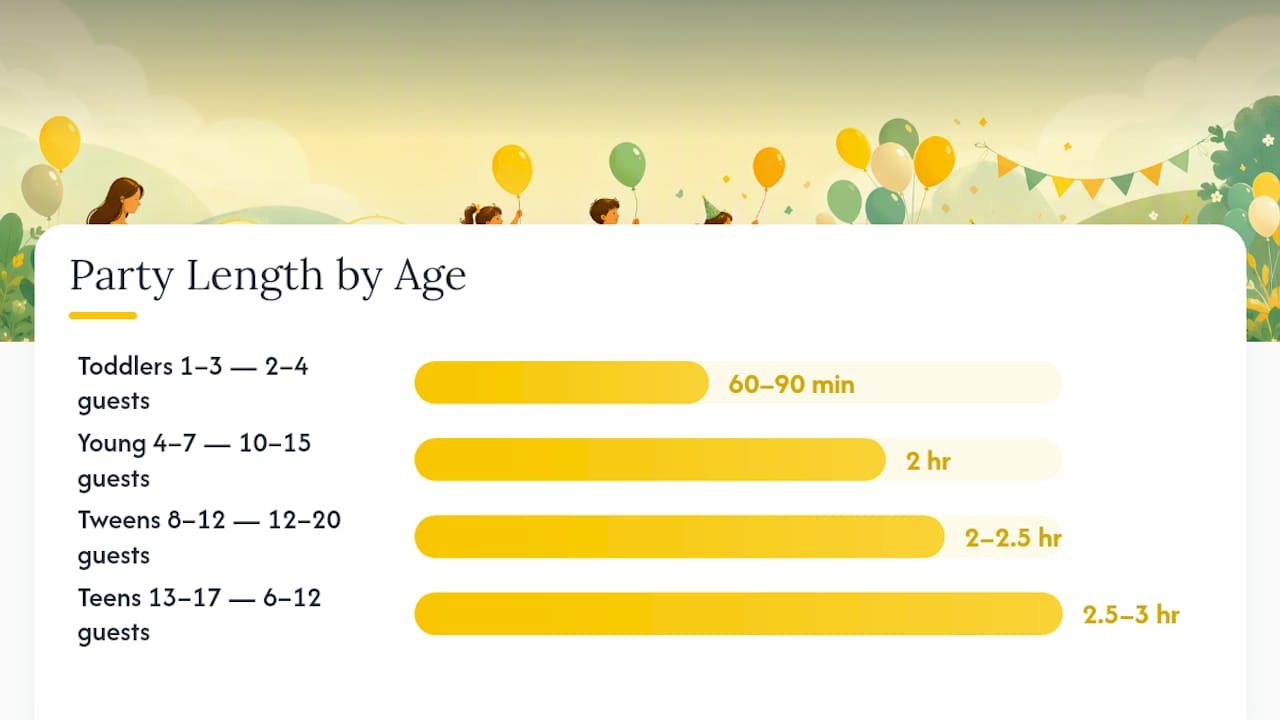
Toddlers (ages 1 to 3): Keep it to 60 to 90 minutes. Anything longer runs into nap windows and overstimulation. Scheduling around nap time, typically late morning (10 a.m. to noon) or mid-afternoon (3 to 5 p.m.), keeps meltdowns to a minimum. Guest counts should stay small, often capped around the child’s age plus one or two, since toddlers do better in low-stimulation groups with close adult supervision. The main priority here isn’t entertainment. It’s safety and rhythm: no choking-hazard foods on the snack table, and one adult per two or three toddlers if parents aren’t staying.
Young kids (ages 4 to 7): Two hours is the sweet spot, according to multiple party planning guides. Long enough for arrival, one big activity, cake, and free play, short enough that kids don’t lose steam. Guest counts of 10 to 15 are manageable with two or three adults helping. The single biggest priority at this age is having one standout activity that anchors the whole event. A craft table alone won’t hold their attention for two hours, but a themed activity with a clear beginning and end will.
Tweens (ages 8 to 12): Push to 2 to 2.5 hours. Kids this age want less structure and more social time, so plan activities that let them talk while they play: team games, a movie with snacks, or a supervised outing. Guest counts can run higher, 12 to 20, since tweens need less hands-on supervision, but you still want at least one adult watching group dynamics.
Teens (13 to 17): 2.5 to 3 hours works best, especially if food and hangout time bookend a single organized activity. Teens care less about themed decorations and more about vibe: music, snacks that feel a little grown up, and transportation logistics if the party isn’t at home. Guest lists shrink again here, often 6 to 12 close friends rather than a broad invite list, because teens value depth over headcount.
Across every age group, the guiding rule is the same: shorter is safer than longer. You can always extend free play if things are going well, but you can’t easily rescue a party that’s run 45 minutes too long with a room full of overtired kids.
Where Should You Host the Party, and When Should You Book It?
Every venue option trades convenience for effort somewhere. Home parties cost less but put you on the hook for setup, cleanup, and entertaining. Public parks are free but weather-dependent and offer zero backup plan if it rains. Indoor play spaces and entertainment venues cost more upfront but hand you a working room, staff, and activities you didn’t have to invent yourself.
Works best for toddlers and smaller guest counts where the mess is manageable.
Park or backyard: Low cost, good for active games, but you need a rain plan and usually more adult supervision since there’s no fixed boundary keeping kids contained.
Indoor play spaces: Built-in entertainment for younger kids, but often noisy and shared with other families unless you book a private slot.
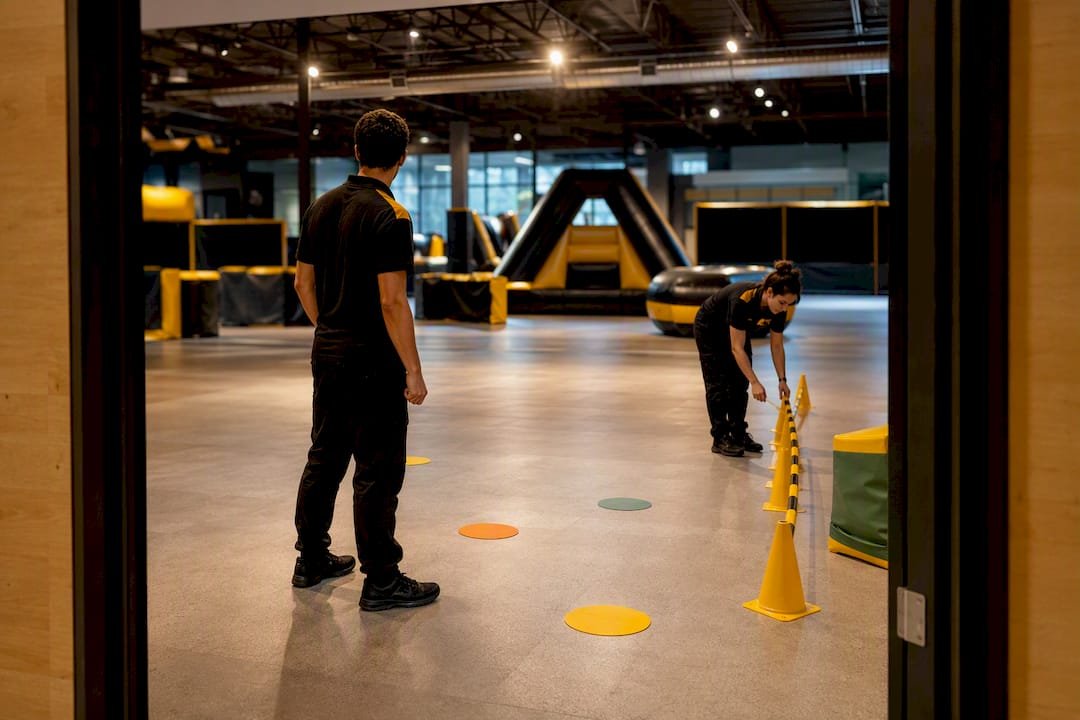
Entertainment or activity venues: Highest cost per head, but staff typically handle setup, activity supervision, and cleanup, which removes most of the day-of workload from parents.
Booking timing depends heavily on the day of the week. Popular weekend afternoon slots at indoor venues typically book several weeks in advance during busy months, especially in fall and spring when birthday season overlaps with school breaks. Weekday slots are typically easier to secure and cheaper, which matters if your child’s actual birthday doesn’t fall on a weekend or if your budget has more flexibility than your calendar.
Before you book anywhere, ask these questions:
- What’s the maximum capacity, and does that number include parents who stay?
- How many staff supervise the activity area, and what’s their ratio to kids?
- Is outside food allowed, and what’s the policy on allergy accommodations?
- What’s the cancellation and rescheduling policy if a kid gets sick that week?
- Is setup and cleanup included, or is that on you?
Pro Tip: Ask about the cancellation policy before you ask about pricing. A cheaper venue with a strict no-refund policy can cost you more than a pricier one that lets you reschedule for free if your child comes down with a cold two days out.
What Are the Best Party Games and Activities by Age?
The parties that run smoothly aren’t the ones with the most activities. They’re the ones with the right number, planned with backups. A 2-hour party runs best with two to three guided activities paired with free-play buffers, not a packed schedule with zero breathing room.
For ages 4 to 7, three structured options cover most themes:
- A themed scavenger hunt (15 to 20 minutes): Hide 8 to 10 clues or objects around the yard or party space tied to the theme. Setup takes 10 minutes if you prep clues the night before.
- A low-mess craft station (10 to 15 minutes): Stick to this window strictly. Kids this age lose interest fast, and a craft that drags to 30 minutes turns into chaos. Simple options like decorating a paper crown or a small canvas bag work well.
- A relay or team game (15 to 20 minutes): Something with clear rules and a winner, but skip elimination formats. Give every kid a small prize for participating rather than rewarding only the winner, which keeps the mood upbeat instead of competitive.
For older kids and tweens, higher-energy team activities hold attention better than crafts. Group games with a physical component, tag-style formats, target games, or team relays, give tweens the social interaction they want at this age while still giving the party a structure. This is also where packaged, in-venue activities save the most host effort: instead of running the game yourself, staff at a venue manage setup, rules, and supervision, freeing you up to just watch. Games like Nerf battles or dodgeball work particularly well for this age range because they’re inherently social and need almost no explanation before kids jump in.
Always have one backup activity ready regardless of age. If the scavenger hunt clues get soggy in the rain or the craft supplies run short, a simple freeze-dance or musical chairs round can fill 10 minutes without anyone noticing the switch.
How Do You Plan Food, Cake, and Allergies for a Kids’ Party?
Food logistics for a kids’ party are simpler than adult catering, but allergy management deserves real attention, not an afterthought.
Menu template that scales: Pizza (roughly one slice per younger child, one and a half for tweens and teens), a fruit or veggie tray, one salty snack option like chips or pretzels, and juice boxes or water. This combination scales cleanly whether you have 10 kids or 25, and it avoids the complexity of a sit-down meal.
Allergy management, step by step:
- Ask about allergies directly on the RSVP, not as an afterthought text the week of.
- Label every food item clearly, including ingredients, not just “nut-free” or “gluten-free” tags.
- Use separate serving utensils and containers for allergen-free dishes to avoid cross-contact.
- Order or bake a nut-free cake as your default. It’s the single easiest way to make sure every kid can eat dessert.
Cake timing: Order or bake the cake at least a week ahead, and confirm the pickup or delivery time two days before the party. Plan for a slicing buffer, meaning cut a few extra pieces beyond your headcount, since seconds and messy first cuts happen at every kids’ party.
Drinks are easy to overlook until you’re short.
Budgeting for a Kids’ Birthday: Favors, Decorations, and When to Buy
Party budgets vary widely by venue choice and guest count, but the biggest cost drivers are consistent: venue or activity fees, cake, and favors, in roughly that order. A home party for 10 toddlers can run under $150 total. A venue-based party for 15 kids with a packaged activity easily runs $400 to $600 once everything is included.
Favors are where most parents overspend without realizing it. A $2 to $5 per-child target is realistic and keeps this line item from ballooning, especially since kids rarely remember individual favor items a week later. Pre-assembled favor bundles, bought in bulk rather than piece by piece, hit that price point more reliably than shopping item by item at a party store, where small purchases add up fast.
Decorations follow the same logic: one strong visual, like a balloon garland, does more for the room than a dozen small scattered items. Budget real time for assembly, though. Experienced party planners set aside 45 to 60 minutes for a garland kit, not the 15 minutes some tutorials suggest, since balloon inflation and arranging take longer than the finished photo makes it look.
A few smart shopping-timing habits:
- Buy non-perishable decor and favors 2 to 3 weeks out, when selection is best and you’re not competing with other last-minute shoppers.
- Order the cake and confirm allergy needs 1 week out.
- Buy perishable food items 2 to 3 days before.
- Assemble anything time-consuming, garlands, balloon arches, custom banners, the night before, not the morning of.
A simple centerpiece or fresh flower touch can round out a table without a big spend; florists offering affordable birthday flower arrangements are worth checking if you want a decorative upgrade without diving into full event decor.
Sample Day-Of Schedules You Can Copy
Printed schedules remove the guesswork on party day. Post one on the fridge or tape it near the snack table so any adult helping can see what’s next without asking you.
90-minute toddler schedule:
- Arrival and free play (20 minutes)
- Structured activity, like a simple sensory station (20 minutes)
- Cake and singing (15 minutes)
- Open gifts if planned (10 minutes)
- Free play and goodbye favors (25 minutes)
2-hour schedule for ages 4 to 7:
- Arrival and free play (15 minutes)
- Main structured activity (25 minutes)
- Craft or second activity (15 minutes)
- Cake and singing at the midpoint (20 minutes)
- Relay or team game (20 minutes)
- Free play, gifts, and goodbyes (25 minutes)
2.5 to 3-hour schedule for tweens and teens:
- Arrival and hangout time (20 minutes)
- Main activity block, team games or an outing (60 to 75 minutes)
- Food and cake (30 minutes)
- Free time or a second lighter activity (30 minutes)
- Wrap-up, transportation coordination, and goodbyes (20 minutes)
Build in a 10 to 15 minute buffer somewhere in the middle of any schedule longer than two hours. Kids run late arriving, cake candles take longer to light than expected, and that buffer is what keeps the whole afternoon from sliding 20 minutes behind by the time guests leave.
How Do You Handle a Mixed Age Group at One Party?
Siblings with different ages, or a mixed-grade friend group, complicate every decision above: length, activities, and even food. The fix isn’t picking one age’s plan and hoping it works for everyone. It’s building in flexibility at the points where ages diverge most.
Split activities by skill level rather than by age label. A scavenger hunt can have easier clues for younger kids and harder ones for older kids running the same hunt simultaneously. This keeps the whole group moving together instead of splitting into two separate parties under one roof.
Stagger cake and gift-opening from the most demanding activity. Younger kids lose focus faster, so schedule their favorite part, usually cake, earlier in a mixed-age event, and let older kids stay engaged longer in a physical activity before winding down.
Recruit one extra adult per distinct age bracket you’re hosting. A single parent can’t simultaneously watch a toddler near a pool and referee a tween relay race. If you can’t get more adult help, lean on a venue with staff supervision built into the package, since that removes the ratio problem entirely.
Finally, keep favors and food allergy-safe across the board rather than customizing by age. Sorting separate allergen-safe snacks for a 5-year-old and a 12-year-old at the same party doubles your prep work for no real benefit.
What Do Venue Staff See That Parents Often Miss?
Running parties day in and day out teaches you where things actually go wrong, not where guides assume they will. The most common day-of issue isn’t a meltdown. It’s timing drift: one activity runs long, and the whole schedule slides. Staff-run venues build buffer time into transitions specifically to absorb that.
Packaged events also solve the supervision math parents underestimate. A birthday host trying to run games, manage food, and watch 15 kids alone is stretched too thin to catch small problems early. Dedicated staff watching one job at a time, not switching between cake duty and referee duty, catches issues faster.
— Archers
Book a Turnkey Kids’ Party Without the Planning Load
If everything above sounds doable but exhausting, that’s the point where a packaged venue earns its cost. Some kids’ birthday packages are built around the same age-based logic covered in this guide: shorter, activity-anchored sessions for younger kids, and longer, team-based formats for tweens and older kids who want more social, higher-energy games.

The Game On Birthday Party starts at $399 and fits smaller groups looking for one strong activity plus space to celebrate. The Epic Birthday Party, from $499, adds more activity variety for groups that want a longer, fuller event. Both packages include staff-run activities, setup, and cleanup, which is the exact workload this guide walks through handling yourself at home. Booking 6 to 8 weeks ahead gets you the best pick of weekend time slots, though weekday openings are often available with less lead time. Check current event package details or go straight to booking a date to see open slots for your child’s age group.
Sources
This guide draws its timelines and age guidance from a mix of parenting and party-planning resources, cross-checked against each other for consistency.
FAQ
What Are the Basic Steps to Planning a Kid’s Birthday Party?
Start 4 to 6 weeks out by picking a date, theme, and venue, then send invitations with a clear RSVP deadline about a week before the event. From there, confirm the cake and allergy needs one week out, buy perishables a few days before, and assemble decorations the night before so day-of is just setup and hosting.
What Are the Trends for Kids’ Birthday Parties in 2026?
Parents are leaning toward fewer, larger structured activities instead of many small stations, and toward venue-based parties that bundle activities with setup and cleanup so hosting takes less personal effort. Digital invitations with built-in RSVP tracking have also become the default over paper for most age groups.
What Should I Include in My Checklist for Planning a Children’s Birthday Party?
A solid checklist covers the date, venue, guest list with RSVP tracking, theme and decorations, food and allergy notes, cake order, activities with a backup plan, and favors. Splitting these into a week-by-week timeline, from 4 to 6 weeks out down to the day of, keeps every task on schedule.
What Should I Do for My Child’s Birthday?
Match the plan to your child’s age: a short 60 to 90 minute gathering with light activities for toddlers, a 2-hour party built around one standout activity for ages 4 to 7, or a longer, more social event for tweens and teens. If a low-effort option appeals to you, a packaged venue like Archers Battlefield’s birthday packages handles the activity and cleanup for you.
How Much Should I Budget per Child for a Kids’ Birthday Party?
Favors alone should run $2 to $5 per child, while total per-child cost including food, cake, and activities typically lands between $15 and $30 depending on venue choice. Home parties sit at the lower end of that range, while venue-based parties with staff-run activities cost more per head but save significant planning time.


