

Ban headshots, use foam balls only, and run catch-to-revive as your default elimination fix. Those three rules cover most of the risk in a room full of people throwing balls at each other, and a venue like Archers Battlefield builds every dodgeball session around them. Get these right and the rest of the rulebook is mostly detail.
TL;DR:
- Enforcing no headshots and catch-to-revive rules dramatically reduces injury risk and keeps the game flowing smoothly.
- Ensuring the court is clear, supervised by multiple staff, and using properly inflated foam balls prevents most common accidents.
- Using flexible game formats like prison or no-elimination variants helps accommodate different age groups and ability levels effectively.
- Keeping team sizes between four and ten players and starting sessions with early safety briefings maintains fairness and safety.
- Staff supervision, equipment checks, and adaptable rules during booking ensure a safe, enjoyable dodgeball experience tailored to your group.
Table of Contents
- Core Dodgeball Rules Every Venue Should Enforce
- Venue Safety Checklist Before the First Throw
- Party Formats That Actually Fit Different Groups
- Planning the Session: Timing, Teams, and Substitutions
- How Archers Battlefield Puts These Rules Into Practice
- Book a Dodgeball Session Where the Venue Handles the Rules
- Where These Rules Come From
- Sources
Core Dodgeball Rules Every Venue Should Enforce
Start with the target area. A legal hit lands on the torso, arms, or legs. Anything above the shoulders doesn’t count as an out, and most recreational rulesets go a step further: a headshot penalizes the thrower, either by eliminating them or handing the ball to the other team. That single mechanism is the closest thing to a silver bullet in dodgeball safety, because it trains players to aim at the legs almost immediately.
A ball is “live” until it hits a person, the floor, a wall, or another ball. Once it touches the ground, it’s dead. A trap hit, where two players catch the same ball at the same moment, usually gets resolved by a quick rock-paper-scissors or a replay of the throw rather than a debate.
Catch-to-revive keeps the game moving and keeps eliminated players from standing around bored. Here’s how it typically works:
- If a player on the court catches a live throw, the thrower is out immediately.
- The catch also revives one eliminated teammate, who re-enters from the sideline in the order they went out.
- Only the team that made the catch gets a revival. The throwing team gets nothing but the elimination.
Conduct rules matter as much as the mechanics. No pushing, no deliberate body contact, and no crouching, kneeling, or lying down just to bait a headshot call. Players who go out need to raise a hand and exit the court fast, so nobody gets hit by a ball meant for someone else. Foam balls only, checked for proper inflation before play starts, and no rings, watches, or dangling jewelry once the game begins.
Pro Tip: Put your no-headshot and catch-to-revive rules directly in the booking confirmation email. Parents and event organizers read it before arrival, which cuts the “wait, what are the rules again?” conversation down to almost nothing.
Venue Safety Checklist Before the First Throw
A five-minute walkthrough before anyone picks up a ball prevents most of the injuries that happen in group play. Risk-assessment guidance for dodgeball points to a short list of controls that cover almost every common accident: impacts, falls, collisions, and equipment failure.
- Clear the court of chairs, bags, and anything else someone could trip over, and check that the floor has enough traction for quick lateral movement.
- Close doors and dividers so a stray ball doesn’t roll into a hallway or another activity area.
- Position staff around the perimeter, not just at one end, so someone can see the whole court during every throw.
- Keep spare foam balls on hand and pull any that feel overinflated, torn, or heavier than the rest.
- Have players stash jewelry, phones, and loose items in a bin before they step onto the court.
Recreational venues typically run about one staff member per a moderate number of participants for casual sessions, adjusting up for younger kids or larger groups. Direct supervision matters most during the first few minutes of instruction and warm-up, when players are still learning where the boundaries are and how hard they’re allowed to throw.
A short pre-game script works better than a sign on the wall. Say it out loud: “No headshots, they cost you the ball. Step out of bounds, you’re out. Catch it, you’re back in.” Thirty seconds, every time, before the first ball flies.
Party Formats That Actually Fit Different Groups
Not every group wants the same game. A six-year-old’s birthday party and a corporate team-building afternoon need different rules even though the core mechanics stay the same.
- Classic six-ball format. Two teams of six, standard court, four to six foam balls in play, catch-to-revive as the elimination fix. This is the default for mixed-age groups and works for most standard sessions.
- Medic dodgeball. One player per team is designated medic and can tag out eliminated teammates back into play by touching them on the sideline. It shortens the time anyone spends sitting out, which matters a lot with younger kids who lose patience fast.
- Prison (or jail) format. Eliminated players move to a “prison” zone behind the opposing team’s back line instead of leaving the court. From there they can still throw at the opposing team, and a caught throw from prison sends them back into the main game.
- Gentle no-elimination variant. Nobody sits out. Getting hit just means switching sides or doing a quick task before rejoining. This suits young kids and mixed-ability groups far better than strict elimination.
- Objective/pin-guard format. Teams defend a set of pins or cones behind their line while still dodging and throwing. It rewards strategy and communication over raw arm strength, which makes it a strong pick for corporate groups that want teamwork over competition.
For pacing, some venues use an advantage rule and a ten-second count, forcing a team holding most of the balls to throw within a set window instead of stalling.
Planning the Session: Timing, Teams, and Substitutions
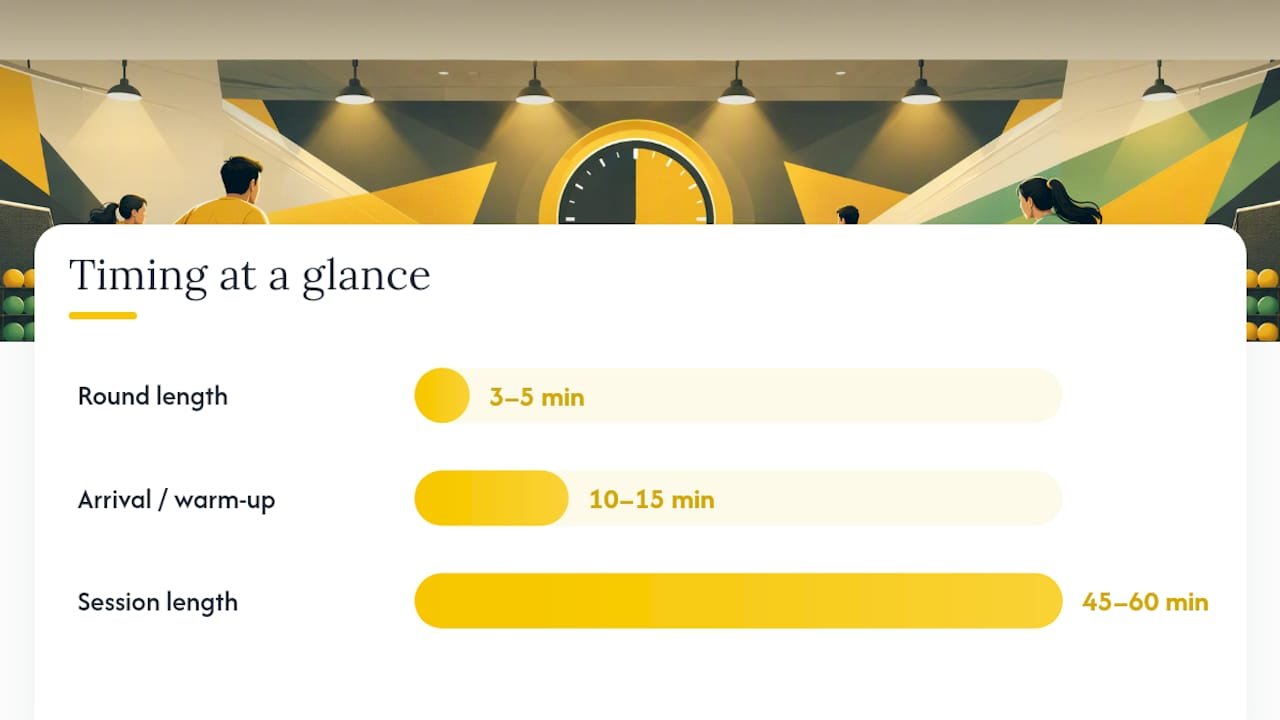
A party dodgeball round usually runs three to five minutes, with a new round starting as soon as one side is eliminated or a set time expires. Most hosts plan for six to eight rounds across a 45 to 60 minute session, leaving room for a break between games.
Team size follows a simple pattern: six players per side is the standard for organized play, while casual party groups often stretch that to six to ten players a team to fit everyone in. Set a minimum of four players per side. Fall below that, and the game stops being fair to whoever’s left.
A quick checklist keeps sessions on schedule:
- Have players arrive 10 to 15 minutes early for a warm-up and safety briefing.
- Rotate substitutes in between rounds, not mid-round, to avoid confusion about who’s live.
- Pull an injured player out immediately and pause the game rather than playing around them.
- Settle disputed calls fast with a simple rule: the team that didn’t make the contested call gets the benefit of the doubt, and play resumes within seconds.
How Archers Battlefield Puts These Rules Into Practice
Archers Battlefield runs dodgeball sessions as one of several supervised group activities, alongside combat archery, Nerf battles, and bazooka ball, with packages built around parties, camps, and corporate groups. Every session opens with the same safety walkthrough: obstacles cleared, boundaries marked, and a spoken rules briefing before anyone touches a ball, matching the instruction-first approach that safety guidelines for group dodgeball recommend.
Staff circulate around the court rather than watching from one spot, which catches problems, like a worn ball or a player crowding the boundary line, before they turn into an incident. Groups booking a birthday party or a corporate outing can request a format that matches their group’s age and size.
— Archers
Book a Dodgeball Session Where the Venue Handles the Rules
This option is available for groups who want the safety briefing, equipment checks, and boundary setup handled before anyone shows up, instead of printing house rules yourself and hoping everyone reads them. Staff run the pre-game script, supervise every round, and adjust the format on the spot for a six-year-old’s birthday crowd or a corporate group that wants pin-guard strategy over straight elimination.

A booking can include staffed supervision, foam balls checked before play, court setup and cleanup, and a format chosen to match your group’s age and size. Kids’ birthday groups can pair dodgeball with a full party package, while corporate groups can bundle it into a team-building session. Visit the dodgeball booking page to check available dates and lock in your session.
Where These Rules Come From
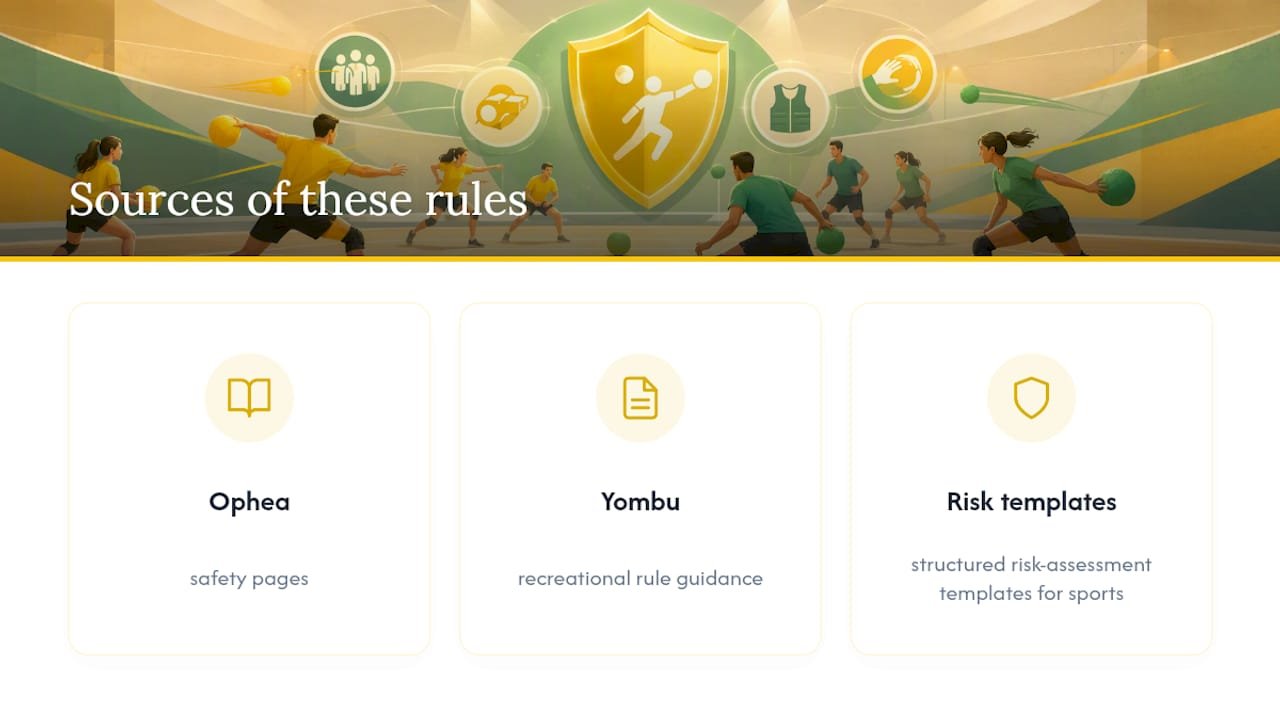
This guide draws on safety pages from Ophea, recreational rule guidance from Yombu, and structured risk-assessment templates built for sports and recreation settings. Check your facility’s own safety standards and local policies before running a session.
Sources
- Ophea — Dodgeball (elementary)
- Yombu — Dodgeball for kids: rules, balls & courts
- Risk Assessment Wizard — Dodgeball risk assessment template


