

The best date night group activities share one trait: a shared goal that takes the spotlight off individual conversation. Escape rooms, trivia nights, cooking classes, and casual food-focused outings consistently win because experts note they reduce conversational pressure and let couples rotate naturally instead of getting locked into one intimate exchange all night.
TL;DR:
- Group activities that emphasize shared goals, such as escape rooms or trivia nights, help reduce conversational pressure and encourage natural rotation.
- Activities like escape rooms, cooking classes, and outdoor adventures are suitable for specific group sizes and activity types, with costs ranging from $10 to $55 per person.
- Proper planning involves considering the group’s energy level, budget, mobility, and activity safety, while deliberate partner rotation fosters engagement and prevents clumping.
- Virtual and hybrid options, including online trivia and shared cooking classes, enable remote participation but should be kept under 90 minutes to maintain energy.
- Venue management and safety instructions are crucial, and choose activities with flexible formats and difficulty levels to accommodate varying comfort zones and relationship dynamics.
Table of Contents
- Top 10 Date Night Group Activities to Try This Year
- What Kind of Group Date Actually Fits Your Crew?
- How to Pick the Right Activity for Your Group
- Budgeting and Timing for a Group Date Night
- Keeping Group Dates Safe and Comfortable for Everyone
- Rotating Partners So Nobody Gets Stuck in One Conversation
- Mixing Singles, New Couples, and Long-Term Pairs in One Group
- Running a Group Date When Not Everyone Can Be in the Same Room
- Matching Activities to Different Comfort Levels in the Group
- What We’ve Learned Hosting Group Date Nights
- Book a Turnkey Group Date Night at Archers Battlefield
- Sources
Top 10 Date Night Group Activities to Try This Year
If you need a plan fast, start here. Each option below works well for double dates or bigger friend groups, and none of them force anyone into an awkward staring contest across a candlelit table.
- Escape room — best for problem-solvers and first-time groups; $25 to $40 per person, 60 to 90 minutes.
- Trivia night — best for casual, low-cost hangs; often free to $10 per person, 2 hours.
- Board-game café — best for mixed-energy groups; $10 to $20 per person, 2+ hours.
- Cooking class — best for foodies who want a shared project; $50 to $90 per person, 2 to 3 hours.
- Paint and sip — best for creative, chatty groups; $35 to $55 per person, about 2 hours.
- Bowling or barcade — best for high-energy nights; $15 to $30 per person, 2 to 3 hours.
- Karaoke private room — best for loud, silly groups; $15 to $25 per person, 1 to 2 hours.
- Mini-golf — best for casual daytime dates; $10 to $20 per person, 1 hour.
- Outdoor picnic with lawn games — best for budget-conscious groups; $10 to $15 per person, flexible timing.
- At-home themed game night — best for zero-budget planning; nearly free, open-ended.
What Kind of Group Date Actually Fits Your Crew?
Not every “fun group date idea” fits every group, so it helps to think in categories rather than individual activities. Six buckets cover almost everything worth booking.
Competitive active activities include dodgeball, bowling, and laser tag. Expect $15 to $35 per person, 1.5 to 2.5 hours, and a sweet spot of 6 to 12 people. These work best when everyone has a similar mobility level, since sprinting and dodging aren’t universal skills.
Cooperative or problem-solving experiences, like escape rooms, scavenger hunts, and murder-mystery nights, run $25 to $45 per person and take 60 to 120 minutes. Groups of 4 to 8 tend to solve puzzles fastest without anyone getting sidelined. If someone in the group has hearing or vision limitations, check with the venue beforehand since many puzzles rely on visual or audio cues.
Creative and low-pressure activities cover paint and sip, pottery classes, and karaoke rooms. Costs land between $20 and $55 per person for roughly two hours, and 4 to 10 people is the ideal range. Nobody needs artistic talent, which lowers the intimidation factor for newer couples in the group.
Food-led experiences include cooking classes, food tours, and progressive dinners across multiple homes or restaurants. Budget $30 to $90 per person for 2 to 3 hours. These flex well for groups from 4 to 16, and they’re the easiest category to accommodate dietary restrictions, since most instructors or restaurants can adjust recipes in advance.
Low-cost at-home options are the budget champion: themed trivia, card game tournaments, or a potluck with lawn games. Costs stay near zero beyond groceries, and timing is whatever the group wants. This category also works best for accessibility, since you control the space entirely.
Outdoor or adventure activities, from hiking to kayaking to a day at combat archery, typically cost $20 to $60 per person and run 2 to 4 hours. Groups of 6 to 15 do well here, though weather and physical demands mean this category needs the most advance planning.
- Competitive active: dodgeball, bowling, laser tag
- Cooperative: escape rooms, scavenger hunts, murder mystery
- Creative: paint and sip, pottery, karaoke
- Food-led: cooking classes, food tours, potlucks
- At-home: trivia, card games, themed nights
- Outdoor: hiking, kayaking, archery-based games
Pro Tip: Book the more physically demanding option earlier in the evening. Energy and enthusiasm fade fast after a big meal, but nobody complains about slowing down for dessert and conversation.
How to Pick the Right Activity for Your Group
Before you send a single text to the group chat, run through a quick checklist. It saves you from planning something half the group can’t actually enjoy.
- Energy level: Does the group want to move, or would everyone rather sit and talk?
- Budget: Set a per-person ceiling before anyone starts suggesting ideas.
- Mobility and access: Confirm nobody has an injury, sensory need, or physical limit the activity would strain.
- Time window: A weeknight date needs a tighter plan than a Saturday.
- Mix of activities: Pairing one active event with one relaxed one keeps the night balanced, a pattern several relationship guides recommend for structuring a double date.
A simple group text works: “Active or chill tonight? Budget under $30 or up for splurging? Any dietary restrictions?” Let people vote with a thumbs-up poll rather than an open debate, which tends to drag on for days.
Watch for red flags. Avoid formats that isolate one couple in a booth for two hours with nothing to do but talk, and skip anything too intimate or competitive for a first group outing, since beginner-friendly, lower-intensity formats work better when the group doesn’t know each other well yet.
Pro Tip: If even one person hesitates about an activity, treat that as real information, not just nerves. There’s almost always a lower-key alternative that still delivers the fun.
Budgeting and Timing for a Group Date Night
Money conversations get awkward fast in a group, so settle logistics before the night starts. Escape rooms typically run $25 to $40 per person for 60 to 90 minutes, paint and sip nights cost $35 to $55 per person over about two hours, and bowling lands at $15 to $30 per person for two to three hours, according to cost breakdowns compiled for group activities.
- Split costs with a shared payment app like Interac e-Transfer requests or Splitwise, both common for group expenses across Canada.
- Reserve escape rooms, cooking classes, and private karaoke rooms at least a week ahead; walk-ins rarely work for these.
- Bowling, mini-golf, and trivia nights usually accept walk-ins on weeknights.
- Choose a private or semi-private session when the group tops eight people, since public sessions often split larger groups apart.
Keeping Group Dates Safe and Comfortable for Everyone
Ask about mobility limits, allergies, and sensory sensitivities before booking, not after arriving. A quick group message covers most of it: any food restrictions, physical limitations, or preference for quieter spaces.
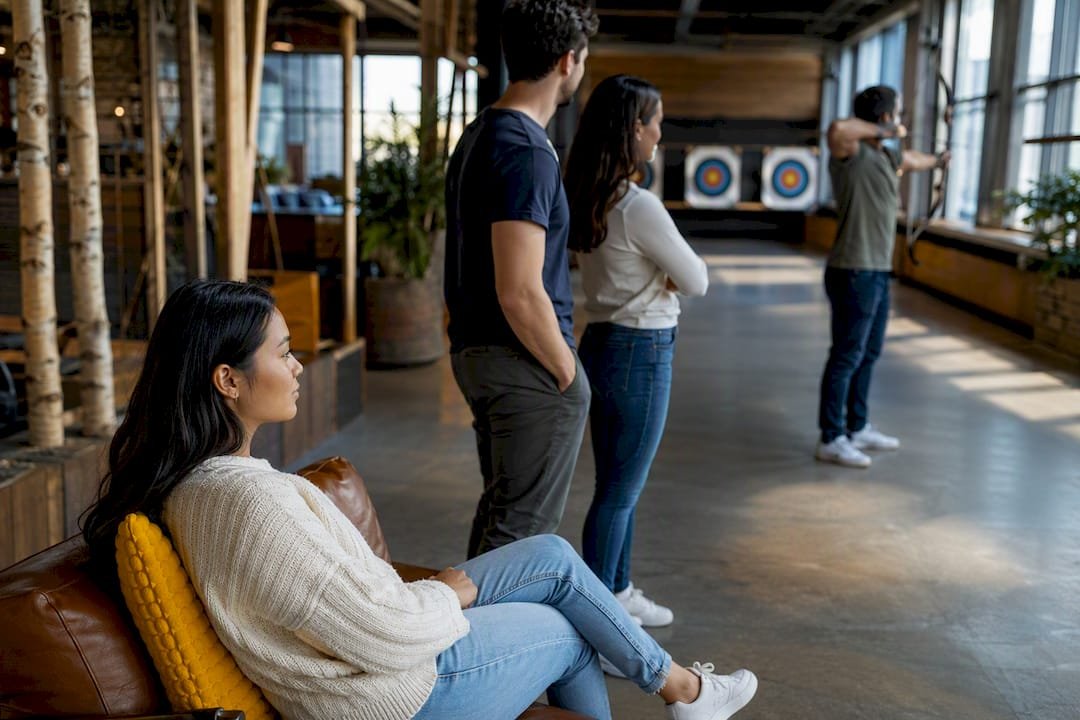
Request accommodations directly from the venue, whether that’s a ramp, seating away from strobe lights, or a quieter side room. For any activity involving physical contact or gear, like combat-style games, confirm consent rules and safety briefings ahead of time. Every venue sets its own policies, so check directly with the venue rather than assuming a rule from a different location applies.
Rotating Partners So Nobody Gets Stuck in One Conversation
The single biggest mistake group daters make is letting couples clump together for the entire night. It kills the point of a group date, which is meeting new people and shaking up the usual one-on-one dynamic.
Build rotation into the activity itself instead of hoping it happens naturally. Trivia teams work well when you shuffle members between rounds rather than keeping the same four people together all night. Escape rooms and scavenger hunts often split naturally into subgroups, so assign those groupings yourself rather than letting couples default to their partner. Dinner seating matters too: alternate seats so partners aren’t next to each other, which forces new conversations across the table.
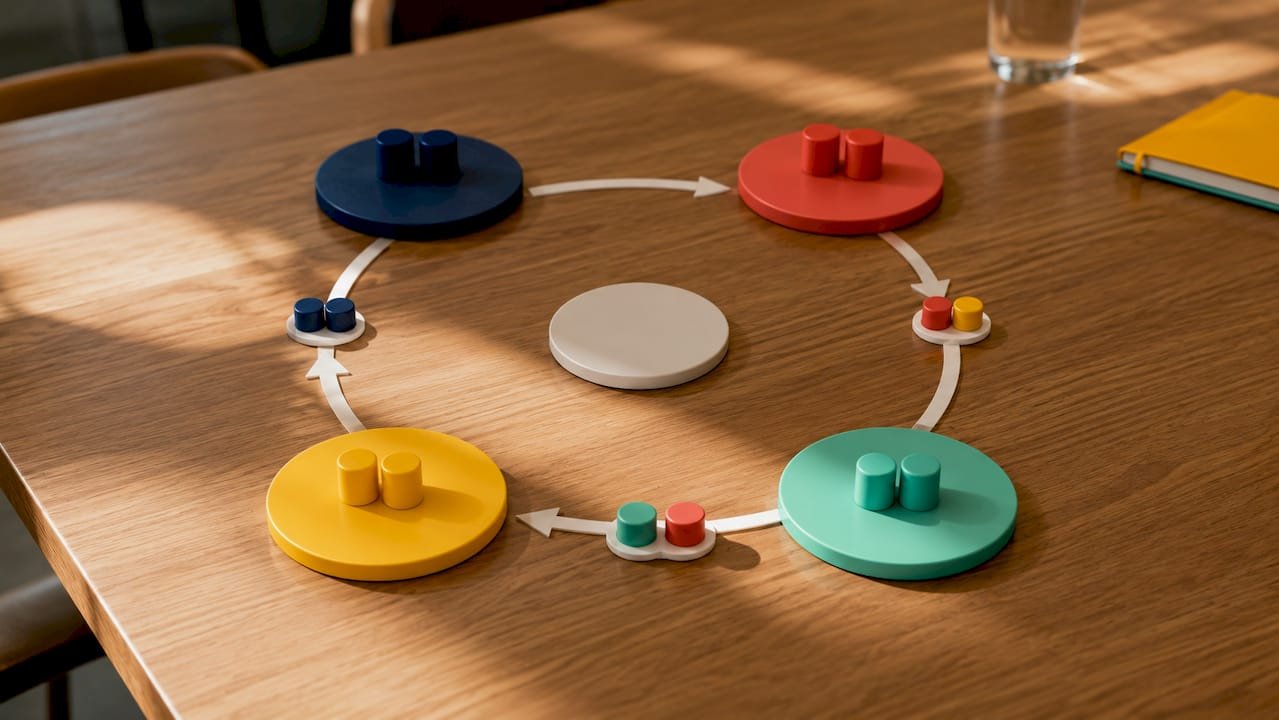
Seating and rotation strategy matters more for group cohesion than the activity choice itself. A mediocre activity with good rotation beats a great activity where three couples spend the whole night in their own bubble.
For activities with natural downtime, like a cooking class waiting on the oven or a bowling lane between frames, use that time deliberately. Ask a rotating “get to know you” question, or assign a simple icebreaker task like guessing something about another couple’s first date. It sounds forced on paper, but in practice it gives people permission to talk to someone new without it feeling like an interview.
If the group includes people who already know each other well and others who just met, lean toward activities with built-in team assignments (trivia, escape rooms, cooking stations) rather than open-floor mingling, which tends to collapse back into existing friend clusters.
Mixing Singles, New Couples, and Long-Term Pairs in One Group
A group date rarely has uniform relationship dynamics, and that’s fine as long as the activity doesn’t assume everyone is at the same stage. Long-term couples often want novelty and a break from routine, while newer couples might feel exposed by anything too intimate in front of strangers.
For groups mixing singles and couples, choose activities with clear team structures rather than pair-based ones. Trivia and escape rooms work because teams form around skill or interest, not relationship status, which keeps a single friend from feeling like a third wheel.
New relationships benefit from lower-stakes, lower-intensity formats. A cooking class or mini-golf outing gives a new couple something to focus on besides each other, which takes pressure off without feeling like avoidance. Save high-intimacy formats, like a slow dinner with heavy eye contact, for dates the couple takes alone.
Long-term couples, meanwhile, tend to get the most benefit from genuine novelty. Research on relationship satisfaction consistently points to scheduling new shared experiences as one of the more reliable ways to keep a long relationship feeling fresh, and a group setting adds social energy that a solo date can’t replicate.
If your group spans a wide age or experience range, default to activities with adjustable difficulty, like an escape room with multiple room levels or a trivia night with varied category rounds. That way nobody feels like the activity was pitched over their head or beneath their interest.
Running a Group Date When Not Everyone Can Be in the Same Room
Remote friend groups and long-distance couples don’t have to skip group date nights entirely. Virtual trivia platforms let you run a full quiz night over video call, and most let you assign teams the same way you would in person, which keeps the rotation principle intact even on-screen.
Cooking classes translate surprisingly well to hybrid formats. Order the same ingredient kit for everyone, join one video call, and cook together in real time with a shared recipe. It gives people something to do with their hands, which lowers the pressure of a straight video hangout.
For genuinely mixed groups, some in person and some remote, split the night into two segments. Do a shared virtual activity everyone can join equally, like an online game or trivia round, then let the in-person group continue with something physical, like bowling or an arcade visit, after the video call wraps. Trying to force one activity to serve both formats at once usually leaves the remote members feeling like spectators.
Keep virtual sessions under 90 minutes. Video fatigue sets in fast, and a group date that drags past that point loses the energy that made it fun in the first place. Whatever platform you use, test the screen-sharing or breakout-room features a day ahead. A tech hiccup at the start of the night burns the exact momentum you’re trying to build.
Matching Activities to Different Comfort Levels in the Group
Every group has a range of comfort zones, from the friend who’ll try anything to the one who needs convincing to leave the couch. Planning around the most hesitant person, rather than the most adventurous one, tends to produce a better night for everyone.
Offer two tiers when you’re not sure how the group will react to an idea. A private room at an axe-throwing venue or a beginner-level archery tag session lets nervous participants ease in without competing against strangers, which several planning guides recommend for first-time group outings.
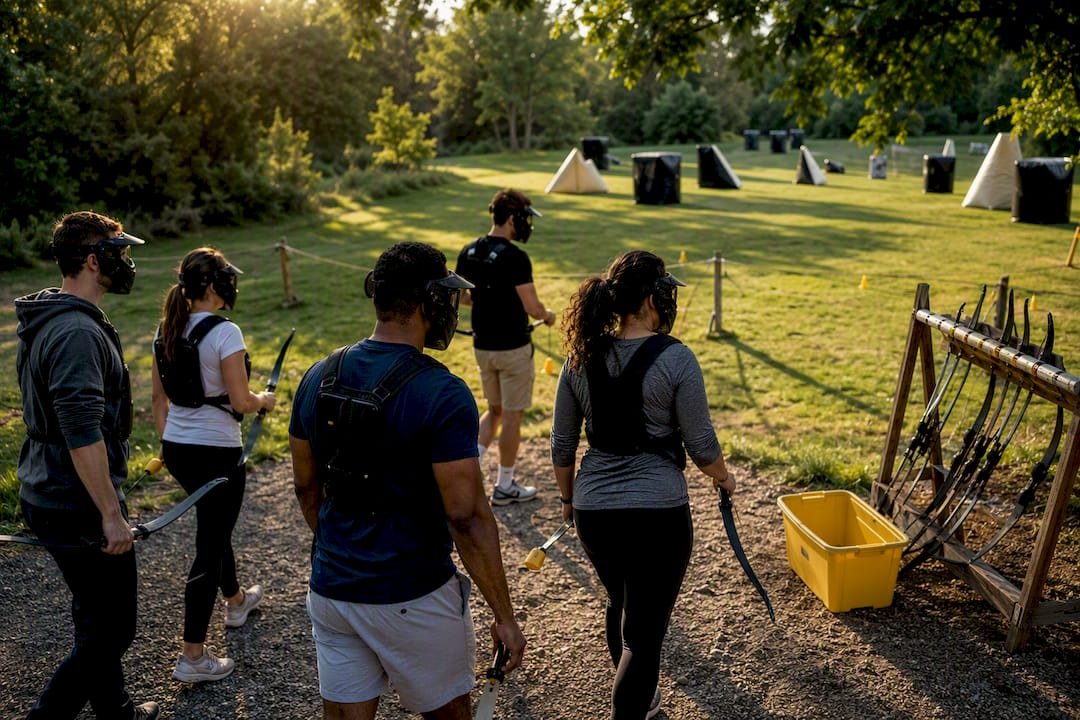
Ask about physical comfort directly rather than guessing. Someone with a bad knee isn’t going to enjoy dodgeball no matter how enthusiastically the invite is worded, and it’s a much easier conversation before the booking than during it. Build in an easy opt-out, too, like a spectator seat or a lower-intensity station, so nobody feels pressured into something that doesn’t match their comfort level.
What We’ve Learned Hosting Group Date Nights
Running events for groups every week teaches you that the venue does more heavy lifting than people expect. A hosted space handles safety briefings, staggers activity stations, and keeps the night moving so nobody has to manage logistics mid-date. Some venues structure their sessions around exactly this: combat archery, dodgeball, and arcade games with staff-run safety checks and flexible group sizes, so couples can focus on each other instead of running the show.
— Archers
Book a Turnkey Group Date Night at Archers Battlefield
Planning a group date usually means juggling multiple venues, several group chats, and a spreadsheet nobody updates. Some entertainment venues skip that entirely by putting several activities under one roof and one booking.

The venue runs combat archery, Nerf battles, dodgeball, ping pong, and axe throwing, all bookable through customizable event packages sized for anywhere from a small double date to a large friend group. Every session includes a safety briefing before gear goes out, and staff manage rotation between stations so no couple sits out for long. Groups also get flexibility to mix an active game, like dodgeball, with a calmer round of ping pong, which covers the energy-mixing advice most planning guides recommend without the guesswork.
Check availability and lock in a date through the archery booking page before weekend slots fill up.
Sources
- Creative double-date ideas that strengthen connection — The Cut
- 18 group date ideas with cost and time estimates — Uprise High
- Science-backed double date ideas — Science of People


