
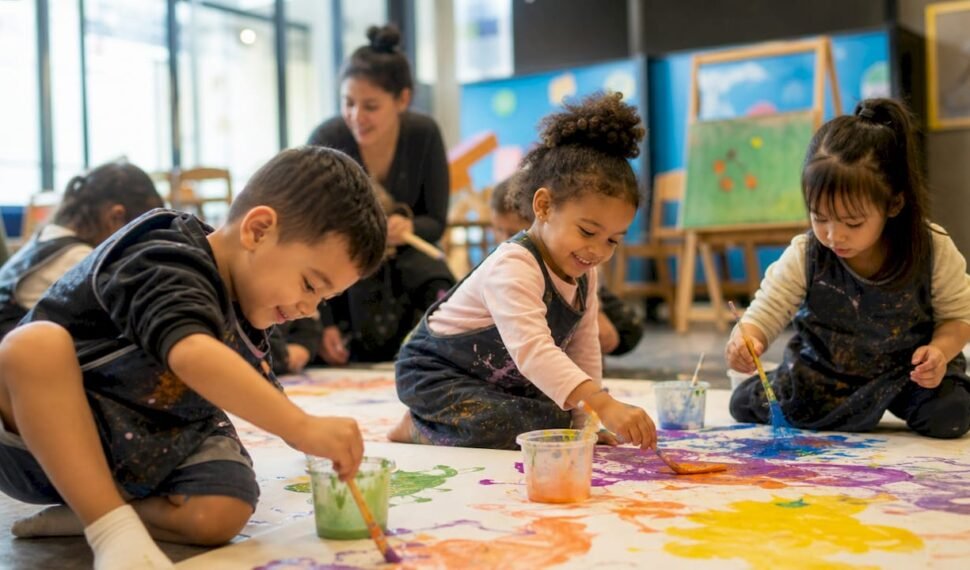
The best indoor field trip ideas for preschoolers fall into a handful of proven categories: children’s museums, aquariums and planetariums, library storytime visits, virtual field trips, community-helper stops, and active indoor play venues. Each one hits a different developmental target, from sensory exploration to early literacy to gross-motor skill building.
- Hands-on venues (museums, aquariums, community-helper stops) work because preschoolers learn through touch and movement, not passive watching.
- Library visits and virtual trips cover the days when budget or weather rules out a bus, giving you literacy or standards-aligned science content from a classroom or living room.
A supervised indoor host like Archers Battlefield fits the active-play category, Discovery Education covers the virtual side, and the Monterey Bay Aquarium live cam is a solid stand-in when an in-person aquarium visit isn’t in the cards.
Key Takeaways
The most effective indoor field trips for preschoolers pair a hands-on venue with a short, mission-style activity and a realistic time window under two hours.
| Point | Details |
|---|---|
| Match venue to goal | Pick museums for STEM, libraries for literacy, fire stations for civic learning, and active venues for gross-motor skills. |
| Keep missions short | Give preschoolers a 3 to 5 minute task, like a color hunt or texture touch, instead of open-ended exploration. |
| Set chaperone ratios early | Plan for one adult per four to six children and brief chaperones with a clear badge system. |
| Use virtual trips as backup | Discovery Education and Nature Conservancy guides deliver standards-aligned learning when travel isn’t practical. |
| Consider a hosted option | Archers Battlefield offers supervised, active indoor group sessions for schools, camps, and parties with built-in structure. |
Table of Contents
- Indoor Field Trip Ideas by Destination Type
- How to Plan an Indoor Field Trip Without Losing Your Mind
- Mission Cards That Keep Preschoolers Actually Engaged
- The Research Behind Hands-On Indoor Learning
- What Actually Works, Based on the Evidence
- How Archers Battlefield Handles Group Indoor Outings
- Frequently Asked Questions
- Sources
Indoor Field Trip Ideas by Destination Type
Every indoor field trip idea below comes with a learning goal, a short “mission” you can hand a preschooler on arrival, and a rough sense of time and cost. None of these need a full school day. Preschool attention spans max out fast, so shorter, mission-driven visits consistently outperform long, open-ended ones.
Children’s museums and hands-on science centers. These build early STEM thinking through sensory play, sound, water tables, and building blocks rather than posted facts. Sample mission: “Find three different textures in this room and tell me a story about one.” Plan on 1 to 2 hours on-site, with admission typically landing in the low-to-medium range per child.
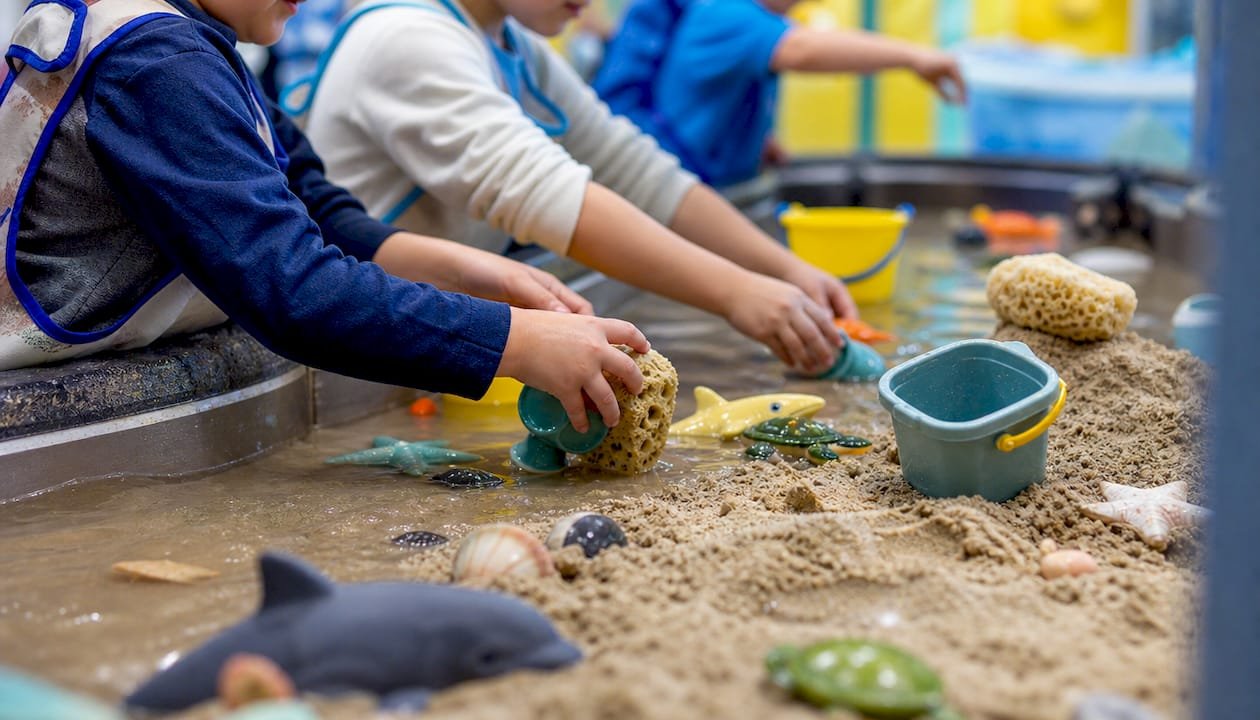
Aquariums and planetariums. Dim lighting, big glass tanks, and star projections turn observation into a game. Sample mission: “Spot five different colors or shapes swimming past.” Most aquariums have quiet zones and stroller access, worth confirming before you book a group slot, since preschoolers overstimulate fast in echoing, crowded halls.
Library storytime and early-literacy visits. These are usually free and built around a librarian-led story followed by a themed activity. Sample mission: a post-story “book hunt” where kids find a book with an animal on the cover, or a simple puppet demonstration tied to the day’s theme. Weekday mornings tend to be quieter than weekend sessions.
Virtual field trips and online educator guides. When weather or budget rules out travel, Discovery Education’s virtual field trips pair a video with an educator guide and interactive components you can run right in your classroom. The Nature Conservancy’s virtual field trips work similarly, bundling a teacher guide with student activities that adapt well to younger groups when you simplify the language.
Community-helper visits. Fire stations, post offices, and bakeries teach civic basics through direct contact with real tools and jobs. Sample mission: “Find three tools a firefighter uses and point to them.” Call ahead. Most stations need advance notice and a headcount for safety reasons.
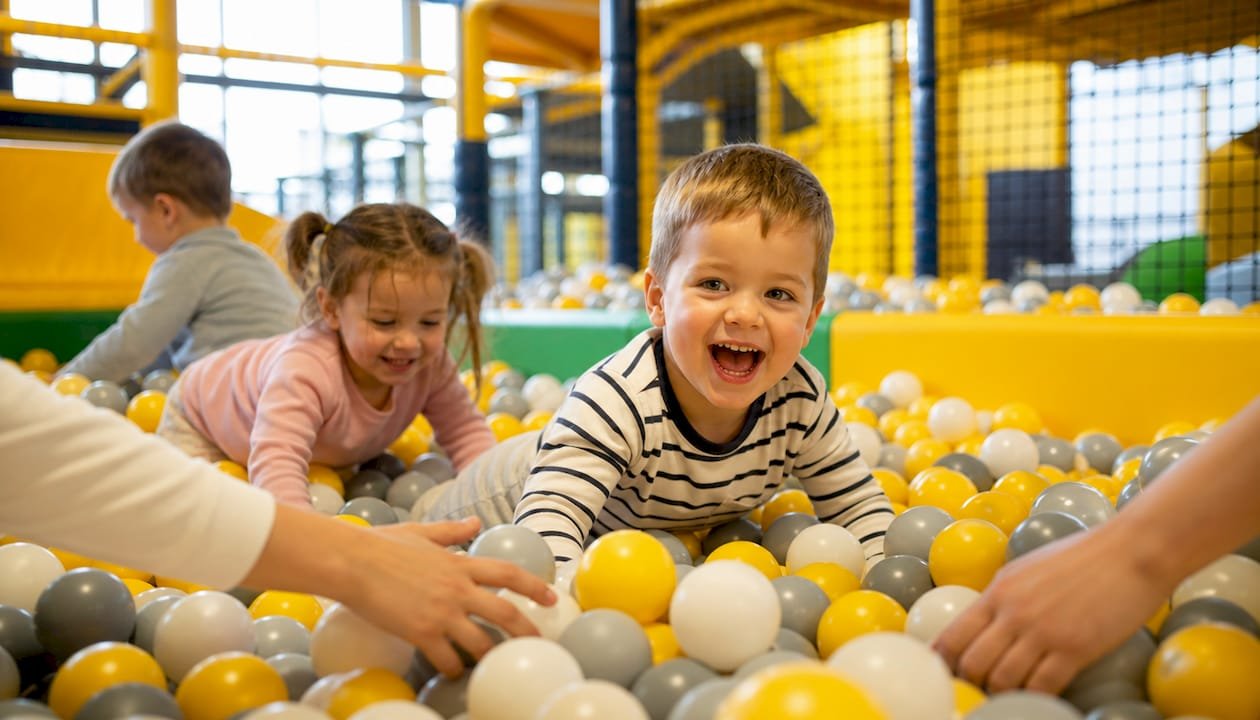
Active indoor play venues. Trampoline parks, indoor pools, rec centers, and indoor sports courts build gross-motor skills that sit-down venues can’t touch. A venue like Archers Battlefield runs team building style group formats with clear supervision structures, which matters when you’ve got a dozen four-year-olds running at once, making it a highlight of the SoCal Sights Adventure Overview. Give the group a short mission, such as “complete three stations before snack time,” to keep energy focused instead of chaotic.
Arts and performance visits. Puppet theaters, small local stages, and art studios build social-emotional skills and fine-motor coordination. A simple role-play activity tied to the show, like acting out one scene afterward, extends the learning past the applause.
Low-cost alternatives for tight budgets or bad weather. A grocery store scavenger hunt (find something red, something round, something cold), a mall walk with a shape-spotting checklist, or a local bakery tour all deliver real learning without a bus contract. MyBrightWheel’s list of preschool field trip types confirms these everyday spots, libraries, fire stations, grocery stores, remain among the most effective for young learners precisely because they are familiar enough to feel safe but new enough to spark questions.
Match the venue to the goal you actually care about that week. Literacy points to the library, STEM points to the museum or a virtual trip, community awareness points to the fire station, and gross-motor development points to active play.
How to Plan an Indoor Field Trip Without Losing Your Mind
Getting the logistics right matters more than picking the “best” venue. A great location with sloppy planning still turns into a rough afternoon.
- Collect permissions and medical notes first. Get signed permission slips, list any allergies or medications, and confirm emergency contact numbers before you finalize headcount.
- Set your chaperone ratio. Preschoolers generally need one adult for every four to six children, tighter for toddlers, looser for older, calmer groups, depending on the venue’s own policy.
- Give chaperones a badge system and clear expectations. A colored vest or lanyard makes it instantly clear who’s watching whom, and a two-minute briefing on behavior expectations prevents confusion mid-trip.
- Build a simple 90-minute timeline. Arrival and orientation (10 minutes), first activity block (20 minutes), snack and bathroom break (15 minutes), second activity block (20 minutes), wrap-up and goodbyes (15 minutes), buffer (10 minutes).
- Estimate cost per child early. Ask about group discounts and whether the venue offers an educator-led session, which often costs the same as general admission but adds structure you’d otherwise have to provide yourself.
- Run the safety checklist. Confirm allergy protocols, know who holds medication, identify a quiet zone for overstimulated kids, and have an off-site emergency plan in writing.
Pro Tip: Book off-peak weekday mornings whenever the venue allows it, and pack a few “grounding” items, a small fidget toy or a familiar picture book, for the inevitable five-minute wait in line. That single move prevents more meltdowns than any amount of pre-trip lecturing.
Mission Cards That Keep Preschoolers Actually Engaged
Preschoolers learn by doing, not by listening to a docent talk for ten minutes. Framing a visit around a specific question or mission turns a standard walkthrough into something kids remember for weeks.
- Color hunt: “Find something yellow and something blue before we leave this room.”
- Texture touch: “Touch three things that feel different and tell me which one surprised you.”
- Counting task: “Count how many fish (or firetrucks, or books) you can see in one minute.”
- Dramatic-play prompt: After a community-helper visit, have kids act out the job they just saw.
Print these as a one-page handout with big text and a picture icon for non-readers. Bring clipboards, a sticker sheet for completed missions, and a few laminated picture cards for toddlers who need visuals instead of words.
Pro Tip: Assign each chaperone one micro-job, photographer, snack manager, or “spotter” watching for overstimulated kids, instead of asking every adult to do everything. It cuts confusion in half.
The Research Behind Hands-On Indoor Learning
Preschoolers retain more from trips built around touching, moving, and manipulating than from ones built around watching and listening. The Erikson Institute’s guidance on indoor play points to sensory bins, movement games, and structured tactile play as direct contributors to motor skill development and attention span in young children.
Movement and tactile play during indoor activities support healthy brain and motor development in young children, and short, focused objectives work better than open-ended exploration for this age group.
When an in-person trip isn’t realistic, a standards-aligned virtual option through Discovery Education or the Nature Conservancy can deliver comparable learning value, particularly when paired with a teacher guide and a specific mission rather than passive video watching.
What Actually Works, Based on the Evidence
Prioritize engagement over content volume. A 20 minute mission with three clear tasks beats a 90 minute open tour every time, because preschool attention doesn’t stretch that far no matter how good the exhibit is. Build in movement breaks between any seated or observational activity, and pick realistic time windows rather than cramming two venues into one morning.
Organized indoor venues built around active, supervised play, Archers Battlefield included, are a ready-made option when a school or group wants structure without designing the activity themselves.
How Archers Battlefield Handles Group Indoor Outings
If your group wants a hosted option instead of stitching together permissions, transport, and activity planning yourself, Archers Battlefield runs supervised indoor group experiences built specifically for that job. Unlike a museum trip that needs its own chaperone plan and timeline built from scratch, a hosted session comes with staff-led supervision, structured rotations, and a fixed schedule already worked out.

Group sizes for kids camps and party bookings scale from small classroom-sized groups up to larger school outings, with customizable packages that fit school field trips, birthday parties, or camp days. Active games like dodge ball and Nerf battles give preschoolers and older kids the gross-motor outlet a museum can’t offer, all inside a supervised, weatherproof space.
If you’re planning a group outing and want the logistics handled for you, request a quote or check availability to see what a hosted session looks like for your group size and date.
Frequently Asked Questions
What age is best for indoor field trips?
Most indoor field trip ideas work well for children ages 2 to 5, though the mission complexity should shrink for toddlers and expand slightly for older preschoolers.
How long should an indoor field trip last for preschoolers?
Aim for 60 to 90 minutes total, including breaks. Preschoolers lose focus fast, so shorter, mission-driven visits beat long, unstructured ones.
What’s a good chaperone ratio for a preschool outing?
Plan for one adult per four to six children, tightening to one per four for toddlers or larger, high-energy venues.
Are virtual field trips actually effective for preschoolers?
Yes, when paired with a teacher guide and a specific mission. Resources from Discovery Education and the Nature Conservancy are built for exactly that structure.
What should go on a field trip permission form?
Include emergency contacts, allergy and medication notes, chaperone assignments, and the venue’s own safety policies before the trip date.
Sources
- New virtual field trips from Discovery Education connect students to real-world learning
- Explore the World with Virtual Field Trips
- Winter Play: 19 Indoor Activities to Support Development in your Young Child


