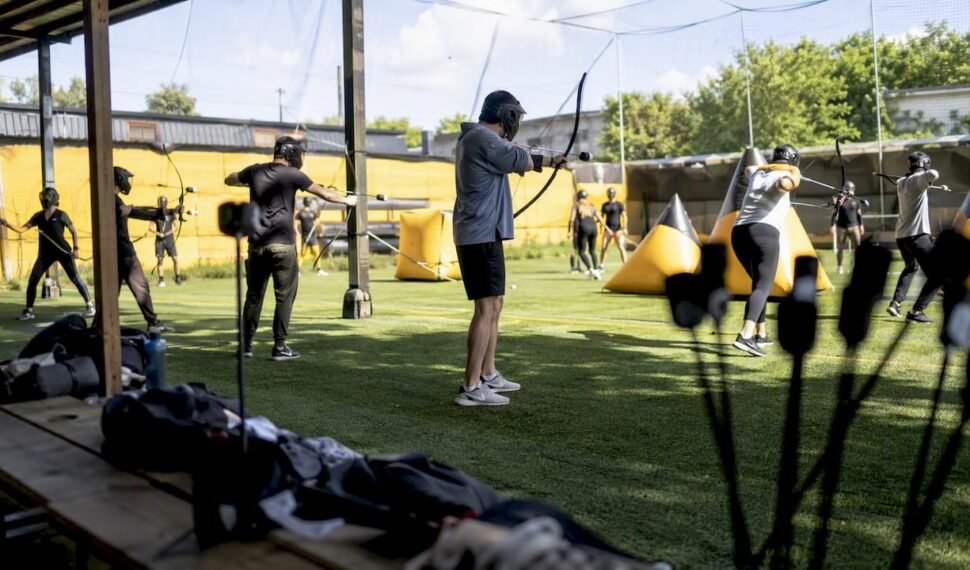
Combat archery for 90 minutes, a picnic in the park, a two-hour cooking class, or a browser-based escape room for remote teammates. All ten ideas below work for teams of 6 to 20 people, and none of them require a three-day retreat or a facilitator with a laminated agenda.
Here’s the shortlist, ranked by how fast they get a small team talking to each other instead of at each other:
- Combat archery or archery tag — high energy, 90 minutes, near-instant icebreaker.
- Park picnic with lawn games — low energy, half-day, zero-pressure.
- Hands-on cooking class — medium energy, 2 to 3 hours, built-in conversation.
- Escape room challenge — medium energy, 60 to 90 minutes, forces problem-solving.
- Volunteer project (food bank, park cleanup) — low to medium energy, half-day, purpose-driven.
- Axe throwing or bazooka ball session — high energy, 60 to 90 minutes, novelty-driven.
- Guided nature walk or hike — low energy, half-day, good for reflective teams.
- Trivia or games night — low energy, 60 to 90 minutes, works in-office or off-site.
- Field day with mixed sports (dodgeball, ping pong) — high energy, half-day, flexible group size.
- Virtual cook-along or browser escape room — low energy, 60 minutes, best for hybrid teams.
Why bother with any of this? Because face-to-face interaction remains the single most valuable form of team interaction for building high-performing teams, and organizations that treat offsites as a real investment rather than an afterthought report measurable gains in engagement and retention. A one-line activity list won’t fix a broken team, but the right one, run well, moves the needle faster than most managers expect.
Key Takeaways
Small teams get the most out of an offsite when the activity is interactive, the timeline is short, and the planning starts with a clear goal instead of a generic activity search.
| Point | Details |
|---|---|
| Pick an idea quickly | Choose from the top 10 shortlist based on your team’s energy level and available time. |
| Survey the team this week | Send a short poll covering dietary needs, accessibility, and activity preferences before booking anything. |
| Lock a date within two weeks | Smaller groups of 10 to 15 can plan effectively on a two-week timeline using bundled local venues. |
| Set a per-person budget upfront | Split spending roughly 40% activity, 35% food, 15% logistics, and 10% buffer. |
| Measure the impact afterward | Send a quick engagement pulse survey a week later and note any change in team communication. |
| Consider a turnkey venue | Archers Battlefield bundles activity, space, and coordinator support into one booking for teams of 6 to 20. |
Table of Contents
- Why Small Team Offsite Ideas Actually Improve Performance
- What Should You Plan Before Booking an Offsite?
- Which Offsite Ideas Fit Your Team’s Energy and Budget?
- How Do You Choose the Right Offsite for Your Team?
- What Do You Need to Plan for Event Day?
- Why Do Interactive, Combat-Style Venues Work So Well for Small Teams?
- What We’ve Learned Running Team Offsites
- Ready to Book a Small Team Offsite That Actually Works?
- Sources
Why Small Team Offsite Ideas Actually Improve Performance
Offsites work because they replace scheduled meetings with shared experience, and shared experience builds trust faster than any status update ever will. That’s the one-sentence case for doing this at all: offsites raise engagement, accelerate bonding between people who normally only see each other in Zoom boxes, and improve day-to-day collaboration once everyone’s back at their desks.
The research backs this up in a way that should reassure any manager worried about spending a Tuesday afternoon on games instead of deliverables. Team composition and face-to-face collaboration are among the critical drivers of team performance identified by Harvard Business Review’s analysis of team dynamics, and teams that interact informally, outside the structure of a meeting agenda, tend to solve problems together more effectively afterward. Offsites are essentially a shortcut to that informal interaction, compressed into a few hours instead of accumulating over months of coffee-break small talk.
Here’s what that actually looks like in practice:
- Better communication — people who’ve laughed together in a low-stakes setting speak up more freely in meetings.
- Faster onboarding — new hires who join an offsite within their first month integrate socially much quicker than those who don’t.
- More creative problem-solving — teams that have bonded outside work show more willingness to float half-formed ideas.
- Higher morale — a single well-run afternoon can reset a team that’s been running on fumes for a quarter.
- Stronger retention signals — employees who feel personally connected to teammates report higher intent to stay.
- Reduced friction on cross-functional work — small teams that offsite together collaborate more smoothly with other departments later.
None of these benefits require an elaborate program. Open-play, interactive formats consistently outperform long, structured sit-down programming for the simple reason that people bond over doing something together, not listening to someone talk at them.
What Should You Plan Before Booking an Offsite?
Start with one question: what’s the actual goal? Bonding, strategic alignment, or a reward for a hard quarter each point toward a different kind of event, and skipping this step is the fastest way to end up with an expensive afternoon nobody enjoyed. If the goal is bonding, pick something interactive and social. If it’s strategy, build in structured discussion time around a lighter activity. If it’s a reward, let the team choose from two or three options you’ve already vetted.
Once the objective is locked, work through this checklist:
- Confirm a date window at least two to three weeks out to maximize attendance.
- Send a two-minute survey asking about dietary restrictions, mobility needs, and activity preferences.
- Map travel logistics: can everyone get there without eating into the event itself?
- Build a contingency plan for weather, last-minute cancellations, or a no-show teammate.
- Set a per-person budget range before you start shopping vendors, not after.
A simple way to split a modest offsite budget:
- 40% activity or venue booking — this is the thing people will remember.
- 35% food and drink — never underestimate how much a good meal contributes to mood.
- 15% logistics — transportation, parking, or venue fees.
- 10% buffer — for the inevitable extra round of drinks or an unplanned add-on.
Pro Tip: Never frame an offsite as mandatory fun. Announce it as an optional but encouraged team afternoon, give people a real opt-out, and you’ll get higher genuine engagement from the people who do show up than you would from a room full of reluctant attendees.
Which Offsite Ideas Fit Your Team’s Energy and Budget?
Small teams have wildly different appetites for physical activity, structured learning, or quiet reflection, so grouping ideas by category makes it easier to filter fast. Here are five buckets worth knowing, each built around what a group of 6 to 20 people can realistically pull off in a day or less.
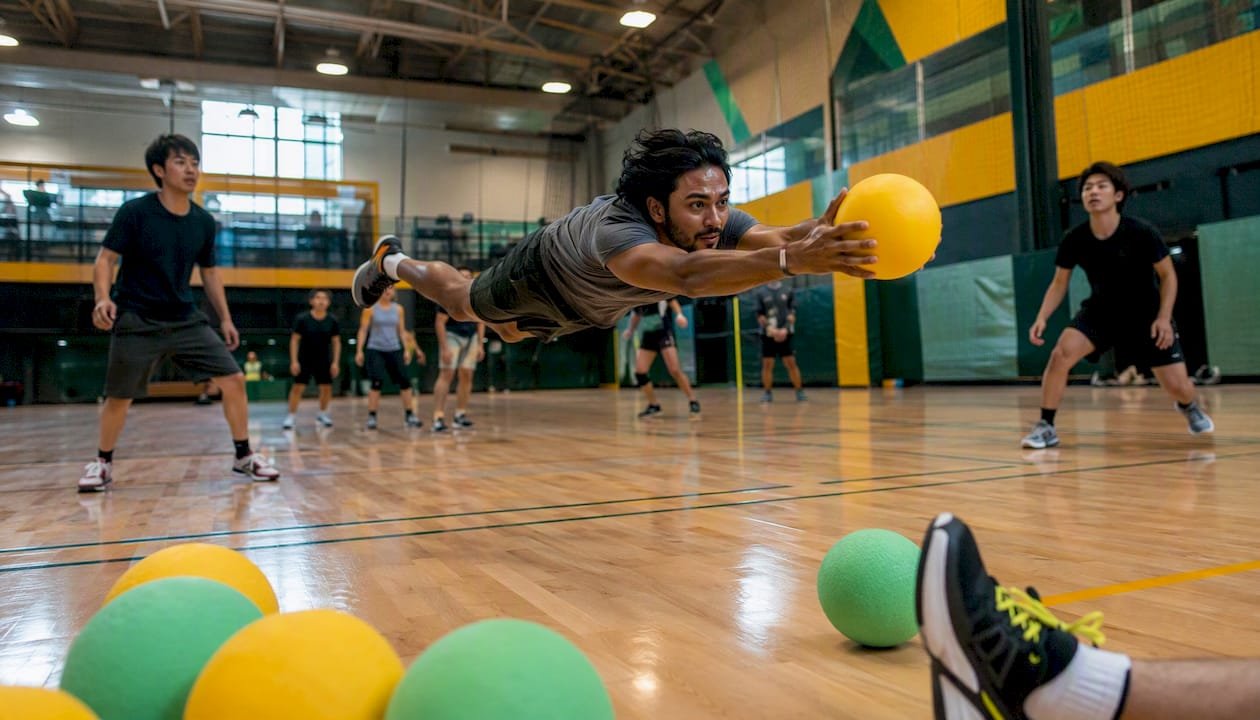
Active and adventure. Combat archery, axe throwing, bazooka ball, dodgeball, and field days fall here. These fit high-energy teams and groups where a chunk of the team already knows each other well enough to compete without hurt feelings. Most run 60 to 90 minutes and cost between $30 and $60 per person depending on the venue and package.
Creative and learning. Cooking classes, pottery workshops, and escape rooms fit teams that lean analytical or introverted, since the activity gives people something to focus on besides small talk. Organizers should match the activity to the group’s objective, and cooking classes in particular tend to produce the most conversation because everyone’s hands are busy but nobody’s under pressure. Expect 2 to 3 hours and $40 to $80 per person.
Volunteer and low-cost. Food bank shifts, park cleanups, and community garden days work well for purpose-driven teams and cost almost nothing beyond transportation. They also tend to produce some of the strongest morale gains relative to spend, since shared purpose does a lot of the bonding work for you.

Short and low-friction. Trivia nights, quick icebreaker games, and 15-minute team challenges fit teams that are short on time or budget. Asana’s library of team-building games breaks these down by group size and time required, and most take under an hour with little to no cost beyond snacks.
Virtual and hybrid. Browser-based escape rooms, trivia platforms, and mailed cook-along kits keep remote teammates included without flying anyone in. Short, low-tech virtual formats work best because complicated setup kills momentum before the activity even starts.
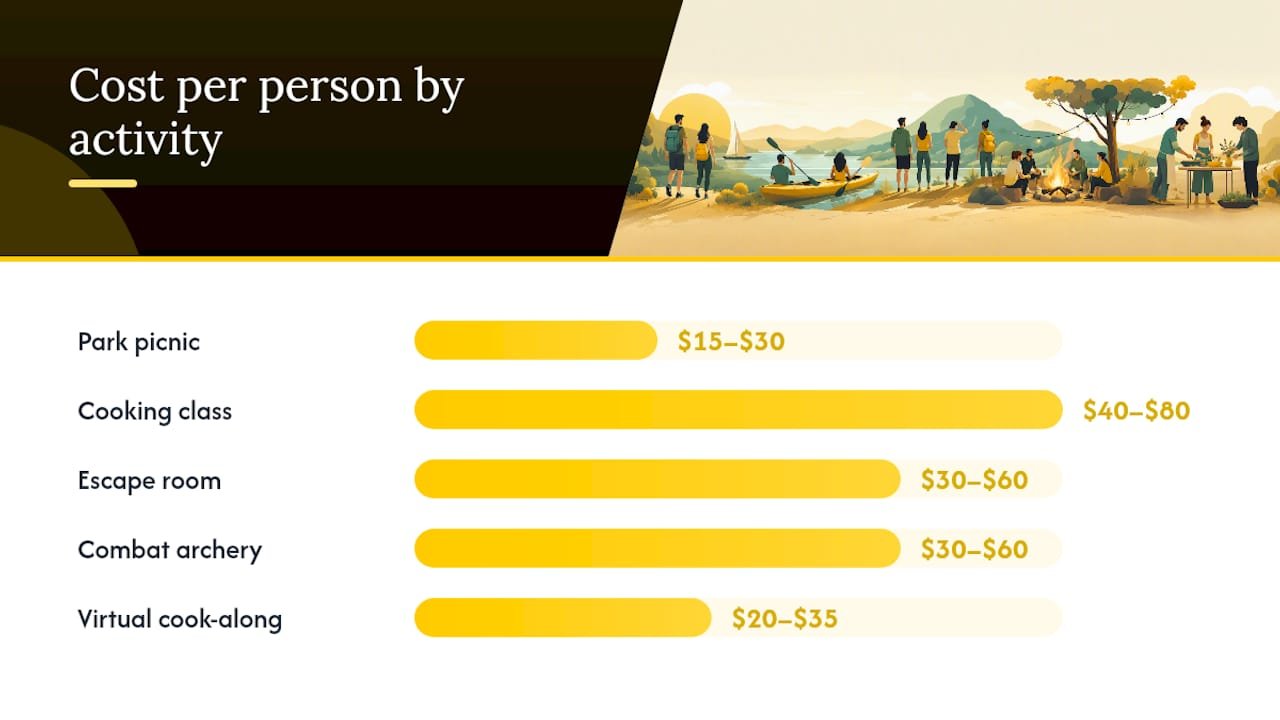
| Idea | Typical Time | Cost Per Person | Best Fit |
|---|---|---|---|
| Park picnic with games | 3 to 4 hours | $15 to $30 | Very small groups (6 to 10), low budget |
| Cooking class | 2 to 3 hours | $40 to $80 | Mid-small groups (11 to 20), creative teams |
| Escape room | 60 to 90 minutes | $30 to $60 | Any size, analytical or competitive teams |
| Combat archery / interactive venue | 60 to 90 minutes | $30 to $60 | Any size, high-energy teams |
| Virtual cook-along | 60 minutes | $20 to $35 | Hybrid or remote teams |
Very small groups of 6 to 10 do best with anything requiring real coordination, since it’s easier to keep everyone engaged in a puzzle room or a shared kitchen. Mid-small groups of 11 to 20 have more flexibility for split-team formats like dodgeball or field day style events, where smaller squads compete within the larger group.
How Do You Choose the Right Offsite for Your Team?
Run every candidate idea through three filters: the goal you defined earlier, the team’s typical energy level, and the logistics you can realistically pull off. An idea that scores well on all three beats one that scores perfectly on just one.
Here’s how that plays out with two real examples. A six-person engineering team that wants pure bonding, has moderate energy, and can only spare a Friday afternoon lands on something like archery tag or a short escape room, both doable in under two hours with minimal setup. A fifteen-person sales team celebrating a strong quarter, high energy, and a full day free points toward a field day or a combat-style venue booking with a private coordinator handling logistics.
Once you’ve picked a direction, vet the vendor before you commit:
- What’s the maximum group capacity, and does it comfortably fit your headcount?
- Do they offer private event bookings, or will your team share space with strangers?
- What safety protocols are in place, especially for anything physical or combat-style?
- Can they walk you through a sample agenda before the day of the event?
- What’s the cancellation and rescheduling policy if someone gets sick or weather turns?
Watch for a few red flags while you’re at it:
- Vendors who push forced-performance activities like mandatory karaoke or public confessions.
- Rigid timelines with no flexibility if your group runs five minutes behind.
- Venues with no accessibility accommodations for mobility or sensory needs.
- Package pricing that hides fees until the invoice arrives.
What Do You Need to Plan for Event Day?
A half-day offsite for 10 to 15 people can run smoothly on a simple timeline: arrival and check-in at the top of the hour, 15 minutes for a light briefing, 90 minutes for the main activity, a 30-minute meal or break, and a closing 15 minutes for informal wrap-up conversation. A full-day version just adds a second activity block after lunch, ideally something lower-energy if the morning was physical, or vice versa.
Smaller groups of 10 to 15 people can plan an effective offsite in as little as two weeks if they lean on venues offering bundled packages: activity, space, and catering handled through a single booking instead of three separate vendors. That single point of coordination is often the difference between a smooth afternoon and a manager spending the week beforehand chasing confirmation emails.
Before the day arrives, work through this:
- Confirm dietary and accessibility needs at least two weeks out, not two days.
- Share a clear meeting point and parking or transit instructions.
- Assign one point person to handle check-in so the rest of the team can just show up.
- Build a simple weather contingency if any part of the day is outdoors.
- Decide in advance how you’ll handle a last-minute no-show, so it doesn’t derail the schedule.
A few things worth double-checking on-site:
- Confirm the venue has a working first-aid kit and staff trained in basic safety response.
- Verify any physical activity has age and mobility guidelines clearly posted.
- Check that food options genuinely cover the dietary restrictions collected during planning, not just a generic “vegetarian option available.”
Why Do Interactive, Combat-Style Venues Work So Well for Small Teams?
Open-play formats beat long, structured programming because the activity itself does the talking. Nobody needs a facilitator prompting forced conversation when they’re dodging Nerf darts or lining up an axe throw, because the format naturally generates chatter, laughter, and the occasional friendly rivalry that carries back into the office.
Interactive venues reduce facilitator overhead because the activity itself generates the conversation and collaboration a manager would otherwise have to script, which frees up managers to actually participate instead of running the event. That matters more than it sounds. A manager who’s busy managing an icebreaker script isn’t bonding with their team; a manager who’s ducking a foam dart alongside everyone else is.
Venue selection matters more than most managers assume going in. A space with genuine wow-factor, something visually different from a conference room or a standard bowling alley, shortens the warm-up period before people relax and start engaging. A private event coordinator who handles check-in, safety briefings, and pacing means the team leader doesn’t have to double as an event planner on top of everything else.
Teams that bond over shared physical challenge, competing side by side rather than sitting across a table, tend to carry that looseness back into how they work together the following week. The format does more of the relationship-building than any planned icebreaker could.
A few notes specific to combat-style activities: confirm eye protection and safety gear are included in the package, ask whether the venue separates skill levels or ability groups, and check that briefings happen before gear goes on, not during. Teams with a mix of fitness levels tend to do best with formats like archery tag or dodgeball, where strategy matters as much as speed.
What We’ve Learned Running Team Offsites
One lesson holds up again and again: the offsites that actually work are the ones where the manager treats the activity as a genuine break, not a covert extension of the workday. The moment a team leader starts checking email between rounds, everyone else notices, and the energy drops fast.
Two mistakes come up more than any others. The first is overscheduling: cramming three activities into a half-day leaves no room for the unstructured chatter that’s actually the point of the offsite. Fix it by cutting the agenda in half and protecting that open time on purpose. The second is ignoring quieter team members’ preferences in favor of whatever’s loudest and most obviously “fun.” Fix it with a short anonymous preference poll before booking, since the people least likely to speak up in a meeting are often the ones most affected by activity choice.
Pro Tip: On the day itself, resist the urge to formally “wrap up” the moment the scheduled activity ends. The best conversations usually happen in the ten minutes after the games stop and before everyone heads to their cars, so build in slack instead of rushing straight to goodbyes.
Ready to Book a Small Team Offsite That Actually Works?
Archers Battlefield exists precisely for the manager who’s read this far and doesn’t want to spend another week coordinating three separate vendors for one afternoon. Our team-building packages bundle the activity, the space, and a private event coordinator into a single booking, which means no chasing catering quotes or juggling separate confirmation emails.
Corporate groups get their choice of combat archery, Nerf battles, bazooka ball, dodgeball, axe throwing, or a mixed rotation across multiple activities, all run with a safety briefing up front and gear included in the package. Private bookings mean your team isn’t sharing lanes with strangers, and our coordinators handle pacing so your team leader can actually participate instead of managing logistics. Food and drink add-ons are available for groups that want to extend into a full half-day event. This format fits small teams of 6 to 20 best, whether the goal is pure bonding, a quarterly reward, or a low-stress way to onboard a few new hires at once.
If you’re ready to lock in a date, check availability on our archery booking page or browse full package details on our event packages page to see what’s included before you book.
Sources
- Team-Building Ideas: Fun Activities To Strengthen Your Team (IMD blog)
- The New Science of Building Great Teams (Harvard Business Review)
- Team-building games (Asana resources)
- Company offsite activity ideas (Perk guide)
- How to plan a small team offsite (Offsiteio Learn)


