

Dodgeball is safe when the group uses soft balls, a clear court, proper footwear, firm in-game rules and an adult watching. Most injuries come from the same few causes: hard or under-inflated balls, cluttered floors, awkward landings and throws at the head. Each cause has a fix, and this guide walks through them in the order you would use them: planning, setup, rules, then what to do if someone gets hurt.
It is written for parents, coaches, teachers and anyone organizing a game night, with Ontario safety standards as the reference point.
TL;DR
- Use soft foam or utility balls only. Ontario’s school standards rule out under-inflated balls, beanbags and hard flying discs.
- Clear the court and its surroundings of obstacles, keep doors closed, and give everyone enough room.
- Wear closed athletic shoes, take off jewellery, and put an adult in direct charge of instruction and throwing.
- Ban head shots, kicking and spiking, and holding a ball too long.
- Pull anyone with a head impact out of the game for the rest of the day and follow a return-to-sport plan.
Table of Contents
- Is dodgeball safe?
- What injuries to plan for
- Equipment: the safest balls and gear
- Court setup: space, surfaces and doors
- Footwear, clothing and jewellery
- Supervision: who watches what
- The in-game rules that protect players
- How many balls do you use?
- Adapting the game for younger children
- Adults and corporate groups
- What to do if someone is hit in the head
- Our perspective
- Book a dodgeball game at Archers Battlefield
- FAQ
- Sources
Is dodgeball safe?
Yes, with the right setup. Dodgeball is a fast game of throwing, dodging and quick direction changes, so it carries the usual risks of any active team game. Active & Safe, a Canadian injury prevention resource, lists three main concerns: shoulder pain from repeated throwing, ankle injuries from jumping and sudden changes of direction, and concussion from hits or collisions.
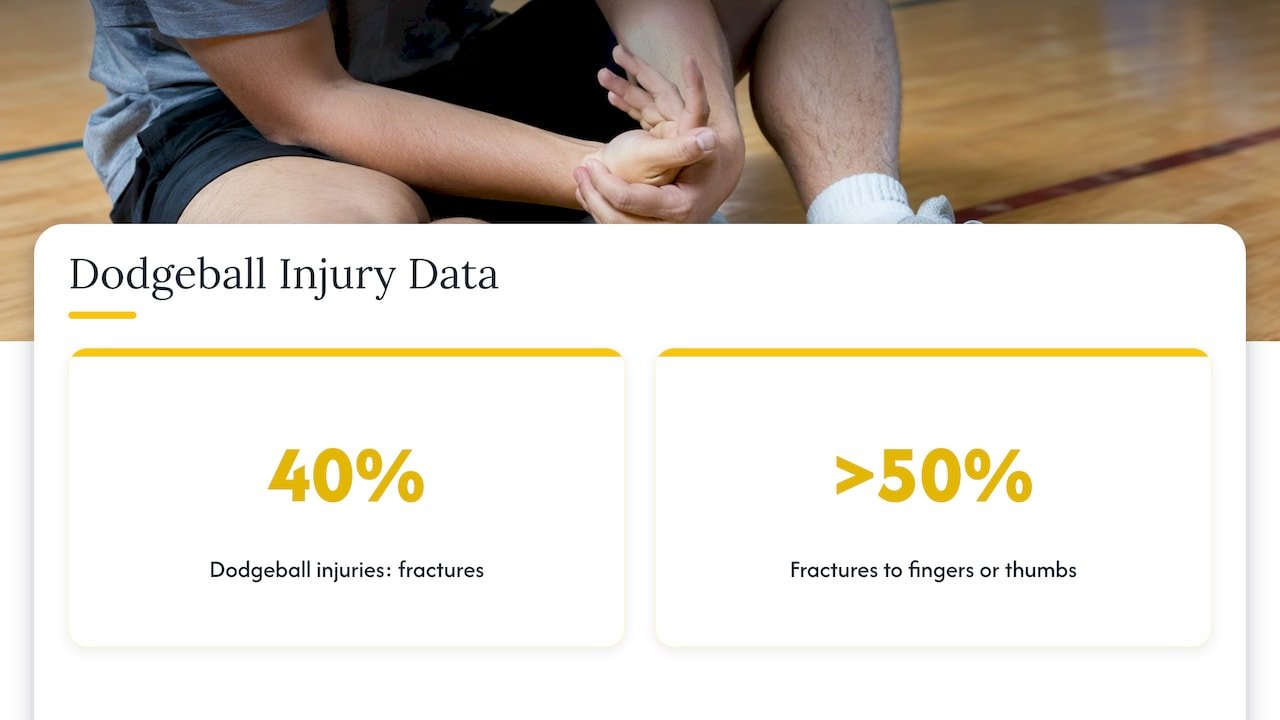
The same source reports data from BC Children’s Hospital: fractures made up 40% of dodgeball injuries seen there in 2012 to 2014, and more than half of those fractures were to fingers or thumbs. Fingers are the part of the body that meets a ball first, whether you catch, block or just reach for a loose one. That is a good reason to teach catching technique and to choose softer balls.
None of this means the game needs to be avoided. It means safety is built from decisions you make before the first whistle. The sections below cover each one.
What injuries to plan for
Shoulders and throwing arms
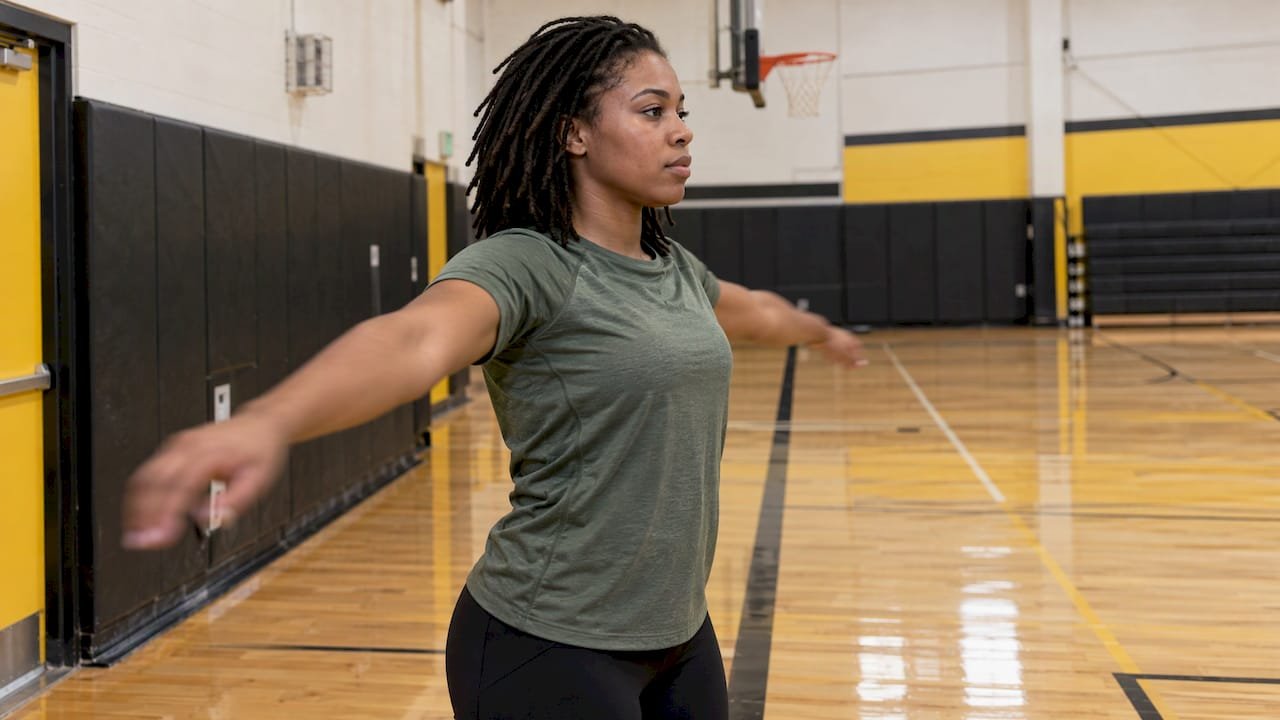
Repetitive throwing loads the shoulder. Active & Safe notes that a shoulder injury prevention program built into the warm-up can improve control, flexibility and coordination. In practice, that means a few minutes of arm circles, light throws and shoulder mobility before play, not jumping straight into full-speed throws.
Ankles and knees
Dodging is a series of quick cuts, hops and landings. Active & Safe says balance training with a resistance component may reduce the risk of all lower-body injuries by up to 50%. For a one-off party that is overkill, but for a team or a weekly league it is worth adding single-leg balance work to warm-ups.
Fingers and hands
Because fractures to fingers and thumbs were the most common fracture site in the hospital data above, teach players to catch with soft hands and to use both hands. Avoid stabbing at a ball with stiff fingers.
Head and face
A ball to the head is the most serious scenario, which is why the rules below treat head shots as a foul and why the concussion section later in this guide matters.
Equipment: the safest balls and gear
The single biggest safety choice is the ball. The Ontario Physical Activity Safety Standards for secondary dodgeball, updated for 2026, call for safe equipment and soft objects such as foam or utility balls. They prohibit under-inflated balls, beanbags and hard flying discs.
Here is a simple equipment check before each game:
- Squeeze every ball. Foam should be intact, with no splits or hard spots.
- Reject any ball that is soft from low air, or too hard for the age group.
- Remove anything that is not a ball from the play area, including tossed items used as substitutes.
- Count the balls and place them in the center line area before play begins.
If you are renting a space, ask what kind of balls are included and how many. At our venue, dodgeball is one of our group activities and you can see the options on our Dodge Ball page.
Court setup: space, surfaces and doors
The elementary version of the Ontario standards says playing surfaces and the areas around them must be free of all obstacles, with adequate space for every participant. It also says all doors into and out of the playing area must be kept closed, so no one wanders into a live game and no ball bounces into a hallway.
Practical setup steps:
- Walk the floor first. Look for water, loose tape, dropped shoes and anything that rolls.
- Mark boundaries away from hazards. Put the sidelines and back lines well clear of walls, benches, stairs and equipment. The Ontario secondary standards advise marking boundaries away from hazards.
- Keep spectators outside the lines. Use a visible spectator zone, not the edge of the court.
- Close the doors. Post an adult or a sign if the room has more than one entrance.
- Match court size to group size. Crowding causes collisions. If the group is large, run two games or rotate teams.
Footwear, clothing and jewellery
The Ontario standards recommend appropriate footwear and removing jewellery. For dodgeball that translates to:
- Closed athletic shoes with grip. Sandals, boots and bare feet are out.
- No rings, bracelets, necklaces or dangling earrings. Rings in particular can catch on a ball or a hand.
- Glasses should be secured with a strap, or the player should consider a sports-style pair.
- Clothing that lets the arms and legs move freely, with long hair tied back so it does not block vision.
Our approach to what to wear for another of our games is covered in our Nerf battle outfit guide, and the same logic of grip, coverage and nothing loose applies here.
Supervision: who watches what
The Ontario secondary standards call for direct supervision during instruction and throwing, with on-site supervision for other parts of an activity. Direct means the adult is watching the players actually throwing, not checking a phone at the side.
A workable setup:
- One adult acts as referee, blows the whistle and calls fouls.
- A second adult watches the waiting players, the doors and the sidelines for larger groups.
- Everyone hears the safety rules before the first game, not after the first problem.
- The referee has the authority to stop play for any unsafe throw, however competitive the moment is.
For youth groups, our 90-minute run sheet for youth group dodgeball shows how to fit rules, warm-up and rotations into one evening.
The in-game rules that protect players
Rules vary between leagues, schools and parties, but the safety-related rules are very similar everywhere. Here are the ones we recommend any group adopt, written as house rules you can read aloud.
Getting out, catching and blocking
- A player hit by a live ball below the neck is out.
- If a thrown ball is caught cleanly, the thrower is out and a teammate who was eliminated can come back in.
- Players may block a throw with a ball they are holding, but if they drop that ball while blocking, they are out.
- Players stay on their own side of the center line. Crossing it is a foul, and the other team gets the ball.
The point of the blocking rule is safety as much as fairness. A player who holds a ball in front of the face has a way to defend without turning away, which is when awkward falls and neck twists happen.
Head shots
Make it a rule that a throw to the head, face or neck is a foul on the thrower, not an out for the person hit. When the rule is clear, players aim low. Add a referee judgment clause: if a player ducks or moves into the throw, the referee can decide the hit was not the thrower’s fault.
Actions to prohibit
- Kicking or spiking the ball. Kicked balls are unpredictable and spiking from close range is a head and face risk.
- Holding a ball for a long time. A 10-second limit is common in recreational rules, and it keeps play moving so nobody is pinned near the line.
- Throwing after the whistle.
- Climbing, diving into walls or sliding on slick floors.
- Throwing at a player who is down, retrieving a ball, or not looking.
A quick answer to a common question: no, you should not kick the ball in a safety-first game. Kicking is typically a prohibited action in organized play.
Bring the players in on the rules
Spend two minutes before play on a quick demonstration: how to catch, how to block, where the lines are, and what the whistle means. Kids especially accept rules they have seen done.
How many balls do you use?
It depends on the format. British Dodgeball’s referee guidance specifies five approved balls per match, and its main game is five-ball cloth dodgeball, with foam rules in a separate document. Casual games commonly use a similar number, but nothing stops a group from using more or fewer, depending on court size and age.
From a safety standpoint, more balls in play mean more simultaneous throws and less time to watch every one. For beginners or younger players, start with fewer balls and add more as they get comfortable. If you want ideas on how to change the pace, our dodgeball game modes guide explains format families and rule templates for organizers.
Adapting the game for younger children
Younger players need softer, lighter balls, smaller courts and a bigger focus on fun than on winning. A commonly used guideline is that children under 8 do best with this approach. Practical changes include:
- Smaller, lighter foam balls that are easy to catch.
- A shorter court so throws are not at full distance.
- No elimination, or very short elimination, so no child sits out for long.
- Rotate who throws so stronger or older kids do not dominate.
- Teach catching and dodging skills as a game before starting play.
For mixed-age groups, split by age or by skill. A 12-year-old and a 6-year-old on the same court is a safety problem even with soft balls.
Adults and corporate groups
Adults often assume they do not need rules, then pull a shoulder on the third throw. Warm up, keep the foam balls, enforce the head-shot rule, and set a throw-clock. If your event is corporate, our corporate dodgeball booking guide covers what to plan for team events. Mixed fitness levels on one team are normal, so make sure the game has roles that do not require full-speed throwing.
Game nights with other lawn and table games follow the same principle of agreeing on rules before anyone starts, and you can see the same idea in recreational game night events where participants agree on equipment and prohibited actions up front.
What to do if someone is hit in the head
Treat any head impact seriously. The World Dodgeball Federation’s concussion guidelines say a player with a suspected concussion must be removed from play immediately and not allowed to return that day.
A clear process for organizers:
- Stop the game and take the player off the court right away.
- Do not let them return that day, even if they say they feel fine.
- Watch for symptoms such as headache, dizziness, nausea, confusion or unusual drowsiness.
- Arrange a healthcare assessment within 24 to 48 hours with a doctor or nurse practitioner.
- Follow a step-by-step return-to-sport plan. The player should not return to dodgeball until a healthcare professional clears them.
- Tell the parent or guardian in the case of a child, and write down what happened.
If symptoms get worse, or the player loses consciousness, vomits repeatedly or has a seizure, call 911.
Our perspective
We run group games for a living, and we have learned that the safest game is the one where the rules are simple, clear and said out loud before play.
Dodgeball is one of our favorites for mixed groups because everyone understands it in thirty seconds. That is also why it needs structure. When a group knows the head-shot rule, the line rule and the whistle, the game feels faster and more fun, not slower.
Our approach to every activity, from combat archery to Nerf battles, starts with safety, then fun, then competition. Parties and team events go better when someone else handles the setup and planning, so the host can actually play or enjoy watching.
If you want to compare how we think about safety across games, our archery tag safety guide lays out gear, rules and setup.
Archers
Book a dodgeball game at Archers Battlefield
If you would rather play than set up and referee, we offer dodgeball as one of our group activities, at $30. We also build birthday and team packages around our games, with planning support included in our approach. Kids’ birthday packages start at $399 for Game On, and team events start at $399 for Game On Team Battle. See the kids’ birthday party packages or the sports team event packages for what each includes.

To ask about dates or group size, start on our main page.
FAQ
Is dodgeball safe for kids?
It can be, with soft balls, a clear court and an adult supervising. Ontario’s school standards call for foam or utility balls, obstacle-free surfaces and closed doors. For children under 8, use lighter balls, smaller courts and a focus on fun.
What are the 5 D’s of dodgeball?
They come from a comedy film and are a joke list, not part of any rulebook. Real rules, such as those used by leagues and schools, cover things like outs, catches, boundaries and prohibited actions. Use those for a real game.
Can you kick a ball in dodgeball?
Not in a safety-first game. Kicking and spiking are usually prohibited because they send the ball in unpredictable directions and can hit someone in the head. Hold, throw or roll the ball instead.
What should we do if a player is hit in the head?
Stop play and take the player off the court, and do not let them return that day. Watch for symptoms, arrange a healthcare assessment within 24 to 48 hours, and follow a return-to-sport plan until they are cleared. Call 911 if symptoms are severe.
Sources
- Dodgeball – Active & Safe
- Dodgeball | Ontario Physical Activity Safety Standards (secondary)
- Dodgeball | Ontario Physical Activity Safety Standards (elementary)
- British Dodgeball Referee Guidance 2022-23
- WDBF Concussion Guidelines


