
That’s the whole job. Everything else, from icebreakers to AV checks, is just filling in the template once the frame is set.
TL;DR:
- Most successful schedules include built-in transition buffers, as rushing between activities or reflection often causes delays or schedule slips.
- Planning should follow a phased timeline with specific deadlines for objectives, vendor confirmation, and final headcount at least five business days before the event.
- Clear role assignment is crucial, including a dedicated floor manager, AV lead, first aid contact, and catering liaison, with venue walkthroughs to ensure logistics and safety.
- An effective agenda typically features a short opener, a core physical or collaborative activity, a reflection period, application time, and a brief closing, tailored to group goals.
- Using pre-designed templates and packages simplifies organizing larger or more complex events, with scalable activities designed to minimize planning and execution errors.
Table of Contents
- Sample Team Building Agenda Templates for Every Time Slot
- What’s the Right Event Planning Timeline for a Team Building Day?
- How Do You Structure an Agenda People Actually Engage With?
- Copy This Run-of-Show Template Into Your Schedule
- Who Handles Logistics, AV, and Safety on Event Day?
- Day-Of Checklist: Staying on Schedule When Things Slip
- How Do You Measure Whether the Day Worked?
- What We’ve Learned Running Hundreds of Team Building Days
- Book a Ready-Made Team Building Day With Archers Battlefield
- Templates and Tools Worth Bookmarking
- Sources
Sample Team Building Agenda Templates for Every Time Slot
You don’t need to invent a schedule from scratch. Three formats cover most corporate offsites, and each one scales up or down depending on group size.
-
The 3-hour workshop. A tested structure runs a 15-minute welcome and icebreaker, two 30-minute activities split by a break, a 30-minute reflection, and a 15-minute wrap-up, according to a step-by-step 3-hour workshop guide. It suits groups of 10 to 40 and works well for departments testing team building for the first time. Materials stay light: name tags, a flip chart, and whatever gear the activity itself needs.
-
The half-day session (4 to 5 hours). This format adds a second activity block and stretches the reflection portion, plus a networking break in the middle where people actually talk instead of checking phones. It fits 20 to 80 participants and works best when you have two distinct goals, say, trust-building in the morning and creative problem-solving after lunch.
-
The full-day offsite (7 to 8 hours). Morning opens with an active session, midday brings a debrief paired with a meal, and the afternoon rotates smaller groups through multiple activity stations before a final session that ties everything back to real work. Full days handle 50 to 200+ people if you have enough facilitators to run parallel stations. Budget a facilitator or activity lead for every 15 to 20 participants, not one person trying to run the whole room.
Each format assumes a facilitator who knows the group’s goal walks in already, not someone reading the agenda for the first time that morning.
What’s the Right Event Planning Timeline for a Team Building Day?
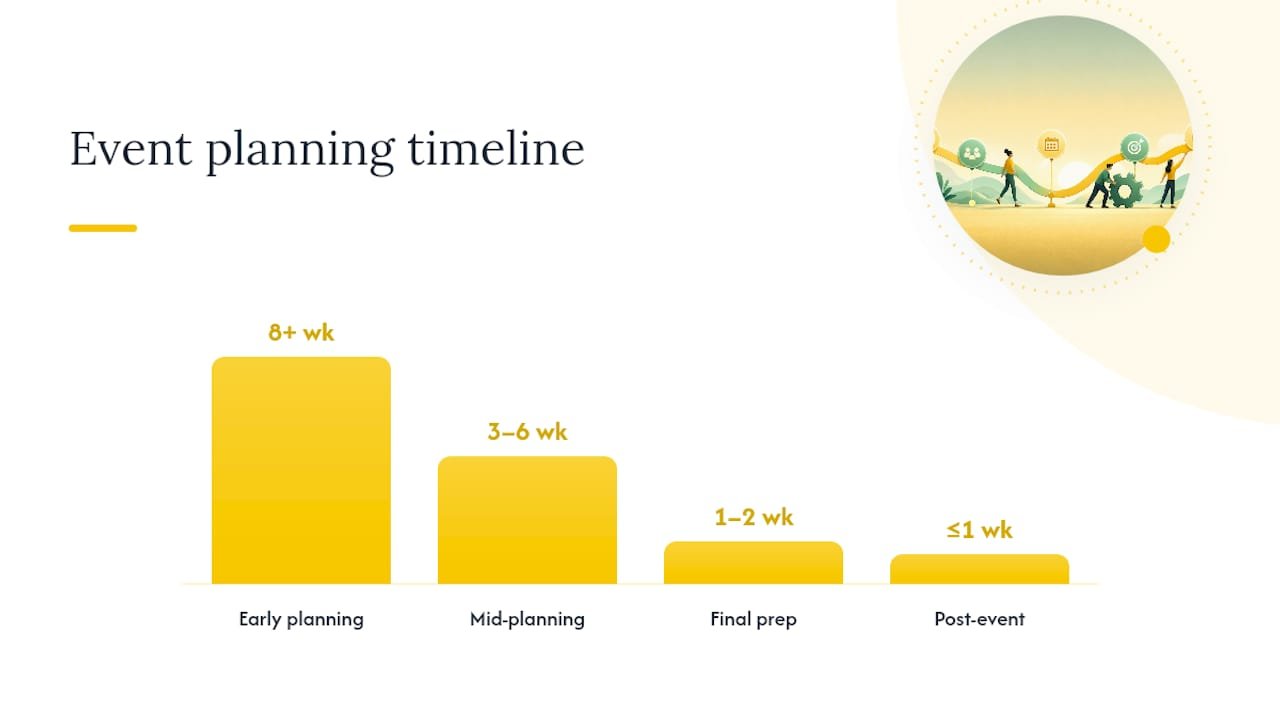
Most schedule slips happen in the middle of planning, not at the start or the finish. A phased timeline built around anchor dates and review gates catches that risk before it becomes a scramble.
Break the work into five phases:
- Early planning (8+ weeks out): lock the objective, headcount range, and venue or activity provider.
- Mid-planning (3 to 6 weeks out): confirm vendors, finalize the activity mix, and send save-the-dates. This is where most timelines slip, because copy review and vendor sign-off always take longer than teams budget.
- Final prep (1 to 2 weeks out): lock the headcount, confirm deposits, and print materials.
- Day-of: execute the run-of-show.
- Post-event (within 1 week): send the survey and debrief with facilitators.
A practical event timeline guide recommends allocating tasks with deadlines attached to a named owner, then holding short weekly check-ins as the date approaches, not just one big kickoff meeting. Publish the master timeline somewhere everyone can see it, whether that’s a shared spreadsheet or a purpose-built timeline template with swimlane views.
Pro Tip: Set your final headcount deadline at least five business days before the event, not two. Catering and activity vendors often need that window to adjust staffing without a rush fee.
How Do You Structure an Agenda People Actually Engage With?
Work backward from what success looks like. If the goal is “rebuild trust after a reorg,” that shapes activity choice, timing, and even who opens the session, differently than a goal like “onboard three new hires into team norms.”
Once the objective is set, sequence it the same way every time:
- Opener (5 to 15 minutes): welcome, objective statement, and one low-stakes icebreaker.
- Core activity (30 to 90 minutes): the main exercise, physical or collaborative.
- Reflection (15 to 30 minutes): small-group debrief, not a lecture.
- Application (15 to 30 minutes): translate the activity into a work commitment.
- Closer (5 to 10 minutes): recap and thank-yous.
Pick icebreakers that match the group’s comfort level. A team that has never done anything physical together shouldn’t open with a high-adrenaline activity; ease into it. Groups always take longer to shift rooms or gear up than organizers expect.
Copy This Run-of-Show Template Into Your Schedule
A working run-of-show needs seven columns, and skipping any one of them is usually what causes a facilitator handoff to lose time. Recommended fields include owner and contingency notes specifically because those are the two things nobody remembers under pressure.
- Time — start and end, not just duration.
- Activity — what’s happening in plain language.
- Objective — the one-line reason this block exists.
- Owner — the specific person running it, not “the team.”
- Materials — everything needed, checked off in advance.
- AV/space needs — mic, speaker, projector, or none.
- Contingency — the backup plan if this runs long or short.
A populated example for the opening of a 3-hour workshop: 9:00 to 9:15, Welcome and icebreaker, “set tone and introduce goal,” Facilitator A, name tags and markers, handheld mic, contingency: cut icebreaker to 10 minutes if registration ran late. Hand off between facilitators at the top of each block, never mid-activity, so nobody loses the thread.
Who Handles Logistics, AV, and Safety on Event Day?
Every agenda needs a name attached to each function, not a department. Assign:
- A floor manager who owns the overall schedule and makes the call on delays.
- An AV lead who runs a sound check at least 30 minutes before doors open, with a backup mic or speaker on standby.
- A first aid contact whose location is announced at the opening.
- A catering liaison who confirms delivery windows, a step covered well in this catering timeline guide for event planners.
Walk the venue before load-in to confirm accessibility, flooring, and exits match what the activity actually needs.
Day-Of Checklist: Staying on Schedule When Things Slip
- Start-of-day check (60 to 90 minutes before doors): registration table set, signage up, room layout matches the plan.
- Common trigger: late arrivals. Contingency: trim the opener, not the core activity.
- Common trigger: activity runs long. Contingency: cut reflection time, never the physical activity itself, since that’s usually the point of the day.
- Teardown: assign one person to handoff materials and confirm nothing stays behind at the venue.
How Do You Measure Whether the Day Worked?
Send a short survey within 24 hours asking two things: how the experience felt, and one specific behavior they’ll try differently at work. Separately, debrief with facilitators while details are fresh; ask what ran long, what the group resisted, and what they’d cut next time.
- Turn debrief notes into a one-page action plan and send it to managers within a week.
- Reuse strong moments (a quote, a photo, a stat) in internal comms to stretch the day’s impact.
What We’ve Learned Running Hundreds of Team Building Days
Pacing breaks agendas more often than activity choice does. Groups need real transition time between physical and reflective moments, and skipping that buffer is where most schedules unravel. Our team building packages build that cushion in by default, with planning support included. One habit worth stealing immediately: assign your floor manager before you finalize the agenda, not after.
— Archers
Book a Ready-Made Team Building Day With Archers Battlefield
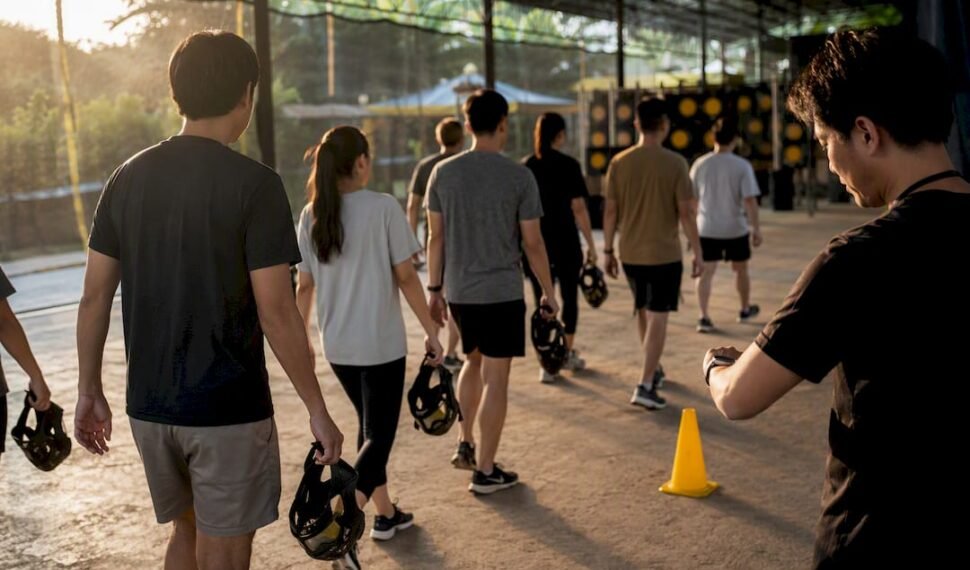
Building your own agenda from scratch means chasing vendors, renting gear, and hoping your icebreaker lands. Archers Battlefield skips that work entirely: combat archery, Nerf battles, bazooka ball, and dodgeball sessions come with the activity, the safety briefing, and a facilitator who already knows how to pace a group, all inside one package.
Our team building packages are built for the exact structure covered above: a fast-paced opener, a core activity that actually gets people moving together, and a debrief space when the games wrap up. Group sizes scale from small departments to full-company offsites, and packages are customizable around your objective, whether that’s trust-building, competition, or just a reason to get everyone in a room. Ready to lock a date? Check availability and book your session and let us handle the run-of-show.
Templates and Tools Worth Bookmarking
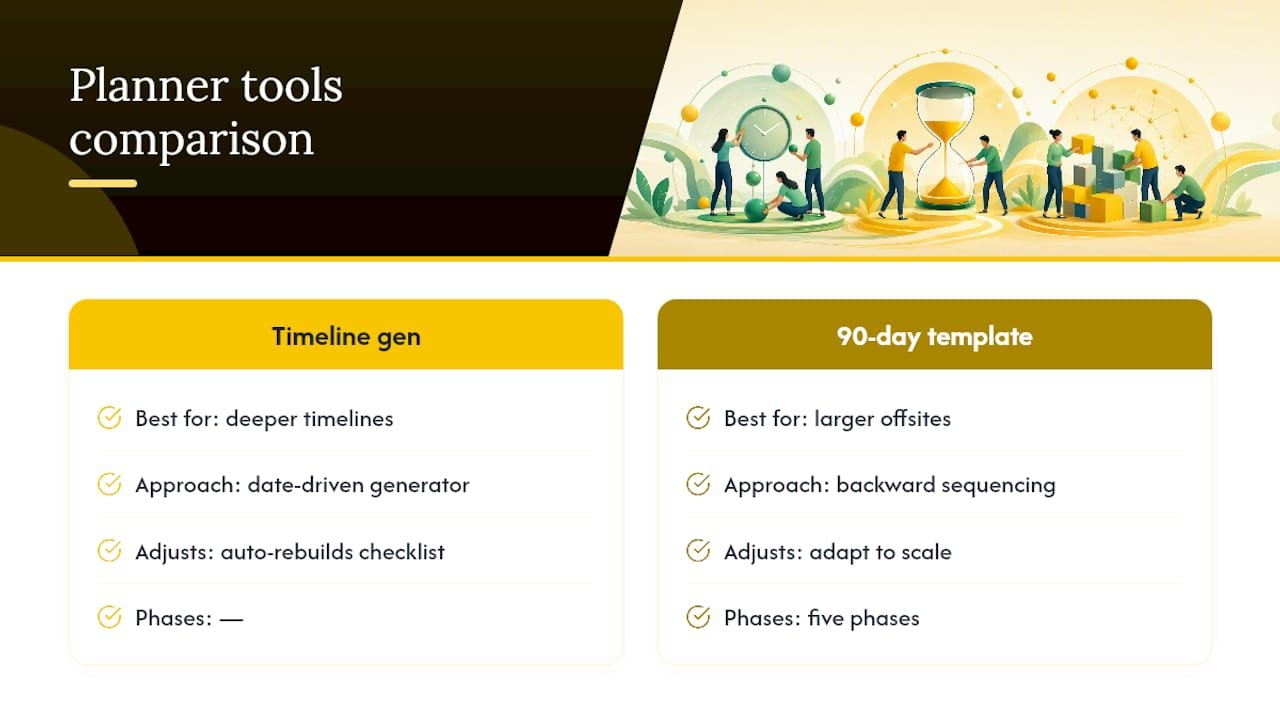
For deeper timeline planning, a dated event timeline generator rebuilds your checklist automatically if the date shifts. For larger offsites, a 90-day backward-planning template sequences venue, logistics, and marketing tasks across five phases worth adapting to your scale.
Sources
- Event timeline guide (Cvent)
- Event timeline templates (Smartsheet)
- How to Plan a 3-Hour Team Building Workshop, Step by Step | Offsiteio Learn


